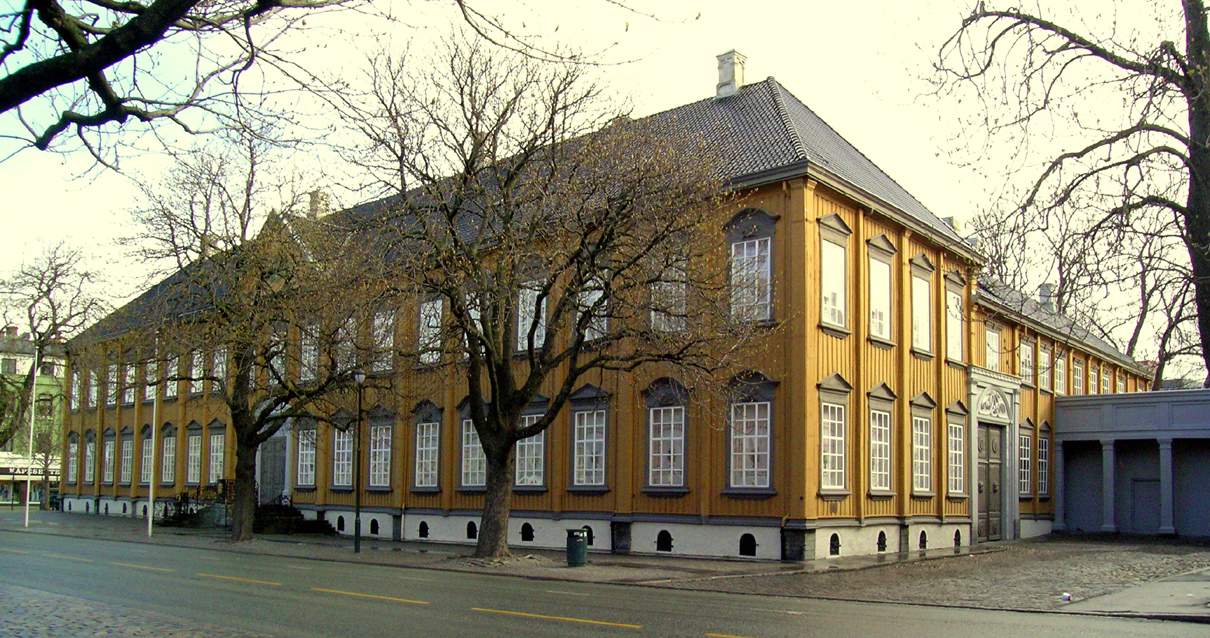
Stiftsgården is the official royal residence in Trondheim, Norway. Constructed between 1774 and 1778 by Cecilie Christine Schøller, it stands as one of the largest wooden buildings in Scandinavia. The structure is a prominent example of late 18th-century architecture, blending Rococo exterior elements with Neoclassical interior design.
Since 1800, the building has served as the official residence for the Norwegian monarch when visiting Trondheim. It has hosted numerous royal events, including coronations, weddings, and state visits, and remains a central landmark in the city's historic center.
Key Facts
- Materials
- Timber, Wood
- Civilization
- Dano-Norwegian
- Accessibility
- Limited; guided tours only
- Date(s)
- 1774-1778
- Condition
- Well-preserved, active royal residence
- Original Function
- Private residence for Cecilie Christine Schøller
- Key Figures
- Cecilie Christine Schøller, King Haakon VII
Construction and Origins
1774-1778The palace was commissioned by the wealthy widow Cecilie Christine Schøller. Designed by an unknown architect, it was built to reflect the status of the elite in Trondheim during the late 18th century.
Royal Acquisition
1800The building was purchased by the state in 1800 to serve as a residence for the governor and, subsequently, as a royal residence for the Norwegian monarchy.
Modern Usage
20th century - presentStiftsgården has played a vital role in Norwegian royal history, serving as the primary residence for the King during coronations and official visits to the city.
Cultural Significance
Stiftsgården is a symbol of Trondheim's historical importance as a center of power and commerce. Its preservation as a wooden palace highlights the unique architectural traditions of Norway, serving as a tangible link to the country's royal heritage and the transition from the Dano-Norwegian union to modern independence.
Interpretive Notes
Scholarly debates and areas of uncertainty
The identity of the original architect remains a subject of minor historical speculation, with various theories linking the design to influences from Copenhagen or local master builders.
Visiting Information
Entry Rules
Open to the public via guided tours during the summer season. Tickets must be purchased in advance. Security screening is mandatory for all visitors.
Best Times to Visit
Summer months (June-August) when guided tours are available.
Photography
Photography is generally permitted in designated areas, but flash and tripods are prohibited inside the residence.
Preservation Notes
As a historic wooden structure, strict climate control and fire safety regulations are in place. Visitors are required to follow guided paths and refrain from touching interior furnishings.
Nearby POIs
9 shownSources & Further Reading
- [1]
- [2]Trondheim's Architectural Heritage — Øivind Lunde. Tapir Academic Press (1997)
Key Facts
- Materials
- Timber, Wood
- Civilization
- Dano-Norwegian
- Accessibility
- Limited; guided tours only
- Date(s)
- 1774-1778
- Condition
- Well-preserved, active royal residence
- Original Function
- Private residence for Cecilie Christine Schøller
- Key Figures
- Cecilie Christine Schøller, King Haakon VII