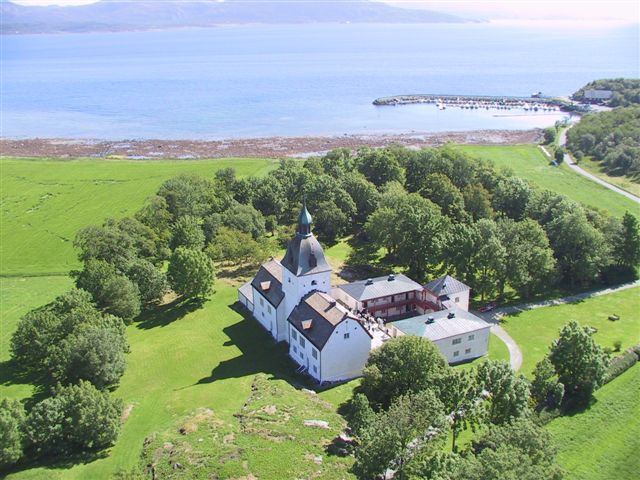
Austråttborgen is a historic manor house located in Ørland, Norway, known for its distinct architectural composition and its role as a seat of power for the Norwegian nobility. The current structure was primarily commissioned by Chancellor Ove Bjelke and completed around 1656, reflecting the architectural trends of the 17th-century Danish-Norwegian elite.
The manor is characterized by its unique U-shaped layout and its blend of Renaissance and Baroque elements. Following a period of neglect and a devastating fire in 1916, the estate underwent extensive restoration efforts between 1920 and 1961 to preserve its cultural heritage. Today, it serves as a museum and a significant site for understanding the social and political history of the Trøndelag region.
Key Facts
- Materials
- Stone, Timber, Brick
- Civilization
- Dano-Norwegian
- Accessibility
- Limited; guided tours required for interior access
- Date(s)
- 1656
- Condition
- Restored and maintained as a museum
- Original Function
- Noble residence and administrative center
- Key Figures
- Ove Bjelke, Inger Ottesdotter Rømer
Medieval Origins
11th-15th centuryThe site has been a center of power since the Middle Ages. It was the ancestral seat of the powerful Rømer family, and historical records indicate the presence of a stone church and a fortified residence long before the current manor was constructed.
The Bjelke Era
1650-1660Chancellor Ove Bjelke transformed the estate into a grand manor house. The construction reflected the status of the Bjelke family, incorporating sophisticated architectural details that were rare in rural Norway at the time.
Fire and Restoration
1916-1961A major fire in 1916 destroyed much of the interior and roof structures. The subsequent restoration, led by architect Gerhard Fischer, focused on returning the building to its 17th-century appearance, a process that spanned several decades.
Cultural Significance
Austråttborgen stands as a symbol of the historical influence of the Norwegian nobility during the period of the Dano-Norwegian union. It is deeply connected to the legacy of Lady Inger of Austrått, a prominent figure in Norwegian history who managed the estate during the 16th century, and remains a focal point for regional heritage in Trøndelag.
Interpretive Notes
Scholarly debates and areas of uncertainty
There is ongoing academic discussion regarding the extent to which the 20th-century restoration accurately reflects the original 17th-century interior layout, as some decorative elements were reconstructed based on stylistic assumptions rather than definitive archaeological evidence.
Visiting Information
Entry Rules
Access is restricted to guided tours during the summer season. Visitors are advised to check the official museum website for specific opening dates and tour schedules.
Best Times to Visit
Summer months (June through August) when the museum is fully operational and guided tours are available.
Photography
Photography is generally permitted in outdoor areas; interior photography may be restricted during guided tours to protect artifacts.
Preservation Notes
The site is a protected cultural monument. Visitors must remain with their tour group and refrain from touching historical surfaces or furniture.
Nearby POIs
8 shownSources & Further Reading
- [1]Austråttborgen: Historien om en herregård — Øystein Ekroll. Tapir Akademisk Forlag (2005)
- [2]Norsk arkitekturhistorie — Christian Norberg-Schulz. Universitetsforlaget (1986)
Key Facts
- Materials
- Stone, Timber, Brick
- Civilization
- Dano-Norwegian
- Accessibility
- Limited; guided tours required for interior access
- Date(s)
- 1656
- Condition
- Restored and maintained as a museum
- Original Function
- Noble residence and administrative center
- Key Figures
- Ove Bjelke, Inger Ottesdotter Rømer