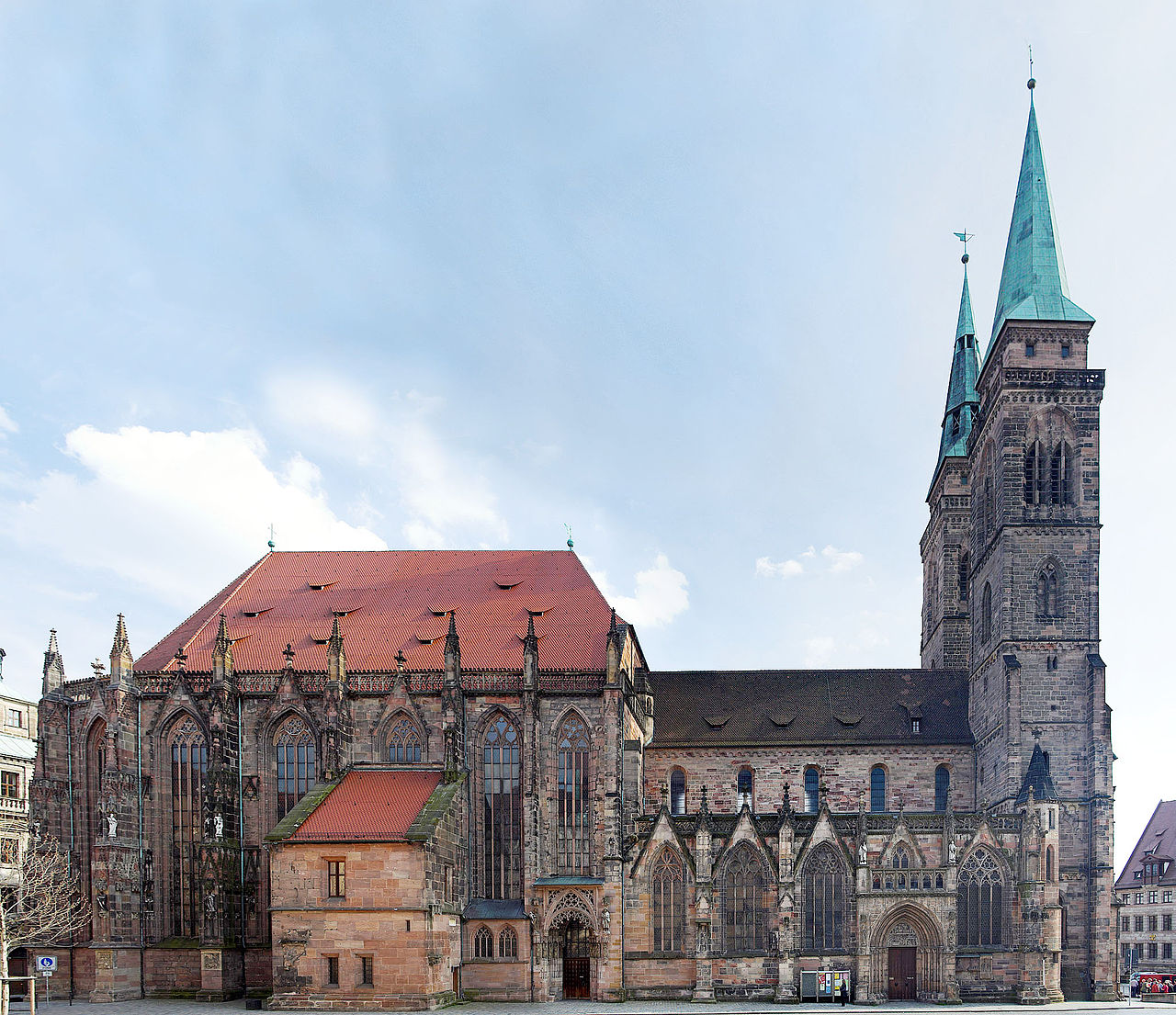
The St. Sebaldus Church, or Sebalduskirche, is the oldest parish church in Nuremberg and serves as a significant example of the transition from Romanesque to Gothic architecture. Construction began in the 13th century, with the Romanesque nave and western choir forming the core of the structure, followed by the addition of the expansive Gothic hall choir in the 14th century.
The interior is renowned for housing the silver shrine of Saint Sebaldus, the patron saint of Nuremberg, which was crafted by Peter Vischer the Elder and his sons between 1508 and 1519. Despite suffering severe damage during the aerial bombings of World War II, the church was meticulously reconstructed, preserving its historical significance as a center of religious and civic life in the city.
Key Facts
- Materials
- Sandstone, Silver, Bronze
- Civilization
- Holy Roman Empire
- Accessibility
- Ground level accessible
- Date(s)
- 1225–1379
- Condition
- Restored after WWII damage
- Original Function
- Parish Church
- Key Figures
- Saint Sebaldus, Peter Vischer the Elder, Veit Stoss
Foundations
13th CenturyThe church was established as a Romanesque basilica. The western choir and the nave were completed during this initial phase, reflecting the architectural standards of the time.
Gothic Expansion
14th CenturyBetween 1361 and 1379, the church underwent a major expansion with the addition of the Gothic hall choir. This period introduced the twenty-two massive pillars that define the current interior space.
Renaissance Additions
16th CenturyThe church became a repository for significant Renaissance art, most notably the bronze shrine of Saint Sebaldus, which remains one of the most important works of the period in Germany.
War and Reconstruction
20th CenturyThe church was heavily damaged during the 1945 air raids. Post-war reconstruction efforts focused on restoring the original medieval fabric, allowing the church to resume its role as a place of worship.
Cultural Significance
The Sebalduskirche is deeply intertwined with the identity of Nuremberg, serving as the spiritual heart of the city since the Middle Ages. As the burial place of Saint Sebaldus, it became a major site of pilgrimage, which contributed significantly to the city's economic and cultural prosperity.
Beyond its religious role, the church functioned as a symbol of the city's wealth and civic pride. The patronage of wealthy Nuremberg merchant families is reflected in the extensive collection of epitaphs and art pieces housed within the walls, marking the church as a primary site for the study of German medieval and Renaissance art.
Interpretive Notes
Scholarly debates and areas of uncertainty
There is ongoing academic discussion regarding the exact sequence of the Romanesque construction phases and the extent to which the 14th-century Gothic choir was intended to replace or merely augment the existing Romanesque structure.
Visiting Information
Entry Rules
Open daily to the public. Entry is free, though donations are encouraged. Visitors are expected to maintain a quiet demeanor as it is an active place of worship.
Best Times to Visit
Weekday mornings are generally quieter. The church is particularly significant during local saint feast days.
Photography
Personal photography is permitted without flash or tripods. Commercial photography requires prior authorization from the parish office.
Preservation Notes
The interior contains fragile medieval art; visitors are requested not to touch the sculptures or the shrine. Restoration work is ongoing in various sections of the building.
Nearby POIs
11 shownSources & Further Reading
- [1]Die St. Sebalduskirche in Nürnberg — Helmut Baier. Verlag Hans Carl (1990)
- [2]Nuremberg: A Renaissance City — Jeffrey Chipps Smith. University of Toronto Press (1994)
Key Facts
- Materials
- Sandstone, Silver, Bronze
- Civilization
- Holy Roman Empire
- Accessibility
- Ground level accessible
- Date(s)
- 1225–1379
- Condition
- Restored after WWII damage
- Original Function
- Parish Church
- Key Figures
- Saint Sebaldus, Peter Vischer the Elder, Veit Stoss