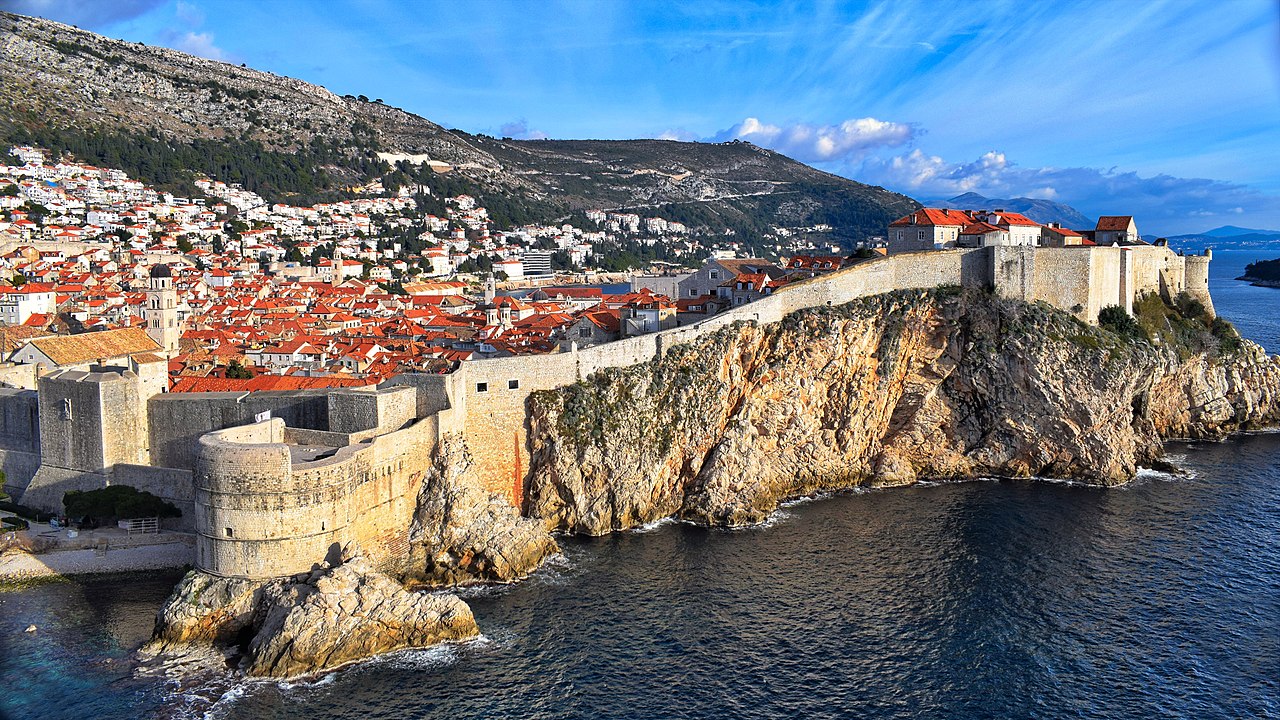
The Pile Gate serves as the primary western entrance to the historic Old Town of Dubrovnik. Originally constructed in the 15th century, the gate complex consists of an outer gate built in 1537 and an inner gate dating to 1460, connected by a stone bridge that replaced an earlier wooden drawbridge. The structure was designed to control access to the city and provide a robust defensive point against potential invaders.
Architecturally, the gate features a statue of Saint Blaise, the patron saint of Dubrovnik, positioned above the archway. The surrounding fortifications, which include the massive Bokar Fortress, were integrated into the gate's design to ensure the security of the Republic of Ragusa. Today, it remains the main pedestrian thoroughfare for visitors entering the UNESCO-listed city walls.
Key Facts
- Materials
- Limestone, Stone masonry
- Civilization
- Republic of Ragusa
- Accessibility
- Steep stone steps and uneven surfaces; limited accessibility for mobility aids
- Date(s)
- 1460 (inner), 1537 (outer)
- Condition
- Well-preserved, active pedestrian entrance
- Original Function
- City gate and defensive fortification
- Key Figures
- Paskoje Miličević
Medieval Origins
15th CenturyThe inner gate was constructed in 1460 as part of the city's expanding defensive network. It was designed to replace older, less secure entry points and featured a wooden drawbridge that could be raised at night to isolate the city.
Renaissance Expansion
16th CenturyIn 1537, the outer gate was added to further fortify the entrance. This period saw the integration of the gate with the nearby Bokar Fortress, creating a sophisticated defensive system capable of withstanding contemporary artillery.
Modern Preservation
20th Century - PresentFollowing the 1979 UNESCO designation, the gate underwent extensive restoration to repair damage from historical earthquakes and the 1991 Siege of Dubrovnik. It now serves as the primary entry point for millions of annual visitors.
Cultural Significance
The Pile Gate is a symbol of Dubrovnik's historical autonomy as the Republic of Ragusa. Its design reflects the city's long-standing commitment to defense and its religious devotion, evidenced by the prominent placement of Saint Blaise, who is believed to protect the city from harm.
As the main gateway to the Old Town, it acts as a threshold between the modern city and the preserved medieval urban fabric. It is central to the city's identity and remains the most photographed entry point in the region.
Interpretive Notes
Scholarly debates and areas of uncertainty
There is ongoing discussion among architectural historians regarding the exact influence of Italian military engineers on the gate's design. While Paskoje Miličević is credited with the layout, the extent to which he incorporated contemporary Venetian defensive theories remains a subject of study.
Visiting Information
Entry Rules
The gate is open 24/7 as it is a public thoroughfare. No tickets are required to pass through the gate itself, though a ticket is required to walk the full circuit of the city walls accessible from nearby stairs.
Best Times to Visit
Early morning before 9:00 or late evening after 19:00 to avoid heavy cruise ship crowds. The gate is particularly atmospheric during the winter months when tourist traffic is minimal.
Photography
Personal photography is permitted. Commercial photography requires a permit from the City of Dubrovnik administration.
Preservation Notes
The stone surfaces are fragile; do not climb on the walls or bridge railings. The area is heavily monitored to prevent graffiti and vandalism.
Nearby POIs
11 shownSources & Further Reading
- [1]Dubrovnik: A History — Robin Harris. Saqi Books (2003)
- [2]The Walls of Dubrovnik: A Guide — Society of Friends of Dubrovnik Antiquities. Dubrovnik Heritage Press (2018)
Key Facts
- Materials
- Limestone, Stone masonry
- Civilization
- Republic of Ragusa
- Accessibility
- Steep stone steps and uneven surfaces; limited accessibility for mobility aids
- Date(s)
- 1460 (inner), 1537 (outer)
- Condition
- Well-preserved, active pedestrian entrance
- Original Function
- City gate and defensive fortification
- Key Figures
- Paskoje Miličević