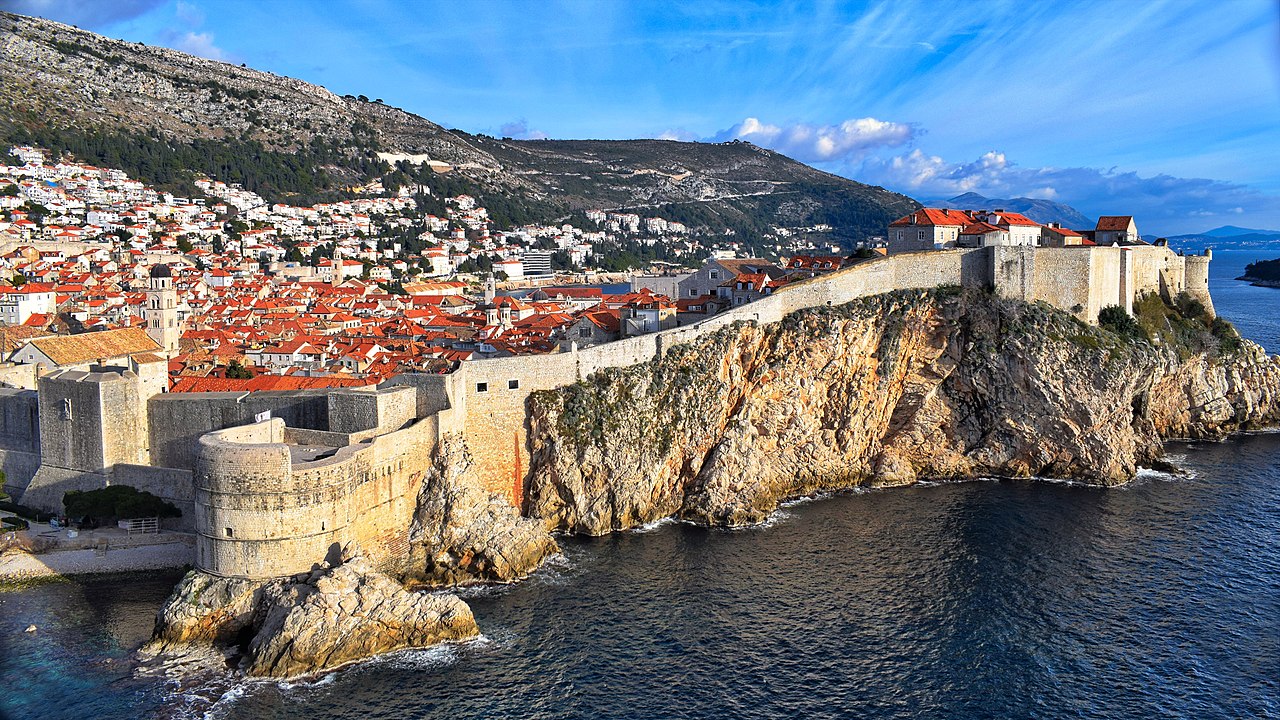
Fort Bokar, also known as Zvjezdan, is a prominent circular bastion located on the western section of the Dubrovnik city walls. Designed by the Florentine architect Michelozzo di Bartolomeo, construction began in 1461 to reinforce the city's defenses against potential Ottoman incursions. It serves as one of the most significant examples of early Renaissance fortification architecture in the region.
The structure was strategically positioned to protect the Pile Gate and the city's western moat. Its design features a casemate structure with multiple levels, allowing for effective artillery placement. Today, it stands as a well-preserved component of the historic city walls, offering panoramic views of the Adriatic Sea and the Lovrijenac fortress.
Key Facts
- Materials
- Stone, Mortar
- Civilization
- Republic of Ragusa
- Accessibility
- Accessible via the city walls walkway; involves stairs
- Date(s)
- 1461-1463
- Condition
- Well-preserved, integrated into the city walls
- Original Function
- Defensive bastion
- Key Figures
- Michelozzo di Bartolomeo
Design and Construction
1461The Republic of Ragusa commissioned Michelozzo di Bartolomeo to modernize the city's defenses. The fort was designed as a circular bastion to provide a superior field of fire compared to the older square towers.
Strategic Importance
15th-17th centuryBokar served as the primary defense for the Pile Gate, the main land entrance to the city. Its artillery capabilities were essential in deterring naval and land-based threats during the height of the Republic's power.
Modern Preservation
20th century - presentFollowing the inclusion of the Old City of Dubrovnik on the UNESCO World Heritage list, the fort has undergone extensive restoration to repair damage from historical sieges and natural erosion, maintaining its structural integrity as a tourist site.
Cultural Significance
Fort Bokar is a symbol of the engineering prowess of the Republic of Ragusa. It represents the transition from medieval defensive architecture to the more sophisticated Renaissance style, reflecting the city's commitment to maintaining its independence through advanced military technology.
Interpretive Notes
Scholarly debates and areas of uncertainty
There is ongoing academic discussion regarding the extent of Michelozzo's original design versus later modifications made by local builders during the 16th century to accommodate heavier artillery.
Visiting Information
Entry Rules
Access is included with the purchase of a ticket for the Dubrovnik City Walls. Open daily, though hours vary by season.
Best Times to Visit
Early morning or late afternoon to avoid peak heat and cruise ship crowds. The sunset views from the western ramparts are particularly notable.
Photography
Personal photography is permitted. Commercial photography requires a permit from the Society of Friends of Dubrovnik Antiquities.
Preservation Notes
The stone surfaces are fragile; do not climb on the parapets or deface the masonry. Stay within the marked walking paths.
Nearby POIs
11 shownSources & Further Reading
- [1]Dubrovnik: A History — Robin Harris. Saqi Books (2003)
- [2]The Walls of Dubrovnik — Vinicije B. Lupis. Dubrovnik Museums (2015)
Key Facts
- Materials
- Stone, Mortar
- Civilization
- Republic of Ragusa
- Accessibility
- Accessible via the city walls walkway; involves stairs
- Date(s)
- 1461-1463
- Condition
- Well-preserved, integrated into the city walls
- Original Function
- Defensive bastion
- Key Figures
- Michelozzo di Bartolomeo