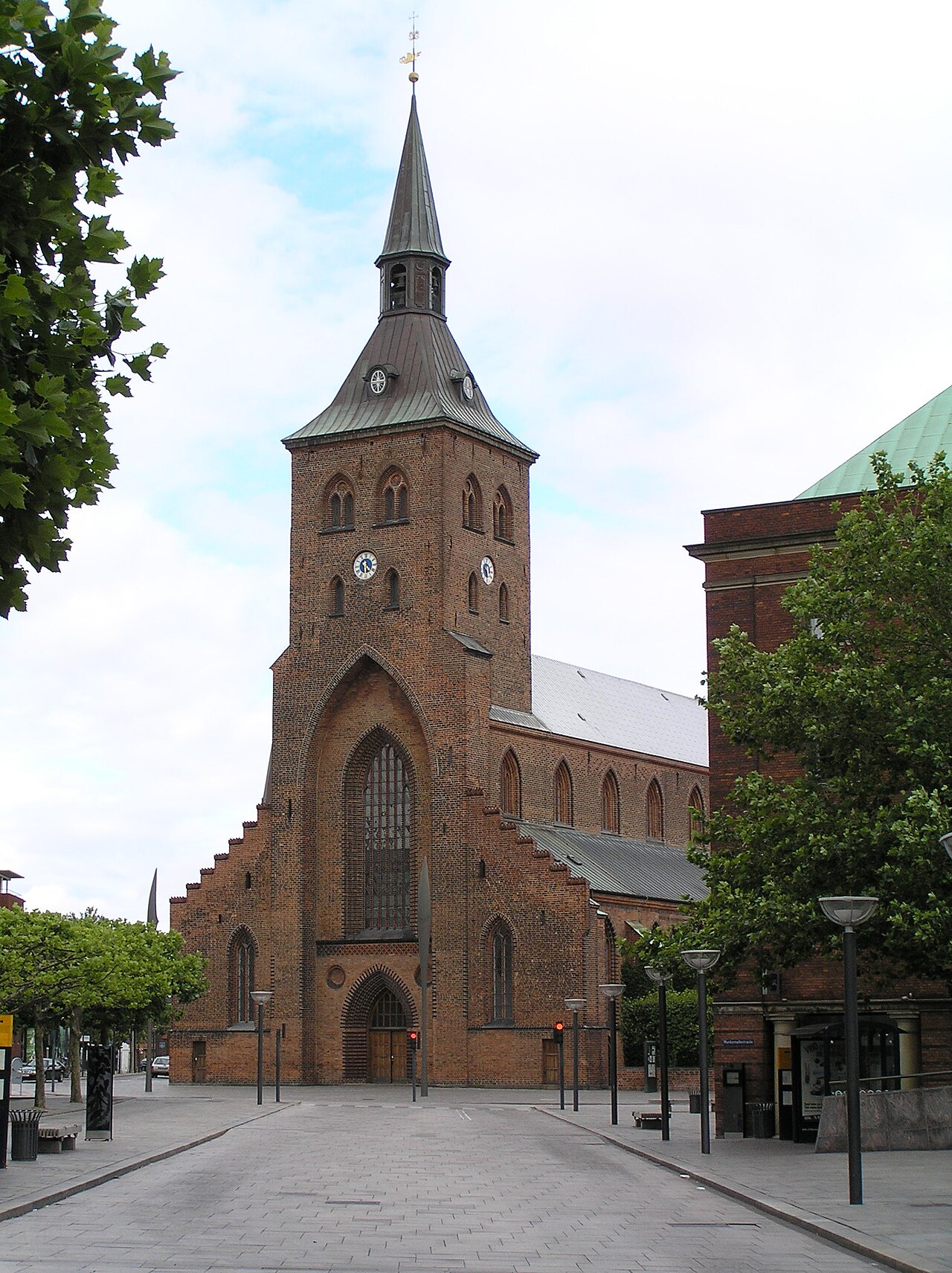
Odense Castle, known locally as Odense Slot, is a historic royal residence located in the city of Odense, Denmark. The current structure, which dates back to the early 18th century, replaced an earlier 16th-century monastery and fortress complex. It served as the administrative seat for the governors of Funen and as a temporary residence for the Danish royal family during their travels.
The castle is perhaps most famous for its association with the childhood of Hans Christian Andersen, whose mother worked as a laundress at the castle. Today, the building serves as the administrative headquarters for the Municipality of Odense and is surrounded by the public Kongens Have (King's Garden), which remains a significant green space in the city center.
Key Facts
- Materials
- Brick, Stucco
- Civilization
- Danish
- Accessibility
- Gardens are open to the public; interior is restricted
- Date(s)
- 1720-1723
- Condition
- Well-preserved, used as municipal offices
- Original Function
- Royal residence and administrative seat
- Key Figures
- Hans Christian Andersen, King Frederick IV
Monastic Origins
13th centuryThe site originally housed the Order of St. John of Jerusalem. The monastery was a significant religious institution in Odense until the Reformation.
Fortress and Renaissance Palace
16th centuryFollowing the Reformation, the monastery was converted into a royal castle. It served as a fortified residence for the Danish Crown's representatives on the island of Funen.
The Current Structure
1720-1723King Frederick IV commissioned the current Baroque-style palace, which was designed by architect J.C. Krieger. The older structures were largely demolished to make way for the new residence.
Modern Era
20th century - presentThe castle was sold to the Municipality of Odense in 1907. It has since functioned as administrative offices, while the surrounding gardens were opened to the public.
Cultural Significance
Odense Castle is a landmark of Danish royal history in the provinces, representing the transition from feudal fortification to centralized administrative power. Its connection to Hans Christian Andersen provides a unique literary and social history dimension, linking the lives of the common citizenry with the royal administration of the 19th century.
Interpretive Notes
Scholarly debates and areas of uncertainty
There is ongoing discussion among local historians regarding the extent of the original medieval monastic foundations that remain beneath the current 18th-century structure, as limited archaeological excavation has been conducted on the site.
Visiting Information
Entry Rules
The interior of the castle is used for municipal offices and is generally closed to the public. The surrounding King's Garden is open to the public daily.
Best Times to Visit
Spring and summer months are ideal for visiting the King's Garden when the flora is in bloom.
Photography
Photography of the exterior is permitted. Interior photography is prohibited as it is a working government building.
Preservation Notes
The building is protected under Danish heritage laws. Visitors are requested to remain on designated paths within the gardens to protect the landscaping.
Nearby POIs
10 shownSources & Further Reading
- [1]Odense Slot: Historie og Arkitektur — Jens Rasmussen. Odense Bys Museer (2015)
- [2]The Life of Hans Christian Andersen — Jackie Wullschläger. University of Chicago Press (2002)
Key Facts
- Materials
- Brick, Stucco
- Civilization
- Danish
- Accessibility
- Gardens are open to the public; interior is restricted
- Date(s)
- 1720-1723
- Condition
- Well-preserved, used as municipal offices
- Original Function
- Royal residence and administrative seat
- Key Figures
- Hans Christian Andersen, King Frederick IV