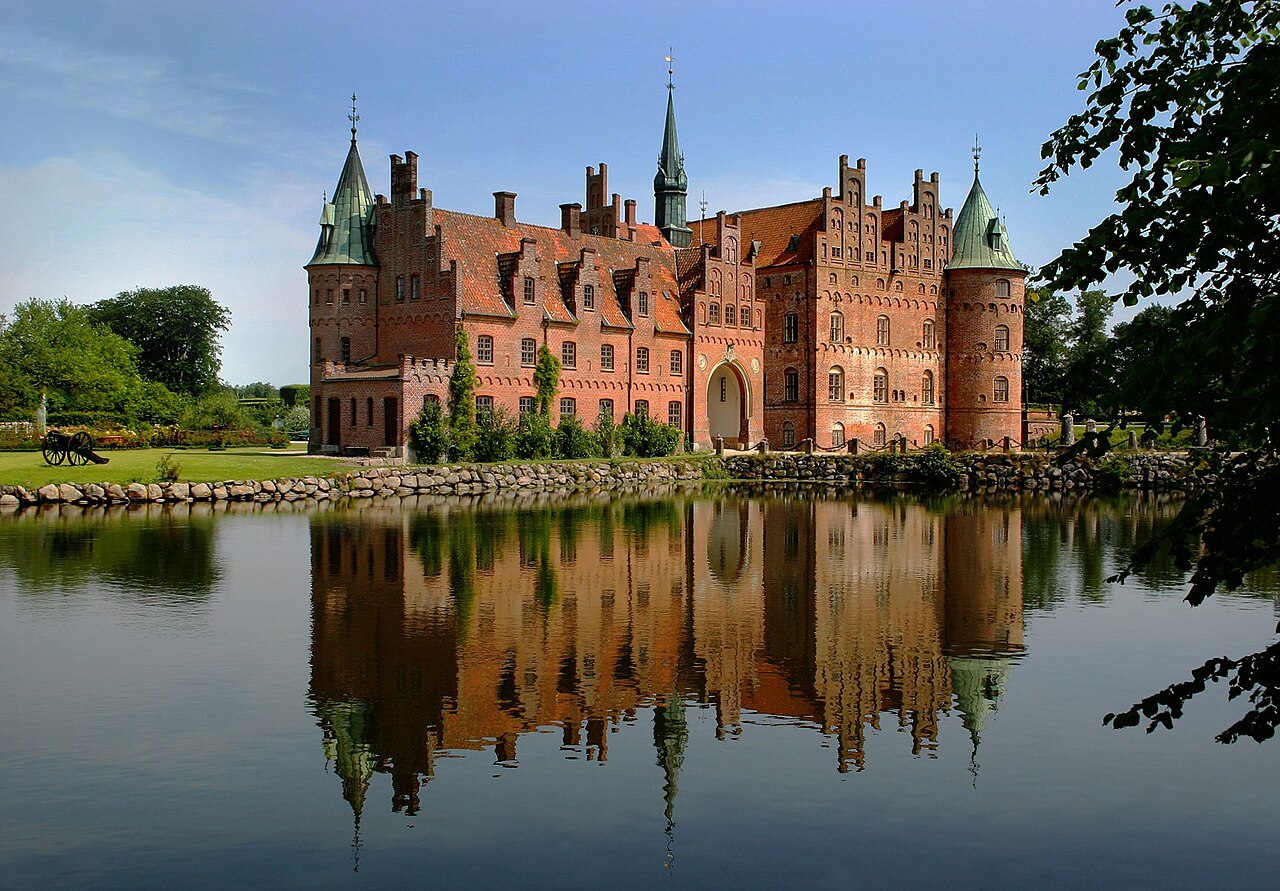
Egeskov Castle is a water castle located in Kvaerndrup, Denmark. Constructed in 1554 by Frands Brockenhuus, it is widely considered the best-preserved Renaissance water castle in Europe. The structure is built on oak piles driven into the bed of a small lake, a feat of engineering that gave the castle its name, which translates to 'oak forest' in Danish.
The castle features a distinctive architectural blend of late Gothic and Renaissance styles, characterized by its stepped gables and defensive features such as machicolations and arrow slits. While originally designed as a defensive fortification, it evolved over centuries into a grand residence, surrounded by extensive formal gardens that were added in the 18th and 19th centuries.
Key Facts
- Materials
- Brick, Oak piles, Stone
- Civilization
- Danish
- Accessibility
- Ground floor and gardens are accessible
- Date(s)
- 1554
- Condition
- Well-preserved, private residence and museum
- Original Function
- Fortified manor house
- Key Figures
- Frands Brockenhuus, Count Michael Ahlefeldt-Laurvig-Bille
Founding and Construction
1554Frands Brockenhuus commissioned the castle during a period of civil unrest in Denmark. The site was chosen for its defensive potential, utilizing the surrounding lake as a natural moat.
Evolution of the Estate
18th-19th CenturyThe castle transitioned from a purely defensive structure to a country estate. During this time, the surrounding gardens were landscaped in the French and English styles, and the interior was updated to reflect contemporary aristocratic tastes.
Modern Era
20th Century - PresentThe castle opened to the public as a museum in the 20th century. It remains in the possession of the Ahlefeldt-Laurvig-Bille family, who continue to manage the estate and its extensive collections of vintage vehicles and historical artifacts.
Cultural Significance
Egeskov Castle serves as a primary example of Danish Renaissance architecture and the evolution of noble estates in Scandinavia. It is a significant cultural landmark that preserves the history of the Danish landed gentry and provides insight into the transition from medieval fortification to Renaissance domesticity.
The site is also a major center for tourism and heritage education in Denmark, hosting various exhibitions that document the history of transportation and rural life, thereby bridging the gap between historical architecture and modern cultural history.
Interpretive Notes
Scholarly debates and areas of uncertainty
There is ongoing discussion among architectural historians regarding the specific influence of Dutch versus Italian design elements in the castle's construction, particularly concerning the integration of defensive features with the emerging aesthetic trends of the mid-16th century.
Visiting Information
Entry Rules
Open seasonally from late April to October. Tickets can be purchased online or at the entrance. The site includes multiple museum collections and garden areas; some interior rooms may be restricted depending on private family use.
Best Times to Visit
Late spring and summer months are ideal for viewing the extensive gardens in bloom. Weekdays outside of the peak July holiday season offer the most comfortable visitor experience.
Photography
Personal photography is permitted in the gardens and most museum areas. Flash photography is prohibited inside the castle interior to protect historical textiles and paintings.
Preservation Notes
The castle's foundation on oak piles requires constant monitoring of water levels in the surrounding moat. Visitors are requested to stay on marked paths in the gardens to protect the historic landscaping.
Nearby POIs
10 shownSources & Further Reading
- [1]Egeskov: The History of the Castle — Michael Ahlefeldt-Laurvig-Bille. Egeskov Estate Publications (2015)View
- [2]Danish Renaissance Architecture — Hanne Christensen. Scandinavian Architectural Review (2018)
Key Facts
- Materials
- Brick, Oak piles, Stone
- Civilization
- Danish
- Accessibility
- Ground floor and gardens are accessible
- Date(s)
- 1554
- Condition
- Well-preserved, private residence and museum
- Original Function
- Fortified manor house
- Key Figures
- Frands Brockenhuus, Count Michael Ahlefeldt-Laurvig-Bille