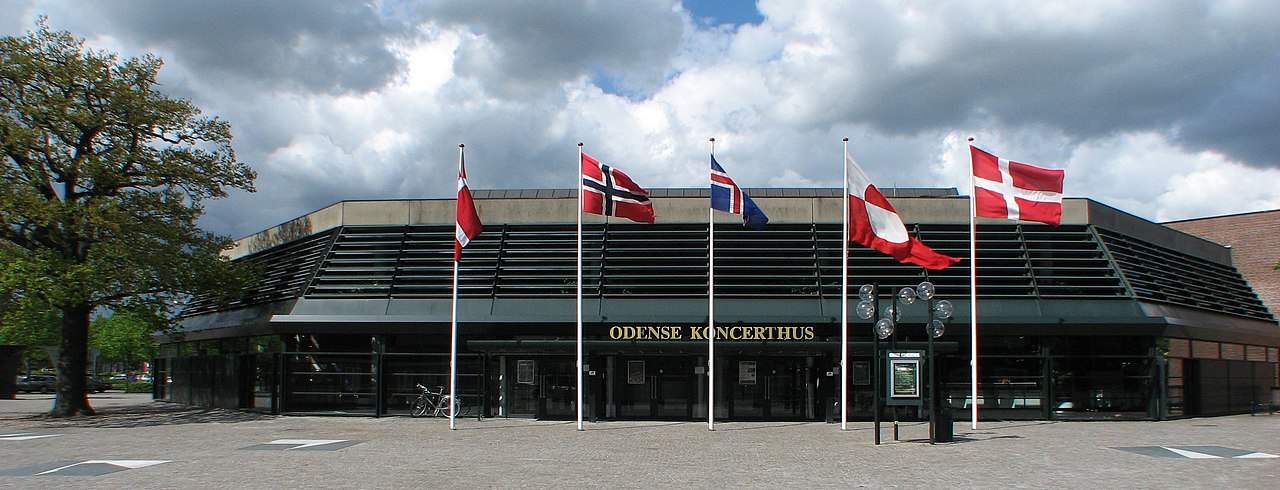
The Carl Nielsen Museum in Odense is dedicated to the life and artistic legacy of Denmark's most renowned composer, Carl Nielsen (1865–1931). The museum houses an extensive collection of original manuscripts, personal correspondence, and musical instruments, providing a comprehensive look at the creative process behind his symphonies, operas, and chamber music.
The exhibition design emphasizes the intersection of Nielsen's personal life and his professional achievements, often featuring his wife, the sculptor Anne Marie Carl-Nielsen. Through interactive displays and curated artifacts, the museum explores the cultural climate of early 20th-century Denmark and the enduring influence of Nielsen's compositions on the international classical music repertoire.
Key Facts
- Materials
- Brick, Glass, Concrete
- Civilization
- Danish
- Accessibility
- Fully wheelchair accessible
- Date(s)
- 1988
- Condition
- Active
- Original Function
- Museum
- Key Figures
- Carl Nielsen, Anne Marie Carl-Nielsen
Establishment
1988The museum was inaugurated in 1988 in Odense, the city where Carl Nielsen spent his childhood. It was designed by architect Jørgen Stærmose to house the growing collection of the composer's personal effects.
Collection Expansion
1990s-2010sOver the decades, the museum expanded its holdings through acquisitions of private letters and rare musical scores, solidifying its status as the primary research center for Nielsen studies.
Modernization
2020-PresentThe museum has undergone recent renovations to integrate modern digital storytelling techniques, allowing visitors to listen to archival recordings and view digitized manuscripts in a contemporary gallery setting.
Cultural Significance
The museum serves as a vital repository for Danish musical heritage. It highlights not only the composer's work but also the artistic partnership between Carl and his wife, Anne Marie, reflecting the broader cultural dynamism of the period. It remains a pilgrimage site for musicologists and fans of Scandinavian classical music.
Interpretive Notes
Scholarly debates and areas of uncertainty
Debates often center on the interpretation of Nielsen's later symphonic works and the extent to which his personal struggles influenced his musical modernism. Scholars continue to analyze the relationship between his folk-inspired melodies and his complex harmonic structures.
Visiting Information
Entry Rules
Open Tuesday through Sunday. Tickets can be purchased at the entrance or via the official Odense City Museums website. Photography is permitted for personal use without flash.
Best Times to Visit
Weekday mornings are generally quieter. The museum is particularly relevant during the annual Carl Nielsen International Competition events.
Photography
Personal photography allowed; no flash or tripods. Commercial photography requires prior written permission.
Preservation Notes
Maintain a respectful distance from original manuscripts and artifacts. Do not touch display cases.
Nearby POIs
10 shownSources & Further Reading
- [1]Carl Nielsen: Life and Music — Jack Lawson. Faber and Faber (1997)
- [2]The Carl Nielsen Companion — Ben Hogwood. Arcana Press (2015)
Key Facts
- Materials
- Brick, Glass, Concrete
- Civilization
- Danish
- Accessibility
- Fully wheelchair accessible
- Date(s)
- 1988
- Condition
- Active
- Original Function
- Museum
- Key Figures
- Carl Nielsen, Anne Marie Carl-Nielsen