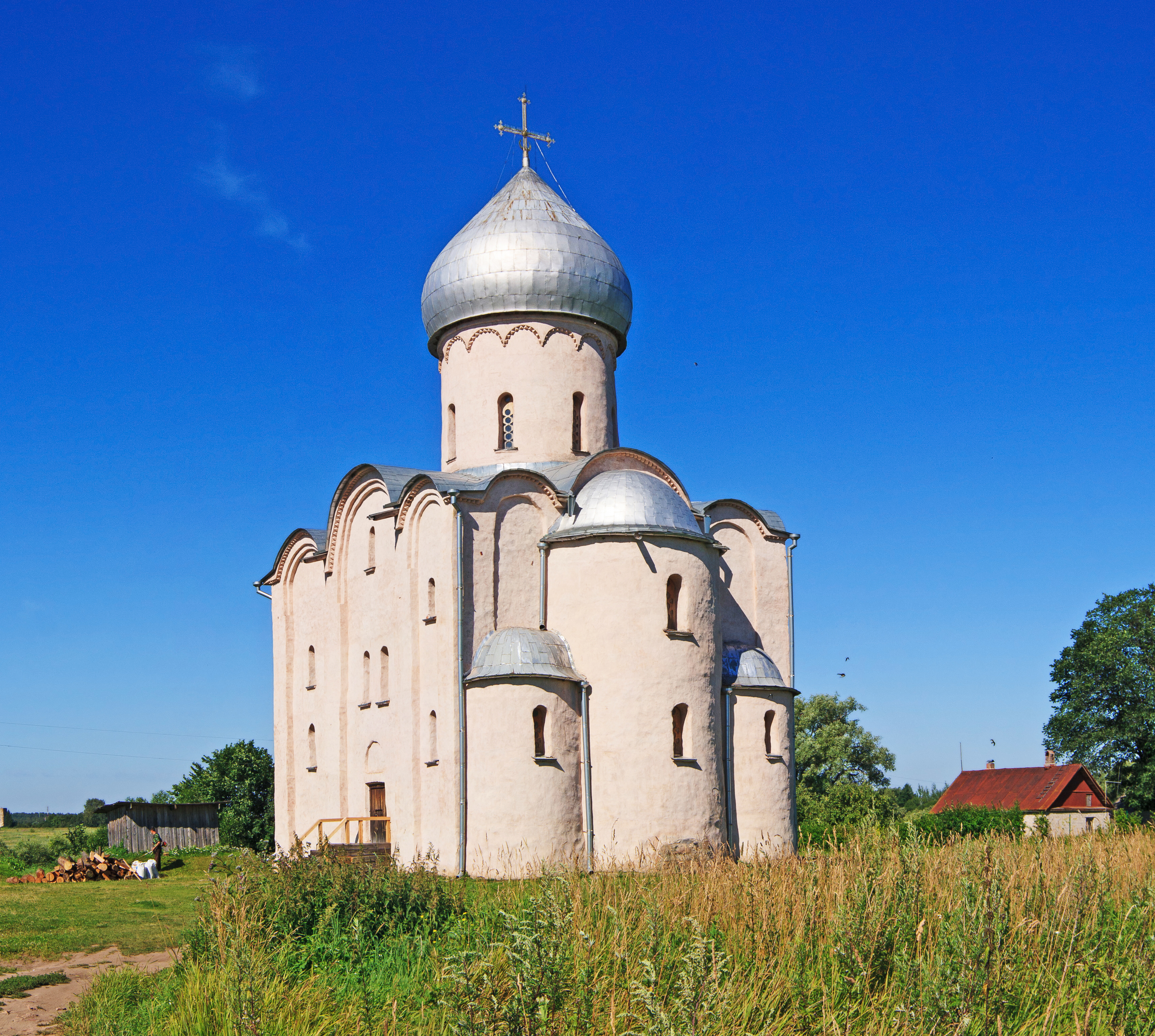
The Church of the Savior at Nereditsa is a 12th-century Orthodox stone church located near Veliky Novgorod, Russia. Commissioned by Prince Yaroslav Vladimirovich in 1198, it represents the architectural style of the Novgorod Republic, characterized by its single-domed, four-pillared structure and austere exterior design.
The church is internationally recognized for its extensive cycle of frescoes, which covered nearly every interior surface. Although the building was severely damaged during the Siege of Novgorod in World War II, the surviving fragments of these murals remain a primary source for the study of late 12th-century Byzantine and Old Russian iconography.
Key Facts
- Materials
- Limestone, Brick
- Civilization
- Novgorod Republic
- Accessibility
- Accessible by road from Veliky Novgorod
- Date(s)
- 1198
- Condition
- Restored after WWII destruction
- Original Function
- Orthodox Church
- Key Figures
- Prince Yaroslav Vladimirovich
Foundation
1198The church was built in a single season by order of Prince Yaroslav Vladimirovich to commemorate his deceased children. It was constructed on the Nereditsa Hill, a site of strategic and symbolic importance overlooking the Volkhov River.
Medieval Period
13th-17th centuryFor centuries, the church served as a major religious center for the Novgorod region. The interior was decorated with a comprehensive fresco program completed shortly after the building's construction, reflecting the high artistic standards of the Novgorod school.
World War II Destruction
1941-1944During the German occupation of the Novgorod region, the church was situated on the front line. It suffered catastrophic damage from artillery fire, resulting in the collapse of the roof and significant portions of the walls, which led to the loss of much of the original fresco cycle.
Restoration
1944-presentPost-war restoration efforts began in the late 1940s to stabilize the ruins. Subsequent decades involved meticulous work to recover and reassemble thousands of fresco fragments, allowing for a partial reconstruction of the original mural program.
Cultural Significance
The Nereditsa Church is a cornerstone of Russian medieval art history. Its frescoes are considered some of the most important examples of pre-Mongol Russian painting, providing a rare window into the aesthetic and theological priorities of the Novgorod Republic before the Mongol invasion.
As a UNESCO World Heritage site, it serves as a symbol of the resilience of Russian cultural heritage. The ongoing efforts to preserve the remaining fragments of its murals highlight the challenges of restoring art destroyed by modern warfare.
Interpretive Notes
Scholarly debates and areas of uncertainty
There is ongoing academic discussion regarding the extent to which the 20th-century restoration accurately reflects the original 12th-century iconographic program. Scholars debate the placement of recovered fresco fragments and the degree to which modern materials should be used to fill gaps in the original mural narrative.
Visiting Information
Entry Rules
Open to the public during seasonal hours. Visitors are required to follow local museum regulations regarding the protection of the interior frescoes. Modest dress is recommended.
Best Times to Visit
Late spring to early autumn, when the road to Nereditsa Hill is easily accessible and the interior lighting is optimal for viewing the frescoes.
Photography
Photography is permitted without flash. Tripods and professional equipment require prior authorization from the Novgorod State Museum-Reserve.
Preservation Notes
The interior environment is strictly climate-controlled to protect the fragile fresco fragments. Touching the walls or any architectural elements is strictly prohibited.
Nearby POIs
11 shown- Yuriev Monastery1.9 km
- Church of the Transfiguration on Ilyina Street2.3 km
- Vitoslavlitsy Museum2.4 km
- Saint Nicholas Cathedral2.7 km
- Novgorod Detinets3.3 km
- Millennium of Russia3.4 km
- Cathedral of Saint Sophia3.4 km
- Eternal Flame of Glory3.5 km
- Novgorodskiy Muzey-Zapovednik3.5 km
- Chamber of Facets3.5 km
- Desyatinny Monastery3.5 km
Sources & Further Reading
- [1]The Frescoes of Nereditsa — V. N. Lazarev. Iskusstvo (1977)
- [2]The Church of the Savior at Nereditsa: Architecture and Painting — G. M. Shtender. Novgorod State Museum (1998)
Key Facts
- Materials
- Limestone, Brick
- Civilization
- Novgorod Republic
- Accessibility
- Accessible by road from Veliky Novgorod
- Date(s)
- 1198
- Condition
- Restored after WWII destruction
- Original Function
- Orthodox Church
- Key Figures
- Prince Yaroslav Vladimirovich
Nearby POIs
11 shown- Yuriev Monastery1.9 km
- Church of the Transfiguration on Ilyina Street2.3 km
- Vitoslavlitsy Museum2.4 km
- Saint Nicholas Cathedral2.7 km
- Novgorod Detinets3.3 km
- Millennium of Russia3.4 km
- Cathedral of Saint Sophia3.4 km
- Eternal Flame of Glory3.5 km
- Novgorodskiy Muzey-Zapovednik3.5 km
- Chamber of Facets3.5 km
- Desyatinny Monastery3.5 km