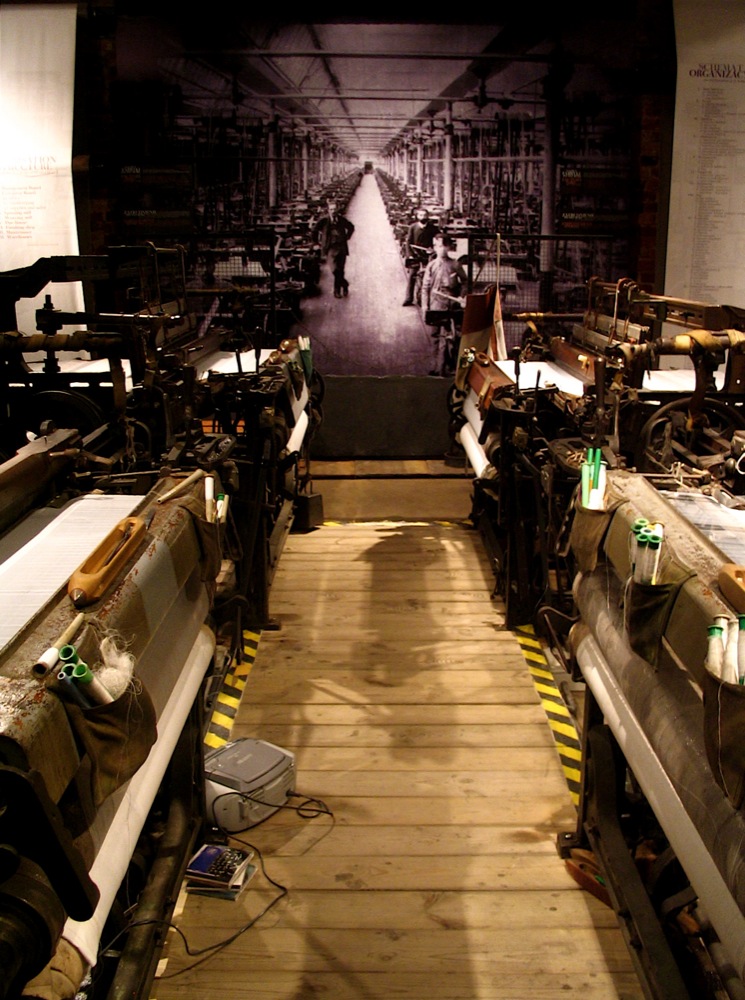
The Muzeum Fabryki is located within the historic Manufaktura complex in Łódź, Poland, housed in the former textile mill of Izrael Poznański. The museum documents the evolution of the 19th-century industrial landscape, focusing on the technological advancements of the textile industry that transformed Łódź into a major European manufacturing hub.
The exhibition space preserves the architectural character of the original factory, featuring original machinery, archival photographs, and personal accounts of the workers. It serves as a cultural anchor for the revitalized Manufaktura site, bridging the gap between the city's industrial heritage and its contemporary role as a center for commerce and culture.
Key Facts
- Materials
- Red brick, Cast iron, Glass
- Civilization
- Polish
- Accessibility
- Fully wheelchair accessible
- Date(s)
- 1872-1892
- Condition
- Restored and converted into a museum and cultural complex
- Original Function
- Textile factory
- Key Figures
- Izrael Poznański
The Rise of the Textile Empire
1872-1914Izrael Poznański established his textile empire in Łódź, creating a self-contained industrial city within a city. The complex included spinning mills, weaving sheds, and worker housing, becoming one of the largest textile operations in the Russian Empire.
War and Nationalization
1914-1989Following the turmoil of the World Wars, the factory was nationalized during the communist era. It continued to operate as a state-owned textile plant, though it faced significant decline in productivity and infrastructure maintenance toward the end of the 20th century.
Revitalization and Museum Opening
2006-presentAfter the factory ceased production, the site underwent a massive urban regeneration project. The Muzeum Fabryki was established to preserve the industrial legacy of the site, officially opening as part of the broader Manufaktura commercial and cultural complex.
Cultural Significance
The museum is central to the identity of Łódź, a city historically defined by its 'Manchester of Poland' moniker. It preserves the memory of the working-class experience and the entrepreneurial spirit that defined the city's rapid 19th-century growth.
Beyond its historical value, the museum plays a vital role in the city's post-industrial transition, demonstrating how heritage sites can be successfully repurposed to foster tourism and local engagement.
Interpretive Notes
Scholarly debates and areas of uncertainty
There is ongoing discussion among urban historians regarding the balance between commercialization and historical preservation within the Manufaktura complex. Some scholars argue that the retail-focused environment of the surrounding area risks overshadowing the authentic industrial history presented within the museum walls.
Visiting Information
Entry Rules
Open daily. Tickets can be purchased at the museum entrance. Guided tours are available for groups with advance booking.
Best Times to Visit
Weekdays are generally quieter than weekends. Visiting during the morning hours allows for a more focused experience of the machinery exhibits.
Photography
Personal photography is permitted. Professional photography or filming requires prior authorization from the museum administration.
Preservation Notes
The museum is located in a historic building; please respect all barriers and do not touch the original machinery or archival displays.
Nearby POIs
5 shownSources & Further Reading
- [1]The Industrial Heritage of Łódź — Krzysztof Stefański. Łódź University Press (2015)
- [2]Manufaktura: From Factory to Cultural Center — Anna Wróbel. Journal of Urban Regeneration (2018)
Key Facts
- Materials
- Red brick, Cast iron, Glass
- Civilization
- Polish
- Accessibility
- Fully wheelchair accessible
- Date(s)
- 1872-1892
- Condition
- Restored and converted into a museum and cultural complex
- Original Function
- Textile factory
- Key Figures
- Izrael Poznański