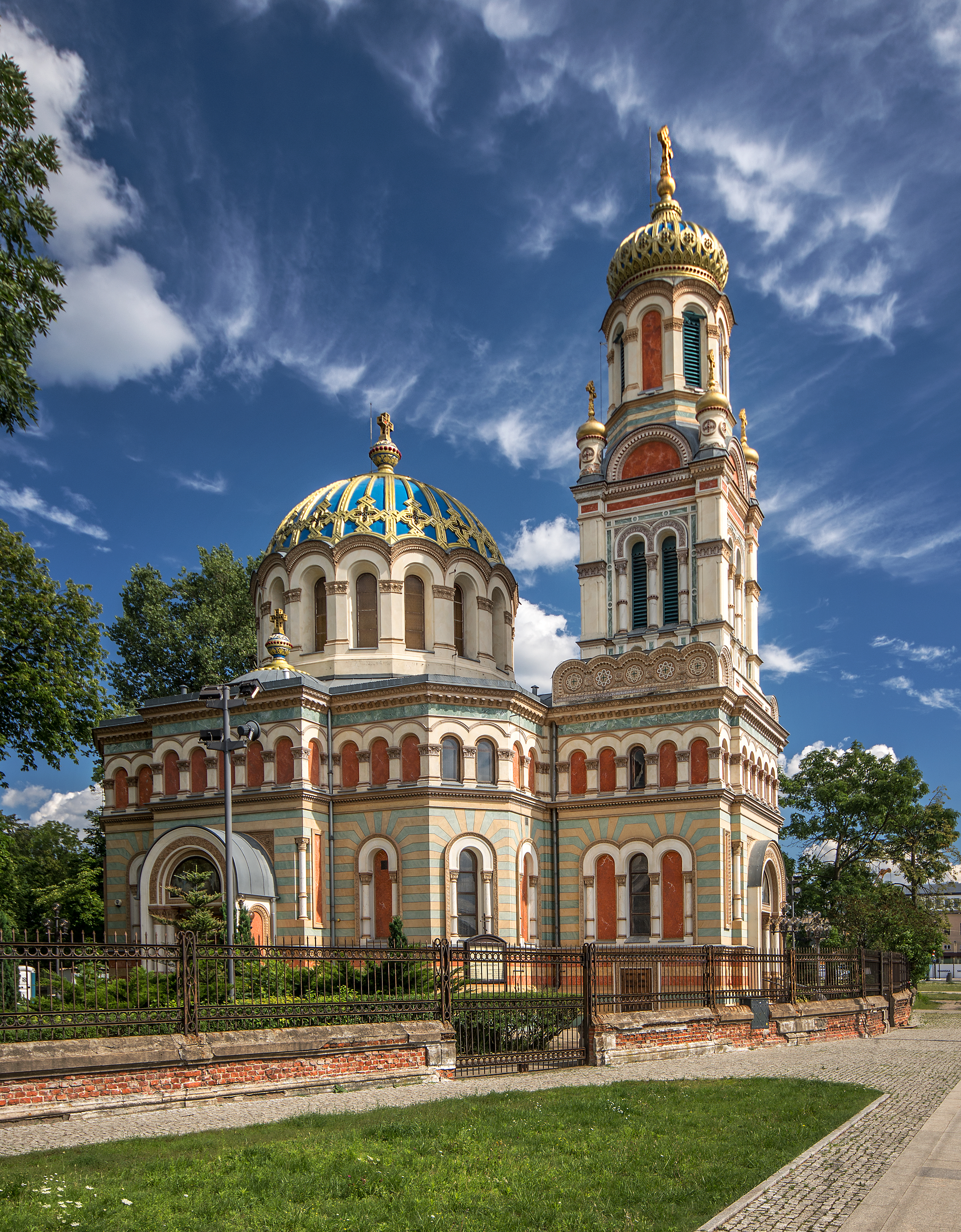
The Alexander Nevsky Cathedral in Łódź is a prominent example of Byzantine Revival architecture, constructed between 1880 and 1884. It was built to serve the growing Russian Orthodox population in the city during the period when Poland was under the control of the Russian Empire. The cathedral is noted for its ornate, colorful brickwork and its distinctive onion domes, which reflect the architectural trends favored by the Russian administration of the time.
Designed by architect Hilary Majewski, the structure features a rich interior decorated with mosaics and icons. Despite the political shifts in the region throughout the 20th century, the cathedral has remained an active place of worship and a significant landmark in the urban landscape of Łódź, representing the multicultural history of the city.
Key Facts
- Materials
- Brick, Stone, Metal
- Civilization
- Russian Empire
- Accessibility
- Ground level access
- Date(s)
- 1880-1884
- Condition
- Well-preserved, active church
- Original Function
- Russian Orthodox Cathedral
- Key Figures
- Hilary Majewski, Alexander Nevsky
Commission and Construction
1880-1884The cathedral was commissioned to serve the Russian military and administrative personnel stationed in Łódź. It was funded by local industrialists and the Russian government, reflecting the city's rapid industrial growth during the late 19th century.
Consecration and Early Years
1884-1914The church was consecrated in 1884 and dedicated to Saint Alexander Nevsky. It served as the primary religious center for the Orthodox community in the city until the outbreak of World War I.
Interwar and Post-War Period
1918-1989Following Poland's independence, the cathedral faced challenges due to the decline of the Russian population. However, it remained open for worship and underwent several maintenance projects to preserve its unique architectural features.
Modern Era
1990-PresentToday, the cathedral is recognized as a protected historical monument. It continues to serve the local Orthodox parish and is a popular site for visitors interested in the diverse religious heritage of Łódź.
Cultural Significance
The cathedral serves as a physical reminder of the Russian imperial presence in Łódź and the city's history as a melting pot of different cultures and religions. It stands as a testament to the architectural influence of the Russian Empire on Polish urban centers during the 19th century.
Interpretive Notes
Scholarly debates and areas of uncertainty
There is occasional scholarly discussion regarding the extent to which the cathedral's design was intended as a tool of Russification versus a purely functional religious space for the local Orthodox minority.
Visiting Information
Entry Rules
Open to the public for prayer and visitation. Visitors are expected to dress modestly and maintain silence. Photography is generally permitted, but should not disturb ongoing services.
Best Times to Visit
Weekday mornings or early afternoons are generally quiet. The exterior is particularly striking in late afternoon light.
Photography
Personal photography is allowed. Flash and tripods are prohibited inside the sanctuary.
Preservation Notes
The building is under legal protection as a historical monument. Visitors should avoid touching the interior icons and wall decorations.
Nearby POIs
5 shownSources & Further Reading
- [1]Łódź: A History of the City — Krzysztof Stefański. Łódź University Press (2003)
- [2]Byzantine Revival Architecture in Poland — Marek Zgórniak. Art History Review (2015)
Key Facts
- Materials
- Brick, Stone, Metal
- Civilization
- Russian Empire
- Accessibility
- Ground level access
- Date(s)
- 1880-1884
- Condition
- Well-preserved, active church
- Original Function
- Russian Orthodox Cathedral
- Key Figures
- Hilary Majewski, Alexander Nevsky