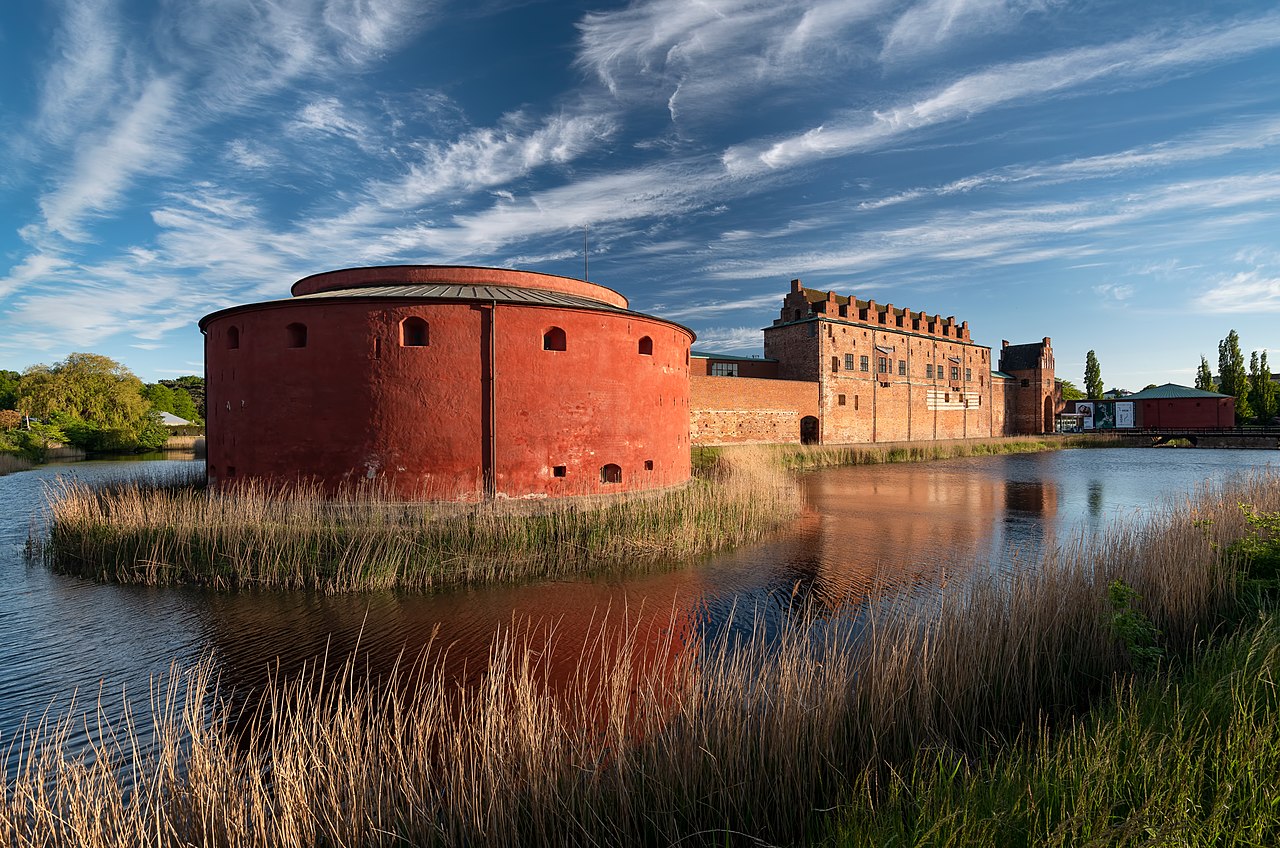
Malmö Castle, known locally as Malmöhus, is a historic fortification located in Malmö, Sweden. Originally founded in 1434 by King Eric of Pomerania, the current structure was largely rebuilt between 1526 and 1539 under the direction of King Christian III of Denmark. It stands as the oldest preserved Renaissance castle in the Nordic region, reflecting the strategic importance of the Oresund region during the 16th century.
Throughout its history, the castle has served as a royal residence, a defensive stronghold, and a state prison. Today, the site functions as a cultural hub, housing the Malmö Art Museum and the Malmö Museum, which features exhibits on natural history, technology, and local maritime heritage.
Key Facts
- Materials
- Brick, Stone
- Civilization
- Danish-Swedish
- Accessibility
- Wheelchair accessible in most exhibition areas
- Date(s)
- 1526-1539
- Condition
- Well-preserved, active museum
- Original Function
- Fortress and Royal Residence
- Key Figures
- Eric of Pomerania, Christian III of Denmark, Francis Bothwell
Foundations and Early Defense
1434The original citadel was commissioned by King Eric of Pomerania to control the entrance to the Baltic Sea and protect the lucrative herring trade in the Oresund.
Renaissance Reconstruction
1526-1539King Christian III of Denmark ordered the construction of the current fortress, incorporating modern defensive features such as bastions and moats to withstand artillery fire.
Swedish Acquisition
1658Following the Treaty of Roskilde, the castle and the surrounding province of Scania were ceded from Denmark to Sweden, changing the strategic focus of the fortification.
Prison and Military Use
18th-19th centuryThe castle served as a state prison for high-profile political prisoners and later as a military barracks, which led to significant interior modifications.
Museum Transformation
20th century - presentIn the 1930s, the castle underwent extensive restoration to remove military additions and restore its Renaissance character, eventually opening as a public museum complex.
Cultural Significance
Malmö Castle serves as a primary symbol of the region's complex history as a borderland between Denmark and Sweden. Its transition from a site of military oppression and incarceration to a center for art and education reflects the broader social evolution of the city of Malmö.
Interpretive Notes
Scholarly debates and areas of uncertainty
There is ongoing discussion regarding the extent of the original 15th-century foundations that remain beneath the 16th-century Renaissance shell, as archaeological access is limited by the current museum infrastructure.
Visiting Information
Entry Rules
Open daily. Tickets are required for entry to the museum complex. No specific dress code is enforced.
Best Times to Visit
Weekdays during the shoulder seasons (spring and autumn) to avoid peak tourist traffic and school groups.
Photography
Personal photography is permitted in most areas without flash. Professional photography requires prior authorization from the museum administration.
Preservation Notes
The site is a protected historical monument. Visitors are requested to refrain from touching the historic masonry and to follow all posted signage regarding artifact protection.
Nearby POIs
11 shownSources & Further Reading
- [1]Malmöhus: Från fästning till museum — E. M. Sjöberg. Malmö Museer Press (2012)
- [2]The Renaissance in the North — J. H. Jensen. Nordic Academic Press (2015)
Key Facts
- Materials
- Brick, Stone
- Civilization
- Danish-Swedish
- Accessibility
- Wheelchair accessible in most exhibition areas
- Date(s)
- 1526-1539
- Condition
- Well-preserved, active museum
- Original Function
- Fortress and Royal Residence
- Key Figures
- Eric of Pomerania, Christian III of Denmark, Francis Bothwell