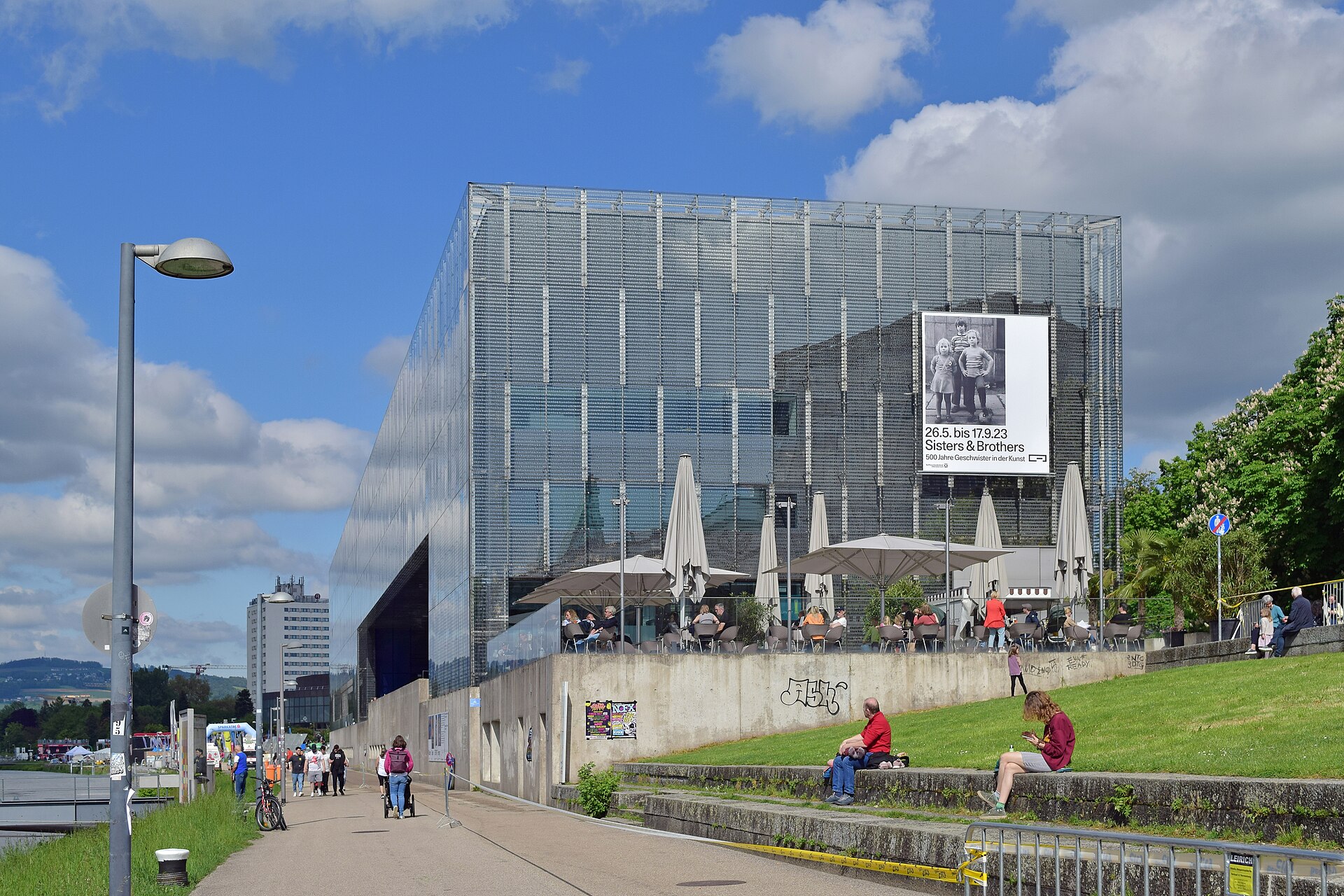
The Lentos Kunstmuseum is a prominent contemporary art institution located on the banks of the Danube in Linz, Austria. Designed by the Swiss architectural firm Weber + Hofer, the building is characterized by its transparent glass facade, which is illuminated at night, creating a distinct visual landmark along the riverfront.
The museum's collection focuses on 19th-century, modern, and contemporary art. It holds significant works by Austrian masters such as Gustav Klimt and Egon Schiele, alongside an extensive collection of international contemporary art, including pieces by Andy Warhol, Valie Export, and Keith Haring.
Key Facts
- Materials
- Glass, Steel, Concrete
- Civilization
- Austrian
- Accessibility
- Fully wheelchair accessible
- Date(s)
- 2003
- Condition
- Active
- Original Function
- Art Museum
- Key Figures
- Weber + Hofer, Gustav Klimt, Egon Schiele, Valie Export
Establishment and Architecture
2003The Lentos Kunstmuseum was opened in 2003 as the successor to the Neue Galerie der Stadt Linz. The building was designed to replace the older facility, providing a modern space capable of housing larger exhibitions and a growing permanent collection.
Collection Development
2003-PresentSince its opening, the museum has expanded its holdings through acquisitions and donations. It has become a central hub for the study of Austrian Expressionism and international pop art, while maintaining a strong focus on contemporary media art.
Cultural Significance
The Lentos Kunstmuseum serves as a cornerstone of the cultural landscape in Linz, contributing to the city's identity as a center for art and technology. Its location on the Danube and its iconic night-time illumination have made it a symbol of the city's urban renewal and commitment to modern architecture.
Interpretive Notes
Scholarly debates and areas of uncertainty
Discussions regarding the museum often center on the balance between its role as a repository for historical Austrian art and its mission to showcase experimental contemporary works. Additionally, the architectural impact of the glass structure on the historic riverfront has been a subject of ongoing urban planning discourse.
Visiting Information
Entry Rules
Open Tuesday through Sunday. Tickets can be purchased on-site. Visitors are expected to follow standard museum conduct, including no food or drink in exhibition galleries.
Best Times to Visit
Weekday mornings are generally quieter. The museum is particularly notable at dusk when the glass facade is illuminated.
Photography
Non-commercial photography without flash is permitted in most galleries. Specific temporary exhibitions may have restricted photography policies.
Preservation Notes
Maintain distance from artworks. Large bags and umbrellas must be stored in lockers provided at the entrance.
Nearby POIs
3 shownSources & Further Reading
- [1]Lentos Kunstmuseum Linz: Architecture and Collection — Stella Rollig. Hatje Cantz (2003)
- [2]Museums of Austria — Austrian Federal Ministry for Arts, Culture, the Civil Service and Sport. BMKÖS (2021)View
Key Facts
- Materials
- Glass, Steel, Concrete
- Civilization
- Austrian
- Accessibility
- Fully wheelchair accessible
- Date(s)
- 2003
- Condition
- Active
- Original Function
- Art Museum
- Key Figures
- Weber + Hofer, Gustav Klimt, Egon Schiele, Valie Export