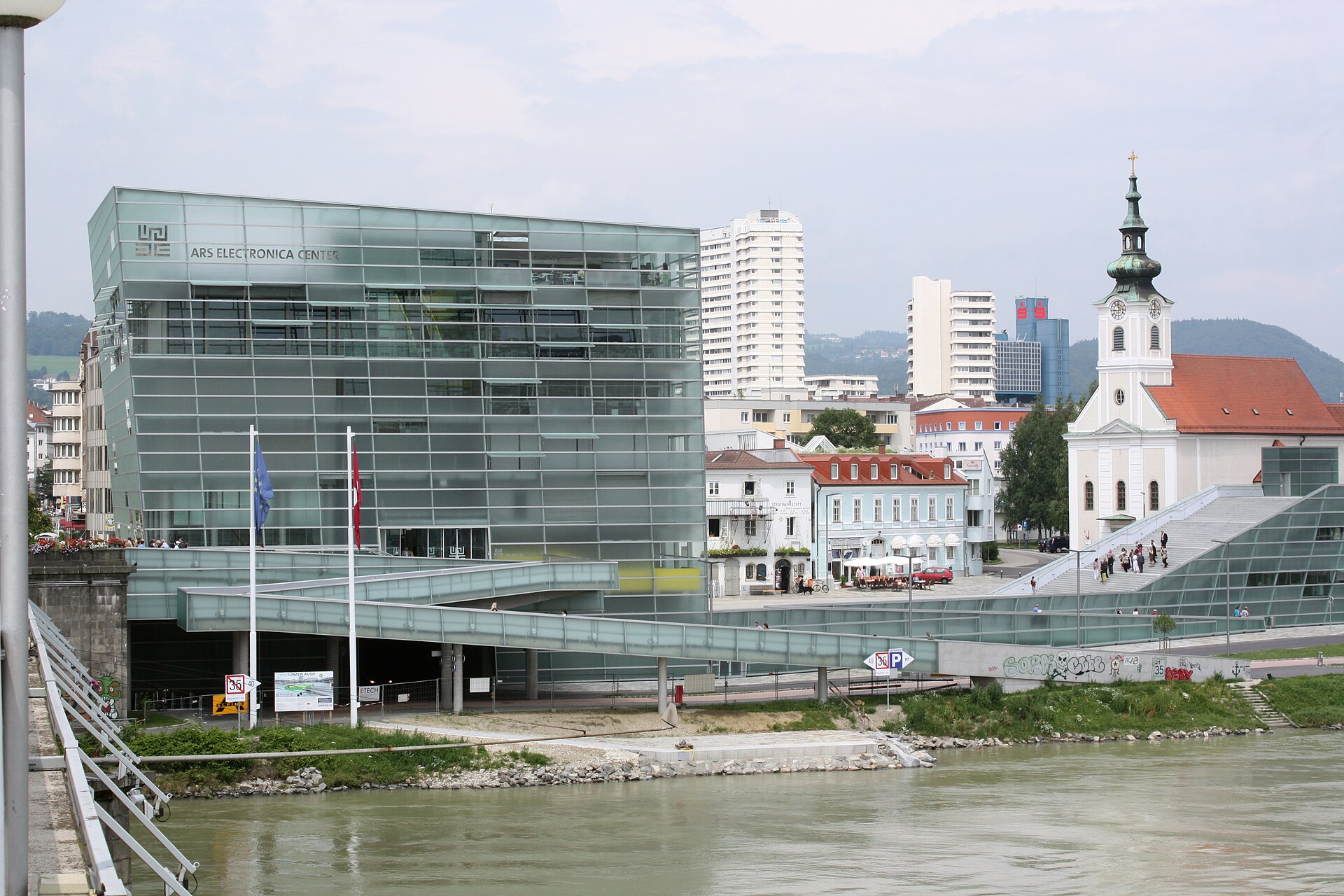
Ars Electronica is a cultural, educational, and scientific institute based in Linz, Austria, dedicated to the intersection of art, technology, and society. Founded in 1979, it serves as a global hub for new media art, digital culture, and technological innovation, operating through a combination of an annual festival, a research laboratory, and a dedicated museum facility known as the Ars Electronica Center.
The institution is widely recognized for its role in fostering interdisciplinary dialogue and showcasing experimental works that challenge traditional boundaries between creative expression and scientific advancement. Through its various programs, including the Prix Ars Electronica, the center facilitates a continuous exchange between artists, engineers, and the public, positioning Linz as a significant node in the international digital arts landscape.
Key Facts
- Materials
- Glass, Steel, LED facade
- Civilization
- Contemporary Austrian
- Accessibility
- Fully wheelchair accessible
- Date(s)
- 2009 (current building)
- Condition
- Active
- Original Function
- Museum of the Future
- Key Figures
- Hannes Leopoldseder, Christine Schöpf, Gerfried Stocker
Founding and Early Years
1979Ars Electronica was established in 1979 by Hannes Leopoldseder, Herbert W. Franke, and Hubert Bognermayr as a festival for art, technology, and society. It was designed to explore the impact of the digital revolution on human culture.
Expansion and Institutionalization
1980s-1990sThe introduction of the Prix Ars Electronica in 1987 solidified the organization's role as a global authority in digital arts. During this period, the institute expanded its scope to include research initiatives and permanent exhibition spaces.
The Ars Electronica Center
1996-2009The first dedicated museum building opened in 1996. In 2009, coinciding with Linz's designation as a European Capital of Culture, a new, expanded facility was inaugurated, featuring a distinctive LED-clad facade.
Modern Global Impact
2010-PresentThe center continues to evolve as a 'Museum of the Future,' focusing on themes such as artificial intelligence, biotechnology, and climate change, while maintaining its status as a premier venue for international media art discourse.
Cultural Significance
Ars Electronica has played a pivotal role in the transformation of Linz from an industrial city into a center for digital culture and creative innovation. It serves as a critical platform for the 'Linz Model,' which emphasizes the integration of cultural development into urban planning and economic strategy.
Globally, the institution is a primary reference point for media art, influencing how museums and galleries curate technology-based works. Its annual festival and awards program are considered the 'Oscars' of the digital arts world, setting standards for artistic excellence in the digital age.
Interpretive Notes
Scholarly debates and areas of uncertainty
Debates often center on the tension between the commercialization of digital art and the institute's original mission of critical social inquiry. Scholars also discuss the ethical implications of the technologies showcased, particularly regarding the role of AI and surveillance in the works exhibited.
Visiting Information
Entry Rules
Open Tuesday through Sunday. Tickets can be purchased online or at the entrance. Guided tours are available in German and English.
Best Times to Visit
During the annual Ars Electronica Festival in September for the most comprehensive experience, or weekday mornings for a quieter visit to the permanent exhibitions.
Photography
Personal photography is permitted for non-commercial use. Flash photography and tripods are prohibited in exhibition galleries.
Preservation Notes
Visitors are requested to follow instructions regarding interactive installations, as many involve sensitive electronic components. Do not touch screens or hardware unless explicitly indicated.
Nearby POIs
3 shownSources & Further Reading
- [1]
- [2]The Digital Turn in Art — Christiane Paul. Thames & Hudson (2015)
Key Facts
- Materials
- Glass, Steel, LED facade
- Civilization
- Contemporary Austrian
- Accessibility
- Fully wheelchair accessible
- Date(s)
- 2009 (current building)
- Condition
- Active
- Original Function
- Museum of the Future
- Key Figures
- Hannes Leopoldseder, Christine Schöpf, Gerfried Stocker