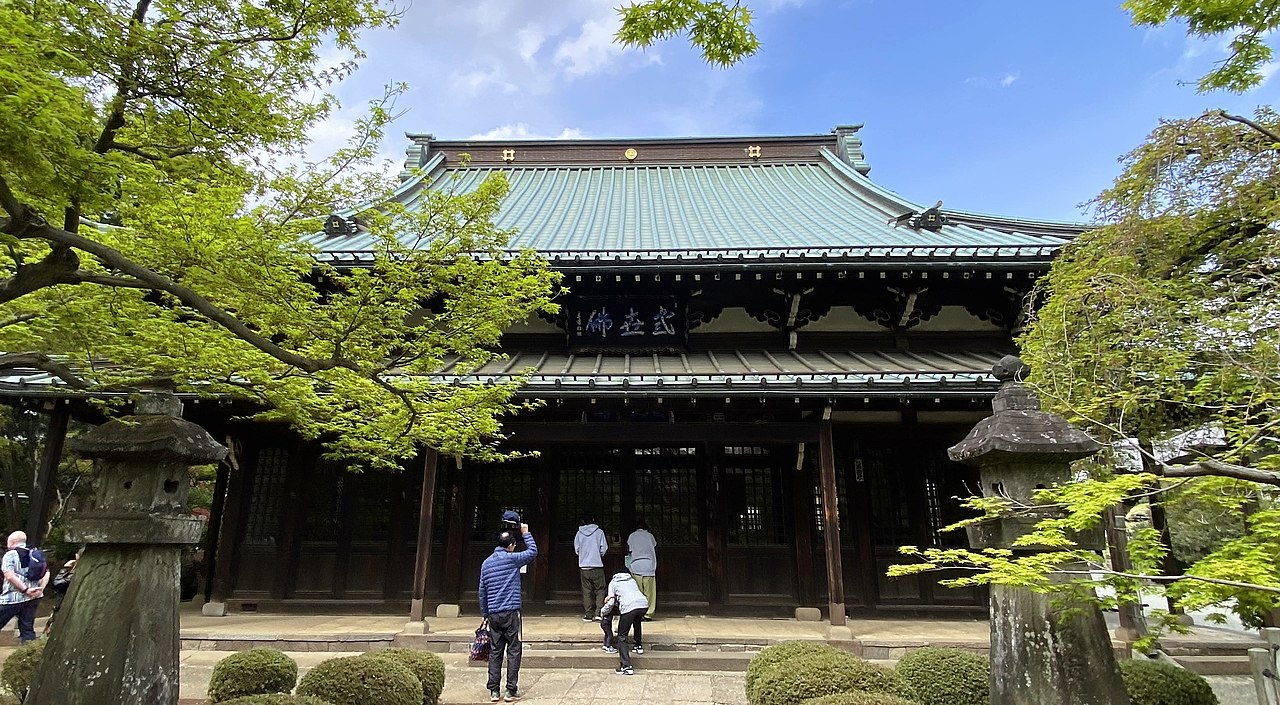
Gōtoku-ji is a Buddhist temple located in the Setagaya ward of Tokyo, Japan. Originally founded in 1480 as Kotoku-in, it was later renamed and designated as the family temple of the Ii clan, the powerful daimyo lords of the Hikone Domain during the Edo period. The temple grounds house the graves of several prominent members of the Ii family, including the influential statesman Ii Naosuke.
The site is widely recognized today as the legendary birthplace of the maneki-neko, or 'beckoning cat' figurine. According to local folklore, a cat belonging to the temple's priest beckoned the feudal lord Ii Naotaka into the temple, saving him from a lightning strike during a storm. This event led to the cat being honored as a guardian spirit, resulting in the thousands of cat statues currently displayed by visitors throughout the temple precincts.
Key Facts
- Materials
- Wood, Tile, Stone
- Civilization
- Japanese
- Accessibility
- Ground level access, gravel paths
- Date(s)
- 1480
- Condition
- Active religious site
- Original Function
- Buddhist temple
- Key Figures
- Ii Naotaka, Ii Naosuke
Founding and Early Years
1480The temple was established as Kotoku-in by the monk Kisen Shoden. It served as a modest temple for the local community during the late Muromachi period.
Association with the Ii Clan
1633Following the legend of the beckoning cat, Ii Naotaka adopted the temple as the family temple of the Ii clan. It was renamed Gōtoku-ji in honor of Naotaka's posthumous name.
Edo Period Significance
1603-1868The temple flourished under the patronage of the Ii clan. It became a site of significant historical importance, housing the family cemetery and serving as a center for Buddhist practice in the region.
Modern Era
19th century - presentIn the modern era, Gōtoku-ji has gained international fame for its unique collection of maneki-neko statues. It remains an active temple while serving as a popular cultural destination for visitors interested in Japanese folklore.
Cultural Significance
Gōtoku-ji holds a unique place in Japanese popular culture as the spiritual home of the maneki-neko. The cat has transcended its local religious origins to become a global symbol of luck and prosperity, with the temple serving as the primary site of pilgrimage for those seeking to pay respects to the legend.
Beyond the folklore, the temple is historically significant for its connection to the Ii clan, who played a pivotal role in the political stability of the Tokugawa Shogunate. The preservation of the Ii family graves provides a tangible link to the feudal history of the Edo period.
Interpretive Notes
Scholarly debates and areas of uncertainty
There is ongoing discussion among folklorists regarding the origins of the maneki-neko legend, as several other temples in Japan also claim to be the birthplace of the icon. While Gōtoku-ji is the most famous, the historical veracity of the specific encounter between Ii Naotaka and the cat remains a subject of cultural interpretation rather than archaeological fact.
Visiting Information
Entry Rules
Open daily from 6:00 to 18:00. Entry to the temple grounds is free. Visitors are expected to maintain a quiet and respectful demeanor as it is an active place of worship.
Best Times to Visit
Early morning on weekdays to avoid crowds. The temple is particularly popular during the spring cherry blossom season and autumn foliage, though it remains accessible year-round.
Photography
Personal photography is permitted in the temple grounds. Please refrain from using flash or tripods, and do not photograph worshippers or private religious ceremonies.
Preservation Notes
The maneki-neko statues are offerings left by visitors; please do not touch or rearrange them. Stay on designated paths and respect the cemetery area, which is a protected historical site.
Nearby POIs
11 shownSources & Further Reading
- [1]The Maneki-neko: A History of the Beckoning Cat — Alan Scott Pate. Japanese Folklore Studies (2011)
- [2]Edo Period Temples of Setagaya — Tokyo Metropolitan Board of Education. Cultural Heritage Series (2018)
Key Facts
- Materials
- Wood, Tile, Stone
- Civilization
- Japanese
- Accessibility
- Ground level access, gravel paths
- Date(s)
- 1480
- Condition
- Active religious site
- Original Function
- Buddhist temple
- Key Figures
- Ii Naotaka, Ii Naosuke