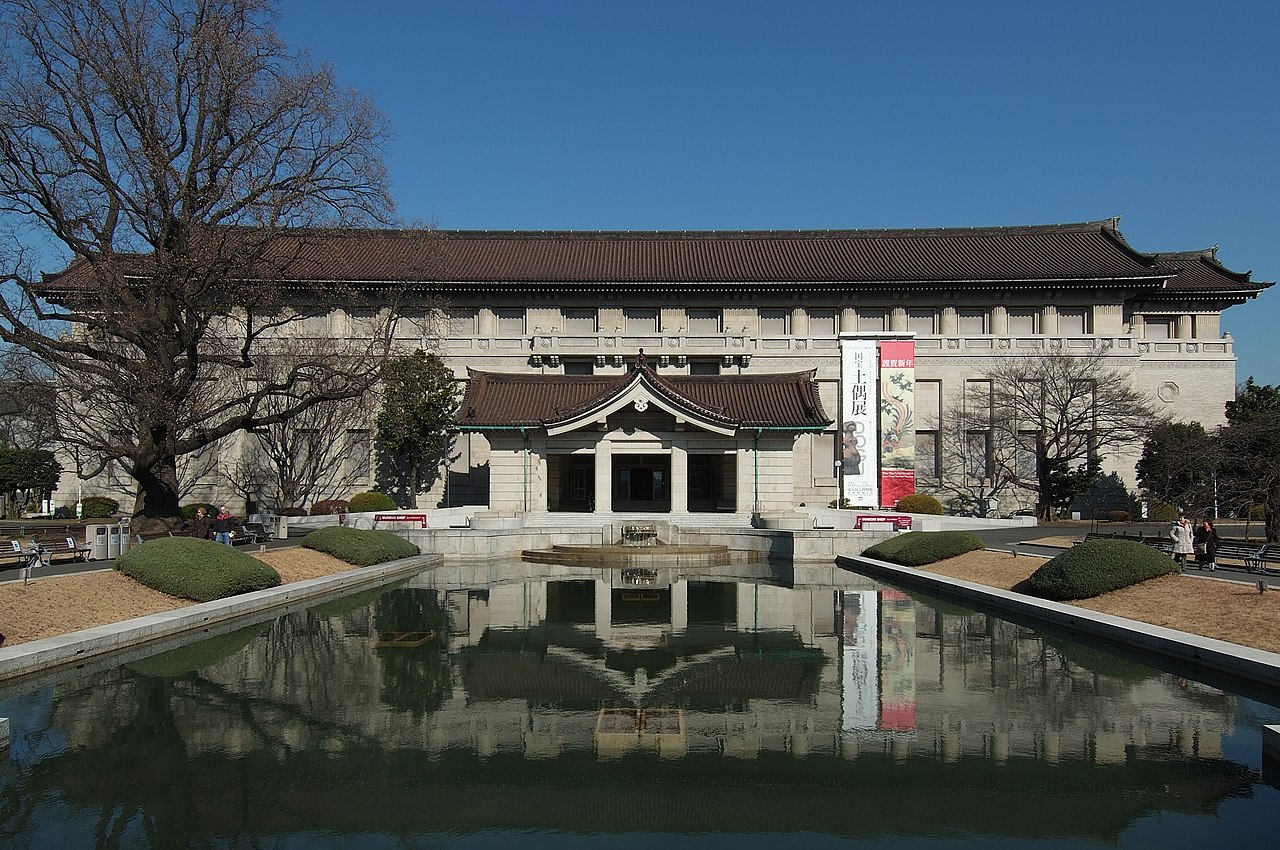
The Tokyo National Museum, located within Ueno Park, is the oldest and largest national museum in Japan. Established in 1872, it serves as the primary repository for Japanese art and archaeological artifacts, housing a collection that exceeds 110,000 items. The museum complex consists of several specialized buildings, including the Honkan (Japanese Gallery), the Heiseikan, and the Gallery of Horyuji Treasures, which collectively preserve a vast timeline of Japanese cultural history.
The institution functions as a center for research and conservation, maintaining 89 designated National Treasures and 648 Important Cultural Properties. Its holdings span from prehistoric Jomon pottery to ukiyo-e woodblock prints and samurai armor, providing a comprehensive overview of the evolution of Japanese aesthetics and craftsmanship through the centuries.
Key Facts
- Materials
- Reinforced concrete, Steel, Glass
- Civilization
- Japanese
- Accessibility
- Fully wheelchair accessible with elevators and ramps
- Date(s)
- 1872
- Condition
- Active, well-maintained
- Original Function
- Public museum and exhibition space
- Key Figures
- Machida Hisanari, Josiah Conder, Taniguchi Yoshio
Founding and Early Years
1872The museum was founded following the first public exhibition held at the Yushima Seido in 1872. It was initially established under the Ministry of Education to preserve artifacts collected during the early Meiji period's modernization efforts.
Consolidation and Expansion
1882-1938The museum moved to its current location in Ueno Park in 1882. The Honkan, designed by Jin Watanabe in the 'Imperial Crown Style,' was completed in 1938 to replace the original building which had been damaged in the 1923 Great Kanto Earthquake.
Post-War Development
1947-1999Following World War II, the institution was renamed the Tokyo National Museum. The late 20th century saw significant expansion, including the opening of the Heiseikan in 1999 to house archaeological artifacts and special exhibitions.
Cultural Significance
The Tokyo National Museum is the definitive institution for the study and appreciation of Japanese cultural heritage. It plays a critical role in the preservation of national identity, acting as the primary guardian of objects that define the historical and artistic narrative of the Japanese archipelago.
Beyond its role as a repository, the museum serves as a bridge between historical scholarship and public education. It is a central site for the study of Japanese art history, influencing how both domestic and international audiences perceive the development of Japanese culture from antiquity to the modern era.
Interpretive Notes
Scholarly debates and areas of uncertainty
Debates often center on the provenance of specific artifacts acquired during the Meiji period and the ethical considerations regarding the repatriation of items from neighboring Asian countries. Additionally, there is ongoing academic discussion regarding the museum's role in constructing a singular 'Japanese' national identity through its curation of diverse regional and historical artifacts.
Visiting Information
Entry Rules
Open Tuesday to Sunday. Tickets can be purchased online or at the entrance. Visitors must follow standard museum etiquette, including no flash photography and no food or drink in the galleries.
Best Times to Visit
Weekday mornings are recommended to avoid weekend crowds. The museum grounds are particularly significant during the cherry blossom season in late March and early April.
Photography
Personal photography is permitted in most galleries without flash or tripods. Some special exhibitions prohibit photography entirely; signage is posted at the entrance of these galleries.
Preservation Notes
Maintain a respectful distance from all artifacts. Do not touch display cases or exhibits. Large bags should be stored in lockers provided at the entrance.
Nearby POIs
11 shownSources & Further Reading
- [1]
- [2]The Making of Modern Japan — Marius B. Jansen. Harvard University Press (2002)
Key Facts
- Materials
- Reinforced concrete, Steel, Glass
- Civilization
- Japanese
- Accessibility
- Fully wheelchair accessible with elevators and ramps
- Date(s)
- 1872
- Condition
- Active, well-maintained
- Original Function
- Public museum and exhibition space
- Key Figures
- Machida Hisanari, Josiah Conder, Taniguchi Yoshio