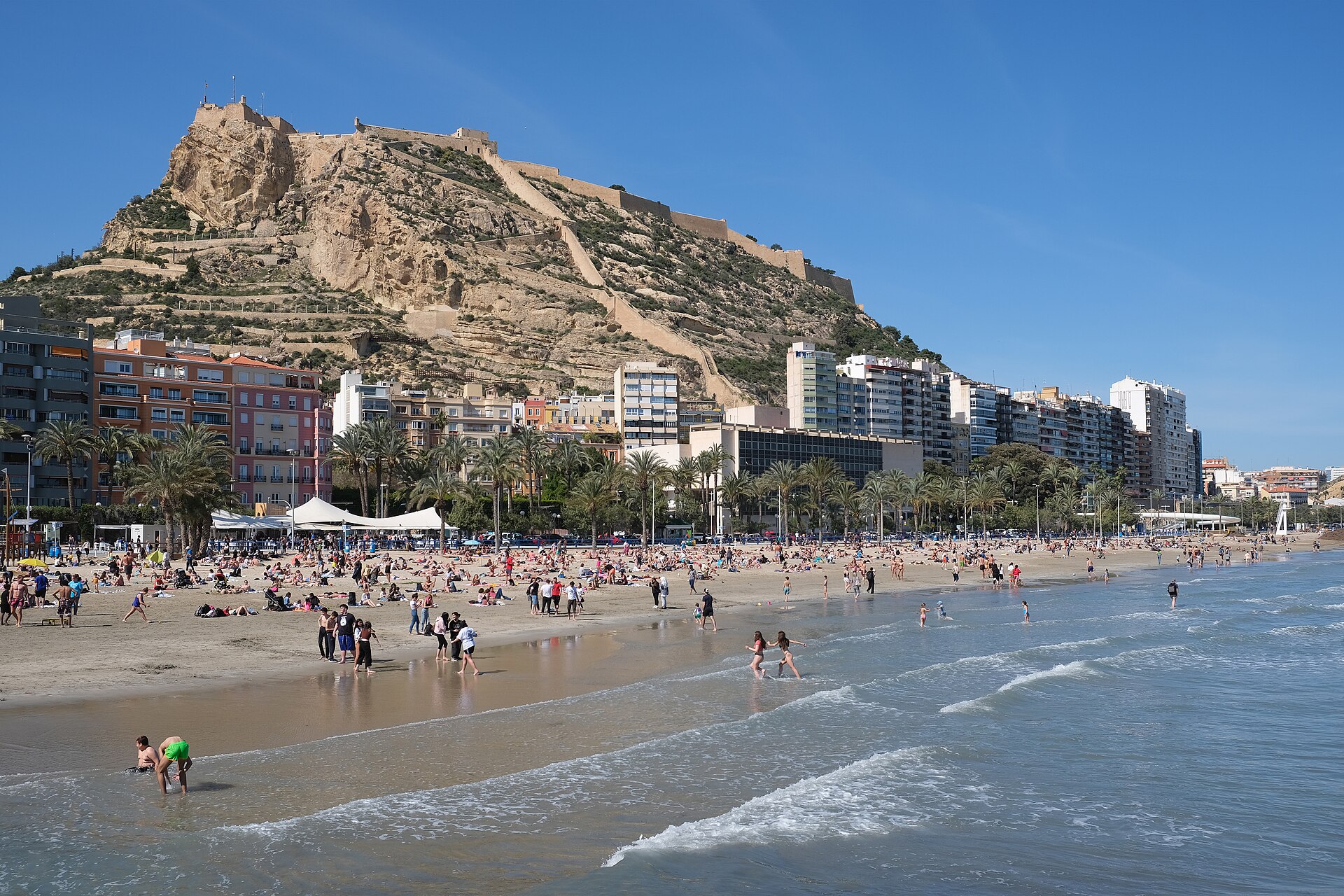
The Castillo de Santa Bárbara is a fortification situated on Mount Benacantil in Alicante, Spain. Overlooking the Mediterranean Sea, the site has served as a strategic defensive position for various civilizations due to its commanding view of the coastline and the surrounding plains.
The fortress is organized into three distinct levels representing different historical phases of construction. The highest level, known as 'La Torreta,' contains the oldest remnants, while the intermediate and lower levels feature structures added during the 16th and 18th centuries to modernize the castle's defensive capabilities against naval threats.
Key Facts
- Materials
- Limestone, Stone masonry, Brick
- Civilization
- Islamic (Al-Andalus), Christian Kingdom of Castile
- Accessibility
- Accessible via elevator from the city base; steep walking paths available
- Date(s)
- 9th century CE
- Condition
- Restored and open to the public
- Original Function
- Defensive fortress
- Key Figures
- Alfonso X of Castile, Philip II of Spain
Islamic Origins
9th-13th centuryThe castle was established during the period of Muslim rule in the Iberian Peninsula. The name 'Benacantil' is derived from the Arabic 'Banu-l-Qatil' (Son of the Precipice), reflecting the site's rugged topography.
Christian Conquest
1248On December 4, 1248, the feast day of Saint Barbara, the castle was captured from the Moors by the forces of Alfonso of Castile, who would later become King Alfonso X. The fortress was subsequently renamed in honor of the saint.
Expansion and Modernization
16th-18th centurySignificant structural expansions occurred during the reign of Philip II, who commissioned the construction of the intermediate levels. Further modifications were made in the 18th century to reinforce the walls against artillery fire.
Modern Era
20th century - presentAfter serving as a prison during the Spanish Civil War, the castle was opened to the public in 1963. It now functions as a cultural venue and museum, hosting exhibitions and historical displays.
Cultural Significance
The castle is the primary landmark of Alicante and a symbol of the city's historical role as a Mediterranean port. It represents the layered history of the region, transitioning from an Islamic stronghold to a Christian defensive bastion, and finally to a public heritage site that defines the city's skyline.
Interpretive Notes
Scholarly debates and areas of uncertainty
There is ongoing discussion regarding the extent of the original 9th-century Islamic foundations, as many of the visible structures were heavily modified or rebuilt during the 16th-century expansion, making precise archaeological dating of the lower layers difficult.
Visiting Information
Entry Rules
Open daily. Entry is free. Access to the summit is possible via a paid elevator service located near Postiguet Beach or by walking the designated trails.
Best Times to Visit
Early morning or late afternoon to avoid peak heat and to capture the best light for photography over the bay.
Photography
Personal photography is permitted throughout the site. Commercial filming requires prior authorization from the Alicante City Council.
Preservation Notes
The site is subject to ongoing maintenance due to its exposed position. Visitors are requested to stay within marked areas and refrain from climbing on the historical masonry.
Nearby POIs
1 shownSources & Further Reading
- [1]Castillo de Santa Bárbara: Historia y Arquitectura — Alicante City Council. Ayuntamiento de Alicante (2020)View
- [2]The Fortifications of the Spanish Mediterranean — J.L. Casanova. Editorial Patrimonio (2015)
Key Facts
- Materials
- Limestone, Stone masonry, Brick
- Civilization
- Islamic (Al-Andalus), Christian Kingdom of Castile
- Accessibility
- Accessible via elevator from the city base; steep walking paths available
- Date(s)
- 9th century CE
- Condition
- Restored and open to the public
- Original Function
- Defensive fortress
- Key Figures
- Alfonso X of Castile, Philip II of Spain