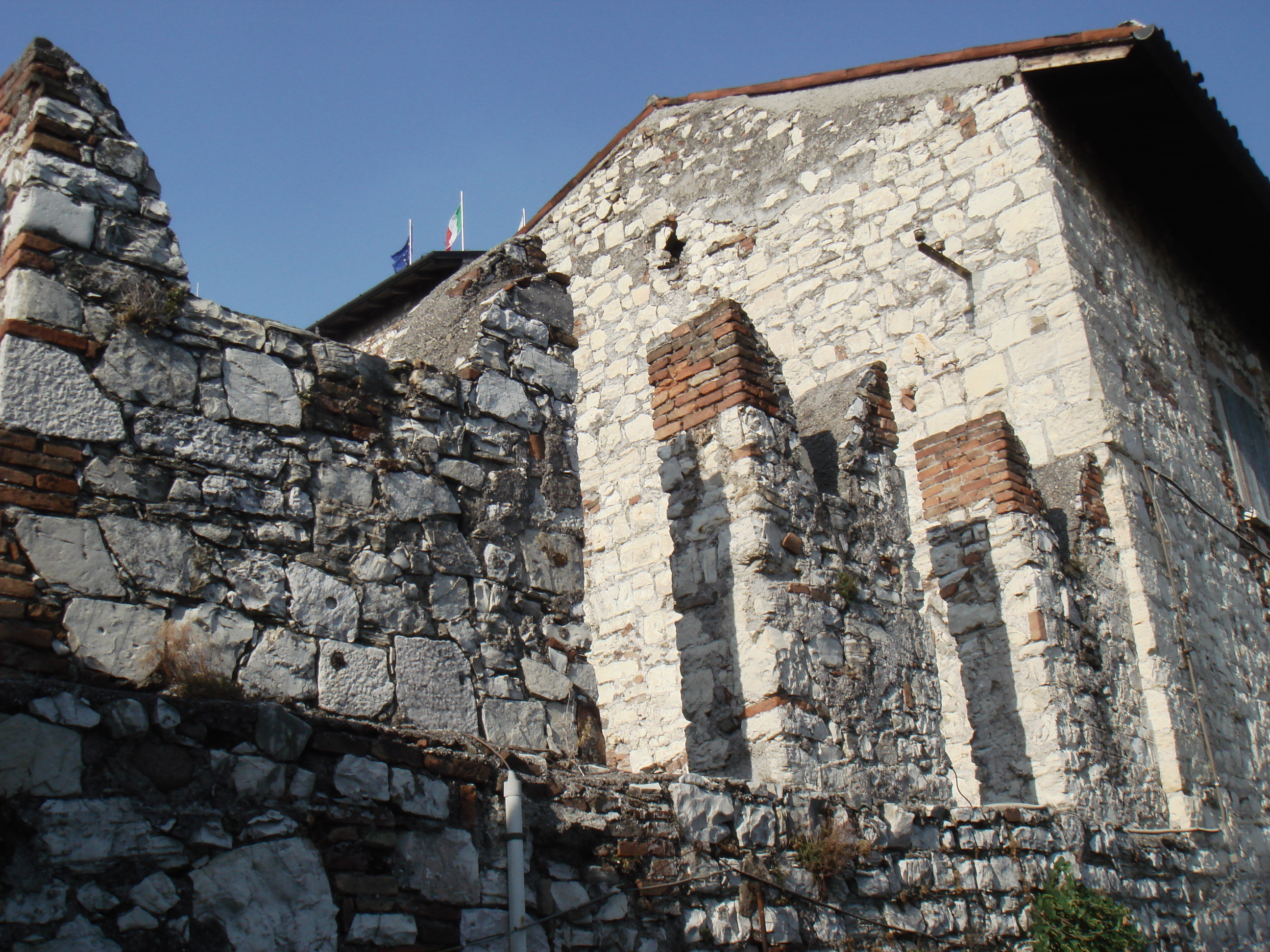
The Castello di Brescia is a large fortified complex situated on the Cidneo Hill, overlooking the historic center of Brescia. Its strategic position has made it a focal point of regional defense since the Roman period, though the current structure primarily reflects the extensive fortifications built during the Venetian rule in the 15th and 16th centuries.
The complex features massive bastions, a fortified gatehouse, and a central keep. Today, it serves as a public park and cultural site, housing the Luigi Marzoli Arms Museum, which holds one of Europe's most significant collections of historical weaponry, and the Museum of the Risorgimento, dedicated to the Italian unification movement.
Key Facts
- Materials
- Stone, Brick
- Civilization
- Italian (Venetian/Visconti)
- Accessibility
- Accessible via walking paths; steep incline
- Date(s)
- 11th - 16th century
- Condition
- Well-preserved, public park and museum site
- Original Function
- Military fortification
- Key Figures
- Pandolfo III Malatesta, Visconti family, Luigi Marzoli
Early Foundations
Roman - 10th centuryThe Cidneo Hill has been occupied since the Roman era, with archaeological evidence of a temple dedicated to the god Celt. During the early Middle Ages, the site was fortified to protect the growing city below.
Visconti and Venetian Expansion
14th - 16th centuryThe Visconti family of Milan significantly expanded the castle in the 14th century. Following the Venetian conquest in the 15th century, the fortress was modernized with advanced bastions and defensive walls to withstand the introduction of gunpowder artillery.
Austrian Rule and Risorgimento
19th centuryDuring the Austrian occupation, the castle served as a prison and barracks. It became a site of intense conflict during the 'Ten Days of Brescia' in 1849, an uprising against Austrian rule that remains a pivotal moment in the city's history.
Modern Transformation
20th century - presentIn the 20th century, the castle was converted into a public space. The Luigi Marzoli Arms Museum was established in the keep, and the grounds were landscaped into a park, preserving the site as a landmark of Brescian heritage.
Cultural Significance
The Castello di Brescia is the primary symbol of the city, representing its long history of resistance and strategic importance. It serves as a bridge between the city's medieval past and its modern identity, functioning as both a recreational space for locals and a repository for military history.
Interpretive Notes
Scholarly debates and areas of uncertainty
The exact extent of the Roman-era structures beneath the medieval foundations remains a subject of ongoing archaeological investigation, as modern fortifications have largely obscured earlier layers.
Visiting Information
Entry Rules
The castle grounds are open to the public daily. Museums require a separate ticket for entry. Opening hours vary by season; please check the official municipal website for current schedules.
Best Times to Visit
Spring and autumn for pleasant walking conditions on the hill. Early morning visits offer the best light for photography of the city skyline.
Photography
Personal photography is permitted in the outdoor areas. Flash photography is prohibited inside the museum galleries.
Preservation Notes
The site is a protected historical monument. Visitors are requested to stay on designated paths and refrain from climbing on the ancient masonry.
Nearby POIs
1 shownSources & Further Reading
- [1]Brescia: Guida Storica — Antonio Fappani. Fondazione Civiltà Bresciana (1995)
- [2]Il Castello di Brescia: Storia e Architettura — AA.VV.. Comune di Brescia (2010)
Key Facts
- Materials
- Stone, Brick
- Civilization
- Italian (Venetian/Visconti)
- Accessibility
- Accessible via walking paths; steep incline
- Date(s)
- 11th - 16th century
- Condition
- Well-preserved, public park and museum site
- Original Function
- Military fortification
- Key Figures
- Pandolfo III Malatesta, Visconti family, Luigi Marzoli