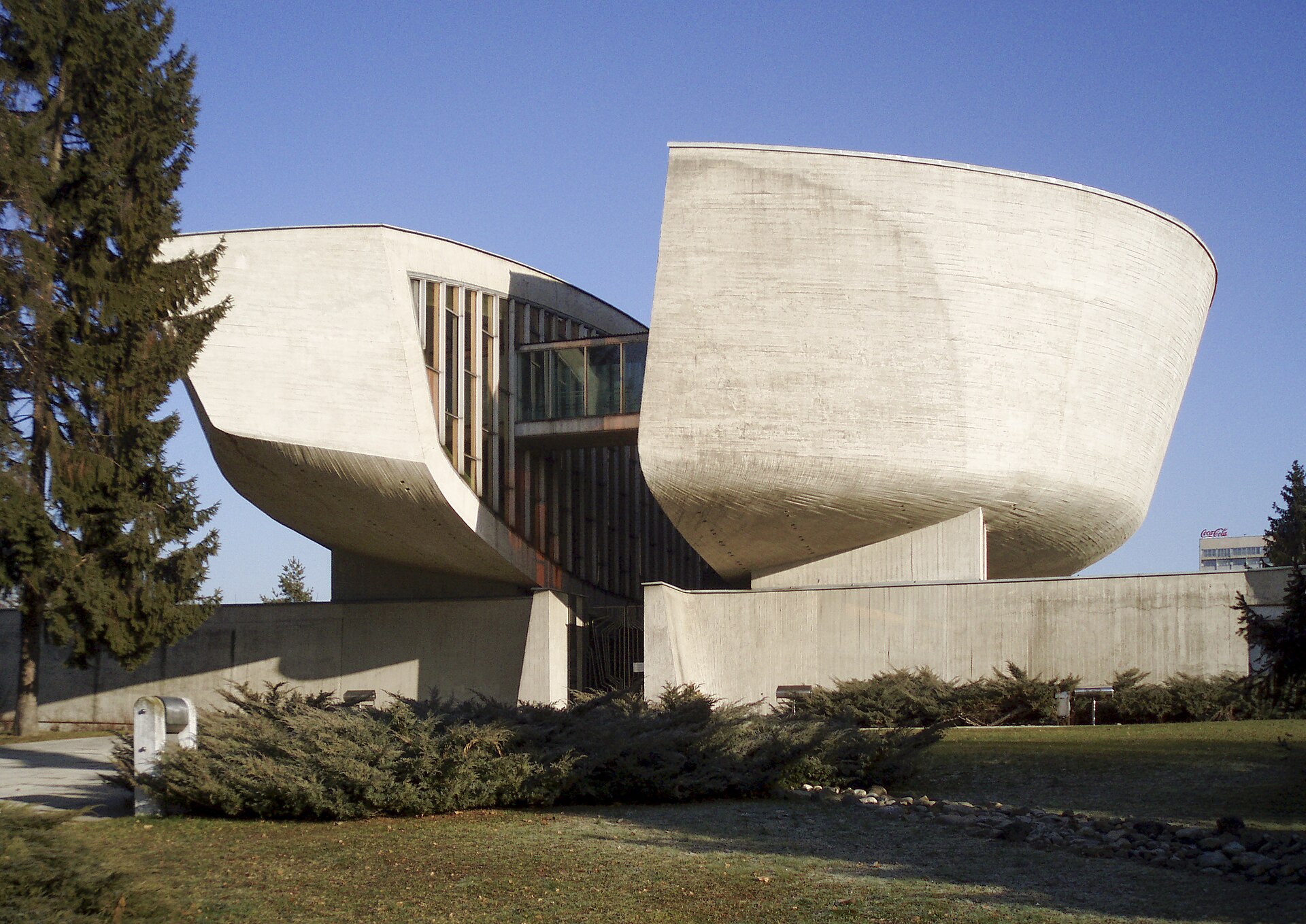
The Museum of the Slovak National Uprising (Múzeum Slovenského národného povstania) is a national cultural institution located in Banská Bystrica, dedicated to documenting the history of the Slovak resistance against Nazi Germany during World War II. The museum serves as a memorial to the 1944 Slovak National Uprising, a pivotal armed insurrection that sought to overthrow the collaborationist government and restore a democratic state.
The museum's distinctive brutalist architecture, designed by Dušan Kuzma, features a split concrete structure connected by a bridge, symbolizing the division and subsequent reunification of the nation. The outdoor exhibition area displays heavy military hardware, including a Soviet Li-2 transport aircraft and various armored vehicles used during the conflict, while the interior galleries house extensive archives, personal testimonies, and artifacts detailing the anti-fascist movement.
Key Facts
- Materials
- Reinforced concrete, Glass, Steel
- Civilization
- Slovak
- Accessibility
- Wheelchair accessible
- Date(s)
- 1969
- Condition
- Well-preserved, active museum
- Original Function
- Memorial and museum
- Key Figures
- Dušan Kuzma, Ján Golian, Rudolf Viest
The Uprising
1944The Slovak National Uprising began on August 29, 1944, in Banská Bystrica. It was a significant military action organized by the Slovak resistance movement to resist the German Wehrmacht and the local puppet regime.
Establishment of the Museum
1955-1969The museum was originally established in 1955 to preserve the legacy of the resistance. The current iconic building was completed in 1969, serving as both a memorial monument and a research center for the study of anti-fascist resistance.
Modern Era
1990-PresentFollowing the Velvet Revolution, the museum expanded its scope to include more objective historical research regarding the Holocaust in Slovakia and the complexities of the wartime period, moving beyond the state-sanctioned narratives of the socialist era.
Cultural Significance
The museum is the primary site for national memory regarding the Slovak National Uprising, which remains the most significant event in modern Slovak history. It represents the nation's commitment to anti-fascist values and serves as a site for official state commemorations every August 29th.
Beyond its role as a memorial, the institution acts as a critical research hub, providing extensive documentation on the persecution of Jewish populations and the Roma during the war, thereby playing a vital role in contemporary historical education and civic discourse in Slovakia.
Interpretive Notes
Scholarly debates and areas of uncertainty
There is ongoing academic discussion regarding the interpretation of the Uprising's political leadership and the extent of civilian participation versus military involvement. Additionally, scholars debate the transition of the museum's narrative from the socialist-era focus on 'class struggle' to the contemporary focus on human rights and democratic values.
Visiting Information
Entry Rules
Open Tuesday to Sunday. Tickets can be purchased at the entrance. Photography is permitted in the outdoor exhibition area; interior photography rules may vary by temporary exhibit.
Best Times to Visit
Late August, specifically around the 29th, to witness the national commemorations, though the site is busiest during this time.
Photography
Personal photography is allowed in the outdoor park. Flash photography is prohibited inside the main exhibition halls to protect sensitive documents.
Preservation Notes
The outdoor military equipment is subject to ongoing maintenance; please do not climb on the vehicles or the aircraft. Maintain a respectful demeanor as the site serves as a war memorial.
Nearby POIs
3 shownSources & Further Reading
- [1]The Slovak National Uprising: A History — Stanislav Mičev. Museum of the Slovak National Uprising Press (2014)View
- [2]Slovakia in World War II — Tatiana Tolarovičová. Slovak Academic Press (2019)
Key Facts
- Materials
- Reinforced concrete, Glass, Steel
- Civilization
- Slovak
- Accessibility
- Wheelchair accessible
- Date(s)
- 1969
- Condition
- Well-preserved, active museum
- Original Function
- Memorial and museum
- Key Figures
- Dušan Kuzma, Ján Golian, Rudolf Viest