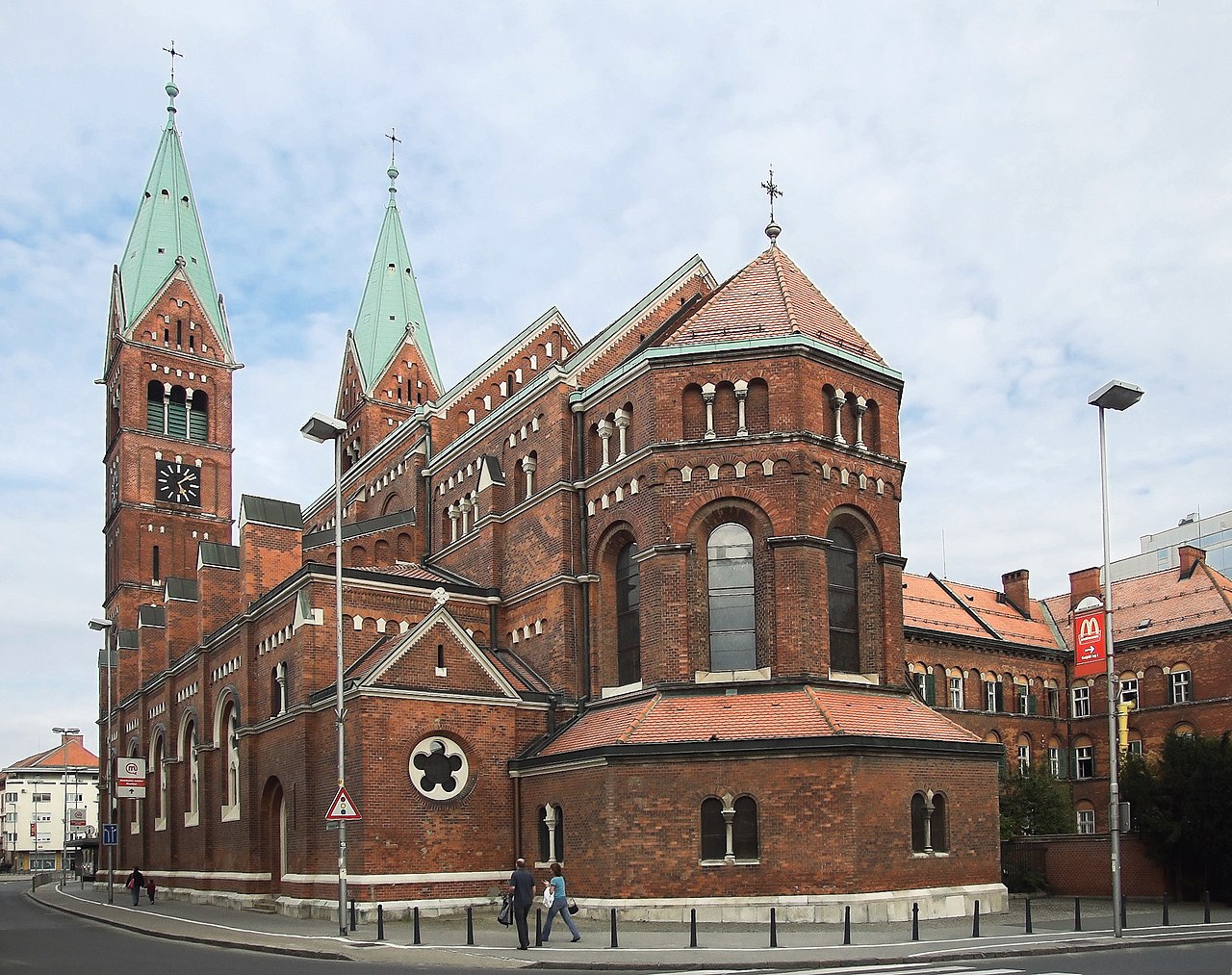
The Basilica of Our Mother of Mercy in Maribor is a prominent Franciscan church known for its distinctive red-brick Neo-Romanesque architecture. Constructed at the turn of the 20th century, it serves as a significant religious and architectural landmark in the city, replacing an earlier structure that had stood on the site since the 17th century.
The interior is characterized by its spacious nave and ornate altars, reflecting the devotional focus of the Franciscan order. While the current building dates to the early 1900s, it maintains a deep connection to the city's spiritual history and remains an active place of worship for the local community.
Key Facts
- Materials
- Red brick, Stone
- Civilization
- Austro-Hungarian
- Accessibility
- Ground level access available
- Date(s)
- 1892-1900
- Condition
- Active, well-preserved
- Original Function
- Franciscan monastery church
- Key Figures
- Richard Jordan
Early Foundations
17th centuryThe original church and monastery were established by the Capuchins in the 17th century. This site served as a center for religious life in Maribor for over two hundred years before the current structure was commissioned.
Construction of the Basilica
1892-1900The current Neo-Romanesque basilica was designed by the Viennese architect Richard Jordan. Construction began in 1892 and was completed in 1900, utilizing red brick to create the striking facade that defines the building today.
Modern Status
20th century - presentIn 1906, the church was elevated to the status of a minor basilica. It continues to function as a Franciscan church and a site of pilgrimage, housing historical artifacts and a notable organ that serves the liturgical life of the parish.
Cultural Significance
The basilica is a central element of Maribor's urban landscape and religious identity. Its Neo-Romanesque style represents the architectural trends of the late Austro-Hungarian period in the region. It functions as a primary site for local religious observances and is a focal point for the Franciscan community in Slovenia.
Visiting Information
Entry Rules
Open daily for visitors and worshipers. Please maintain silence and respect ongoing religious services. Modest dress is requested.
Best Times to Visit
Weekday mornings or afternoons outside of scheduled mass times for a quieter experience.
Photography
Personal photography is permitted without flash. Professional photography requires prior permission from the parish office.
Preservation Notes
The structure is maintained by the Franciscan order. Visitors are asked to refrain from touching historical altars and artwork.
Nearby POIs
11 shownSources & Further Reading
- [1]
- [2]Architecture of the Franciscan Monastery in Maribor — Zora Z. Hladnik. Slovenian Art History Journal (2015)
Key Facts
- Materials
- Red brick, Stone
- Civilization
- Austro-Hungarian
- Accessibility
- Ground level access available
- Date(s)
- 1892-1900
- Condition
- Active, well-preserved
- Original Function
- Franciscan monastery church
- Key Figures
- Richard Jordan