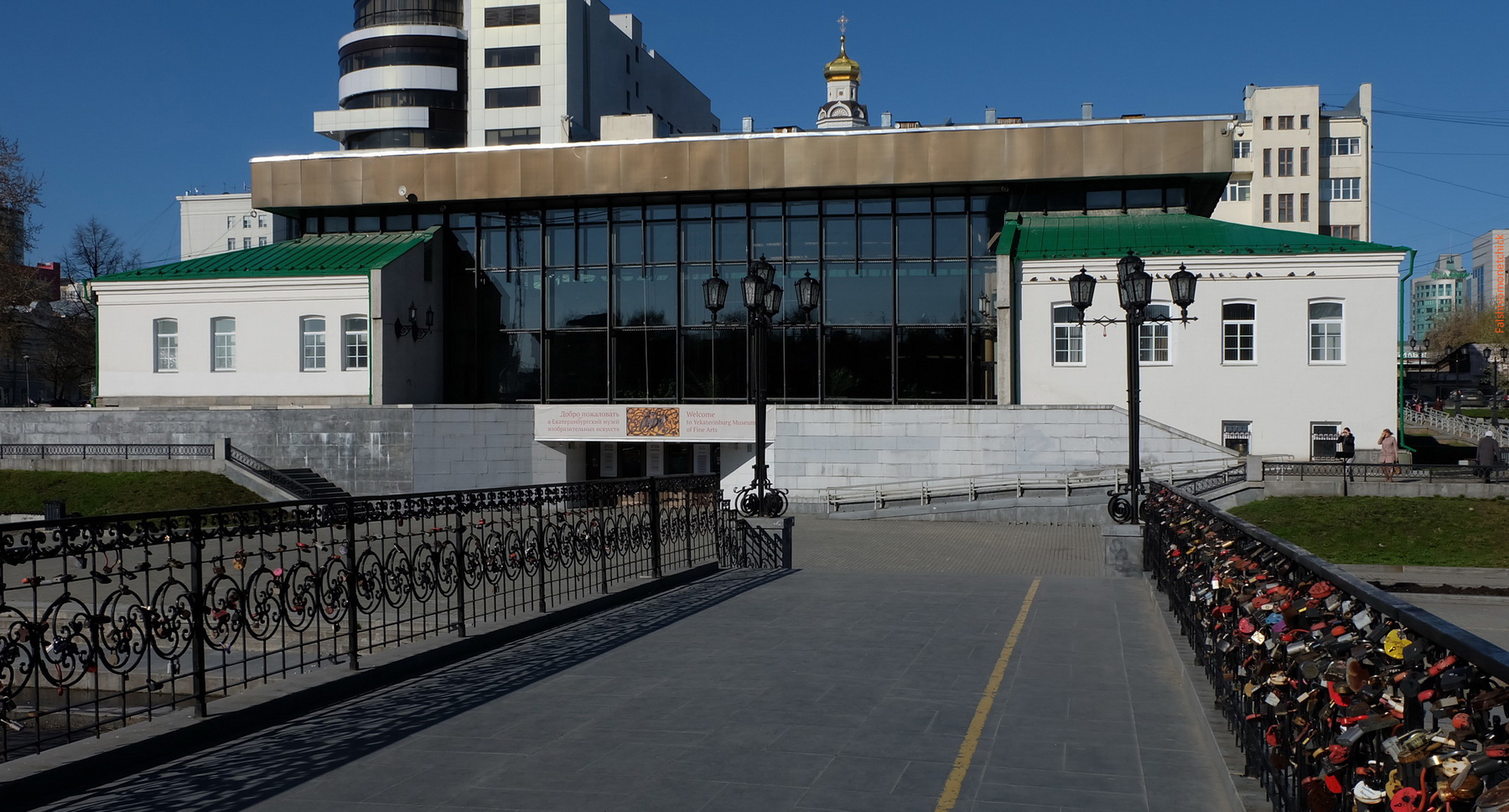
Yekaterinburg Museum of Fine Arts
The Yekaterinburg Museum of Fine Arts is one of the largest art museums in the Ural region of Russia. Established in 1936, the museum houses an extensive collection that spans several centuries of Russian and European art, including a notable assembly of 17th-century icons and works by prominent Russian painters.
The museum is perhaps best known for its unique collection of Kasli iron casting, a traditional Ural craft. The centerpiece of this collection is the ornate cast-iron pavilion, which was originally created for the 1900 Paris World's Fair, where it earned the Grand Prix for its intricate craftsmanship and technical precision.
Key Facts
- Materials
- Stone, Brick, Cast Iron
- Civilization
- Russian
- Accessibility
- Wheelchair accessible
- Date(s)
- 1936
- Condition
- Active, well-maintained
- Original Function
- Art Museum
- Key Figures
- N.A. Ionov
Founding and Early Years
1936The museum was founded in 1936, initially serving as a repository for regional art and historical artifacts collected from across the Sverdlovsk Oblast.
Expansion of Collections
Mid-20th CenturyDuring the post-war period, the museum significantly expanded its holdings, acquiring major works of Russian avant-garde and classical art, as well as the famous Kasli iron pavilion.
Modern Era
21st CenturyToday, the museum serves as a primary cultural hub in Yekaterinburg, hosting international exhibitions and maintaining a rigorous program of restoration and research into Ural industrial art.
Cultural Significance
The museum is a cornerstone of cultural identity in the Urals, preserving the legacy of the region's industrial history through its world-renowned iron casting collection. It bridges the gap between traditional religious icon painting and the industrial aesthetic that defined the development of Yekaterinburg.
Interpretive Notes
Scholarly debates and areas of uncertainty
Discussions among art historians often center on the classification of Kasli iron works, debating whether they should be categorized primarily as industrial products or as high-art sculpture due to their intricate aesthetic detailing.
Visiting Information
Entry Rules
Open Tuesday through Sunday. Tickets can be purchased at the entrance. Photography is permitted for personal use, though flash is prohibited in the icon galleries.
Best Times to Visit
Weekday mornings are recommended to avoid weekend crowds, particularly during the winter months when the museum serves as a primary indoor cultural destination.
Photography
No flash photography allowed. Professional or commercial photography requires prior written permission from the museum administration.
Preservation Notes
Maintain a respectful distance from the cast-iron exhibits. Do not touch the surfaces of the icons or the iron pavilion, as oils from skin can damage the historical finishes.
Nearby POIs
6 shownSources & Further Reading
- [1]The Kasli Iron Pavilion: A Masterpiece of Ural Craft — V. P. Belov. Ural University Press (2012)
- [2]Fine Arts of the Urals: A History — E. A. Petrova. Russian Academy of Arts (2018)
Key Facts
- Materials
- Stone, Brick, Cast Iron
- Civilization
- Russian
- Accessibility
- Wheelchair accessible
- Date(s)
- 1936
- Condition
- Active, well-maintained
- Original Function
- Art Museum
- Key Figures
- N.A. Ionov