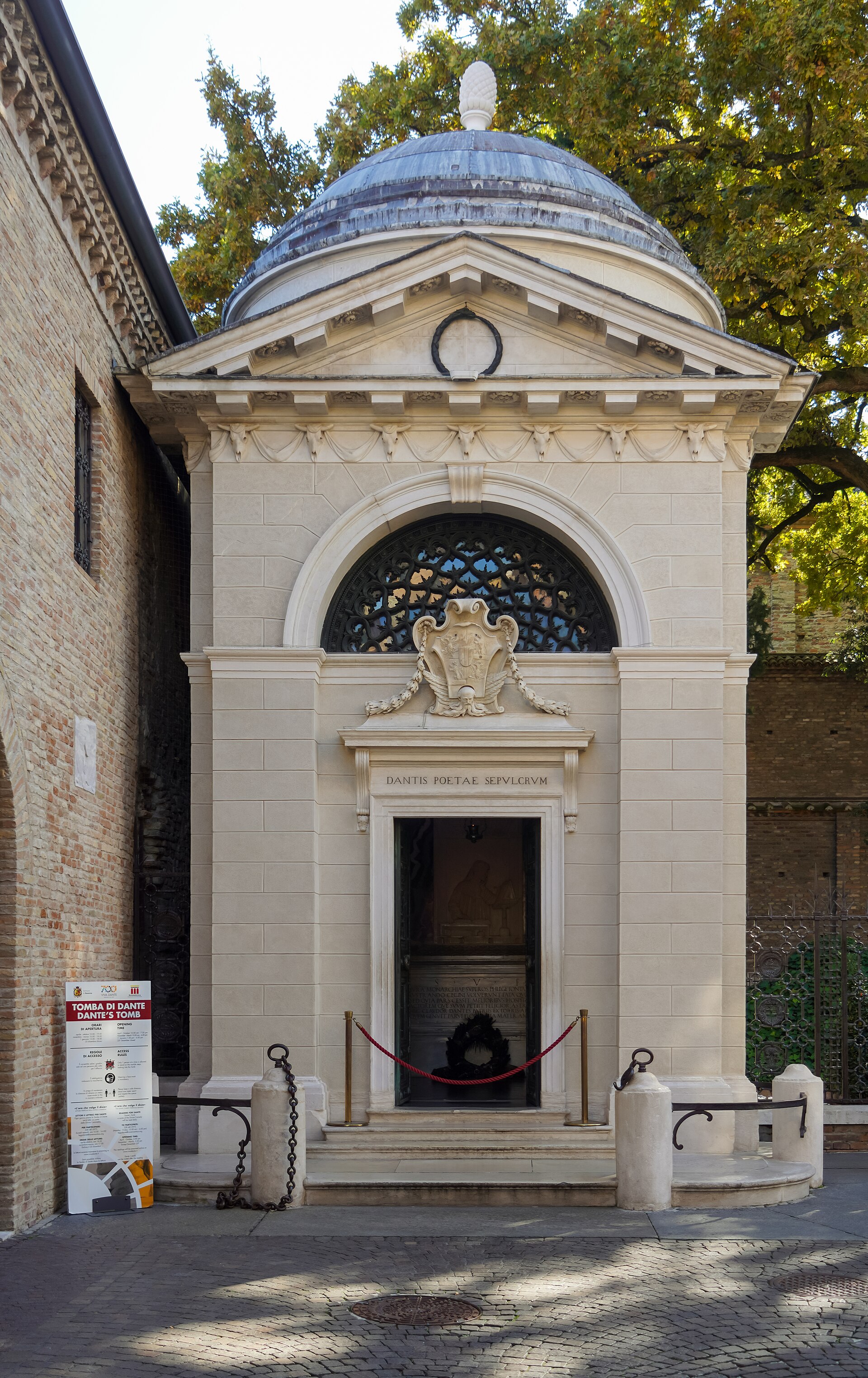
The Tomb of Dante is a small neoclassical structure located in the center of Ravenna, Italy, housing the remains of the medieval poet Dante Alighieri. Built in 1780 by architect Camillo Morigia, the monument replaced an earlier 15th-century structure to provide a more dignified resting place for the author of the Divine Comedy.
The interior features a marble sarcophagus and a relief sculpture by Pietro Lombardo dating from 1483. The site serves as a place of pilgrimage for literature enthusiasts and is considered a national monument of Italy, symbolizing the cultural legacy of the poet who spent his final years in exile in Ravenna.
Key Facts
- Materials
- Marble, Brick, Stone
- Civilization
- Italian
- Accessibility
- Ground level access, limited interior space
- Date(s)
- 1780
- Condition
- Well-preserved, active memorial site
- Original Function
- Funerary monument
- Key Figures
- Dante Alighieri, Camillo Morigia, Pietro Lombardo
Death and Initial Burial
1321Following his death in September 1321, Dante Alighieri was buried in the portico of the Church of San Francesco in Ravenna. His remains were placed in a stone sarcophagus.
The 15th Century Shrine
1483Bernardo Bembo, the Venetian podestà of Ravenna, commissioned a new relief sculpture of Dante from the sculptor Pietro Lombardo to adorn the burial site, marking the first significant architectural intervention.
Construction of the Current Tomb
1780The current neoclassical structure was designed by Camillo Morigia at the request of Cardinal Luigi Valenti Gonzaga. It was intended to provide a more monumental and permanent setting for the poet's remains.
World War II and Concealment
1944During the Allied bombing of Ravenna in World War II, Dante's remains were removed from the tomb and hidden in a nearby mound to protect them from potential destruction. They were returned to the monument in 1945.
Cultural Significance
The Tomb of Dante is a focal point for Italian national identity, representing the 'father of the Italian language.' Its location in Ravenna, rather than his native Florence, highlights the historical tension between the two cities regarding the poet's legacy and final resting place.
Every year, the 'Dante's Day' celebrations and various literary events emphasize the tomb's role as a site of cultural pilgrimage. The monument is maintained with a perpetual flame fueled by oil donated by the city of Florence, symbolizing a symbolic reconciliation between the poet and his birthplace.
Interpretive Notes
Scholarly debates and areas of uncertainty
There is no significant scholarly debate regarding the authenticity of the remains, as they were verified during the 1865 and 1921 exhumations. However, the historical 'tug-of-war' between Florence and Ravenna over the right to host the tomb remains a subject of cultural and historical discussion.
Visiting Information
Entry Rules
Open daily. Entry is free. Visitors are expected to maintain a quiet and respectful demeanor as the site is considered a place of solemn remembrance.
Best Times to Visit
Early morning or late afternoon to avoid peak tourist crowds. The site is particularly significant on the anniversary of Dante's death, September 14th.
Photography
Photography is permitted for personal use. Flash and tripods are prohibited inside the small structure.
Preservation Notes
The monument is fragile due to its age and the nature of the materials. Visitors should refrain from touching the marble surfaces or the relief sculpture.
Nearby POIs
0 shownNo nearby POIs listed yet.
Sources & Further Reading
- [1]Dante: The Story of His Life — Marco Santagata. Harvard University Press (2016)
- [2]The Tomb of Dante in Ravenna — Corrado Ricci. Ravenna Cultural Heritage Board (1921)
Key Facts
- Materials
- Marble, Brick, Stone
- Civilization
- Italian
- Accessibility
- Ground level access, limited interior space
- Date(s)
- 1780
- Condition
- Well-preserved, active memorial site
- Original Function
- Funerary monument
- Key Figures
- Dante Alighieri, Camillo Morigia, Pietro Lombardo
Nearby POIs
0 shownNo nearby POIs listed yet.