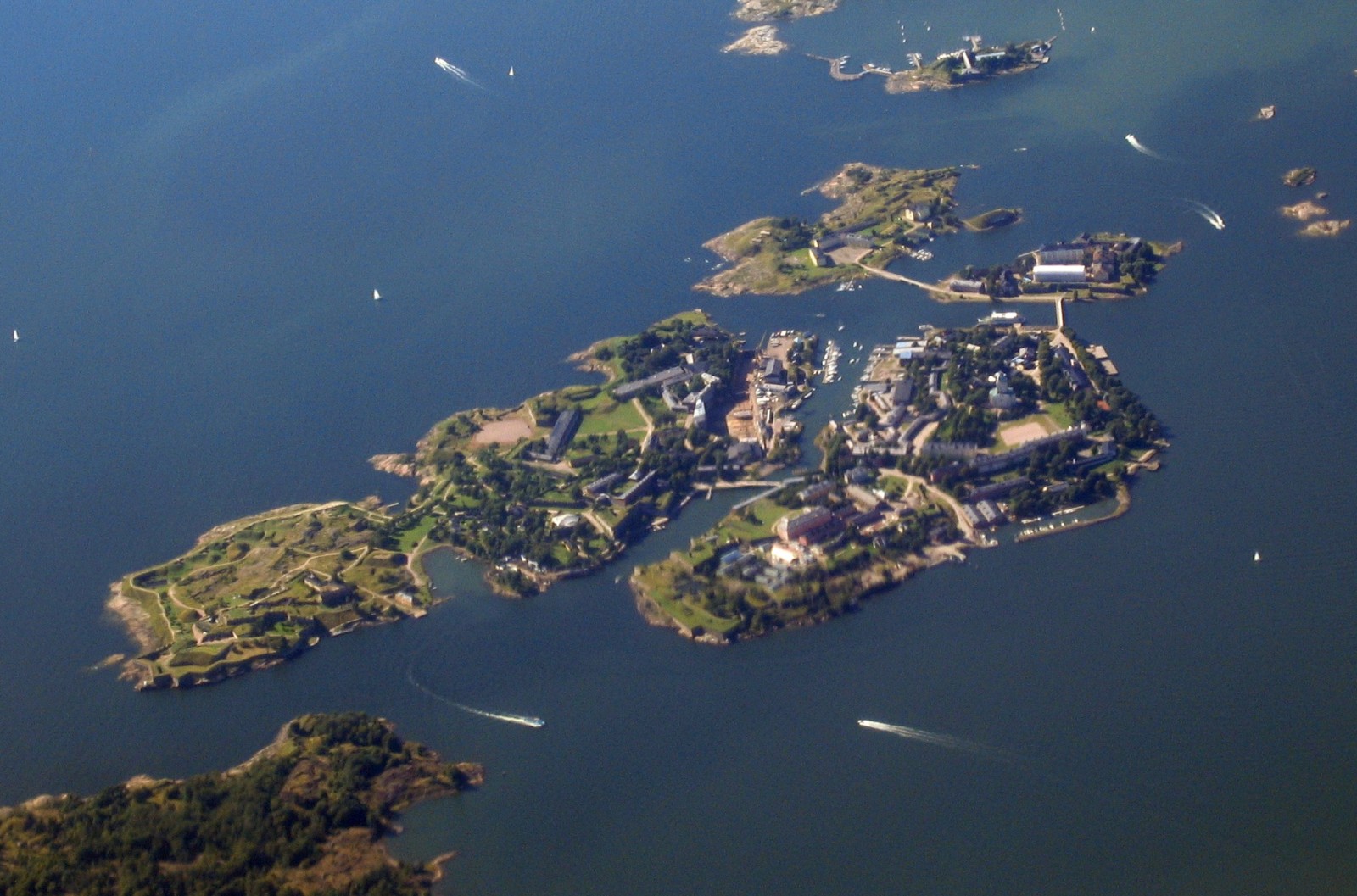
Suomenlinna is an 18th-century sea fortress built across a cluster of six islands off the coast of Helsinki. Originally constructed by the Swedish Crown in 1748 as Sveaborg, the fortress was designed to serve as a maritime defense base and a naval shipyard to counter Russian expansion in the Baltic region. It represents a significant example of Vauban-style military architecture, featuring extensive bastions, curtain walls, and dry docks that were considered state-of-the-art during the Enlightenment.
Following the Finnish War in 1809, the fortress was surrendered to Russia, who expanded the fortifications and integrated them into the defense of Saint Petersburg. After Finland gained independence in 1917, the site was renamed Suomenlinna and transitioned from a military stronghold to a civilian and cultural district. Today, it remains a residential area and a major historical site, managed by the Governing Body of Suomenlinna under the Finnish Ministry of Education and Culture.
Key Facts
- Materials
- Granite, Brick, Earthworks
- Civilization
- Swedish, Russian, Finnish
- Accessibility
- Accessible by public ferry; some areas feature uneven terrain and cobblestones
- Date(s)
- 1748 - 1772
- Condition
- Well-preserved, active residential and cultural site
- Original Function
- Maritime fortress and naval shipyard
- Key Figures
- Augustin Ehrensvärd
Founding and Swedish Construction
1748-1788Construction began in 1748 under the direction of Augustin Ehrensvärd. The fortress was intended to be the 'Gibraltar of the North,' providing a secure base for the Swedish archipelago fleet and protecting Helsinki from Russian naval threats.
Russian Imperial Period
1809-1917After the Swedish surrender in 1809, the fortress became a Russian garrison. The Russian military modernized the defenses, adding barracks, churches, and extensive underground tunnels to support the defense of the Baltic approaches to Saint Petersburg.
Independence and Modern Era
1917-PresentFollowing Finland's independence, the fortress was renamed Suomenlinna. It served as a military base until the mid-20th century, after which it was demilitarized and opened to the public. It was inscribed as a UNESCO World Heritage site in 1991.
Cultural Significance
Suomenlinna is a cornerstone of Finnish national identity, symbolizing the country's complex geopolitical history between East and West. It serves as a unique example of a living fortress, where historical military structures coexist with a permanent civilian population of approximately 800 residents.
The site is central to Finnish cultural life, hosting museums, art galleries, and summer events. Its preservation highlights the evolution of military engineering and the transition of defensive architecture into public heritage spaces.
Interpretive Notes
Scholarly debates and areas of uncertainty
Debates persist regarding the balance between preserving the site's military integrity and accommodating modern residential needs. Additionally, scholars continue to analyze the effectiveness of the fortress's design during the 1808 siege, questioning whether the surrender was a result of architectural failure or political collapse.
Visiting Information
Entry Rules
The fortress is open to the public 24/7. Access is via the HSL public ferry from Helsinki Market Square. While the islands are public, some museum buildings and private residences have restricted access.
Best Times to Visit
Late spring to early autumn for full access to museums and outdoor walking paths. Winter visits offer a stark, atmospheric experience but some facilities may have limited hours.
Photography
Personal photography is permitted throughout the public areas. Commercial photography and drone usage require prior authorization from the Governing Body of Suomenlinna.
Preservation Notes
The site is fragile; visitors must stay on marked paths to prevent erosion of the earthen ramparts. Climbing on the walls and fortifications is strictly prohibited to ensure visitor safety and structural preservation.
Nearby POIs
11 shownSources & Further Reading
- [1]Suomenlinna: A UNESCO World Heritage Site — Governing Body of Suomenlinna. Suomenlinna Official Portal (2023)View
- [2]The Fortress of Sveaborg — Olli Marttila. Finnish Heritage Agency (2015)
Key Facts
- Materials
- Granite, Brick, Earthworks
- Civilization
- Swedish, Russian, Finnish
- Accessibility
- Accessible by public ferry; some areas feature uneven terrain and cobblestones
- Date(s)
- 1748 - 1772
- Condition
- Well-preserved, active residential and cultural site
- Original Function
- Maritime fortress and naval shipyard
- Key Figures
- Augustin Ehrensvärd