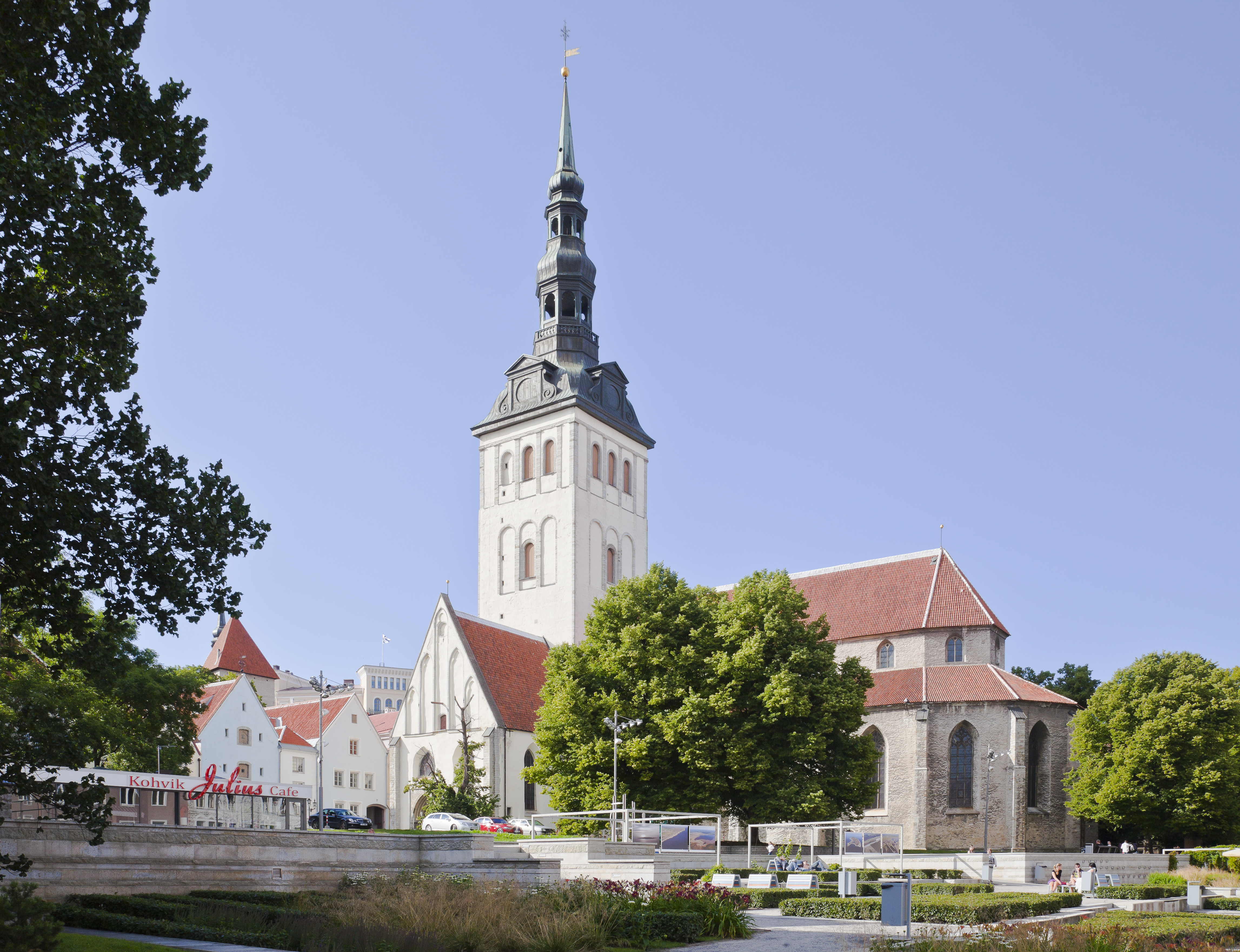
St. Nicholas Church (Niguliste kirik) is a medieval former church and current museum located in the Old Town of Tallinn, Estonia. Founded in the 13th century by Westphalian merchants, the structure served as a central religious and social hub for the city's German-speaking community. Its architecture reflects the transition from early Gothic styles to later additions, including a prominent spire that defines the Tallinn skyline.
Following significant damage during the 1944 Soviet bombing of Tallinn, the church was meticulously restored and repurposed as a museum and concert hall. Today, it houses one of Estonia's most significant collections of ecclesiastical art, including medieval altarpieces and the world-renowned 'Danse Macabre' painting by Bernt Notke.
Key Facts
- Materials
- Limestone, Brick
- Civilization
- Hanseatic League
- Accessibility
- Wheelchair accessible with elevator access to upper levels
- Date(s)
- 1230 CE
- Condition
- Restored, functioning as a museum and concert hall
- Original Function
- Parish church
- Key Figures
- Bernt Notke, Hermann von der Borch
Founding and Expansion
13th-15th centuryThe church was established around 1230 by merchants from Gotland. It was originally built as a fortified structure to protect the congregation during times of unrest. By the 15th century, the church was expanded into a three-aisled basilica, reflecting the growing wealth of the Hanseatic city.
Reformation and Survival
16th-19th centuryDuring the Protestant Reformation in 1524, the church was spared from the iconoclastic riots that destroyed much of Tallinn's religious art, as the congregation successfully sealed the doors with molten lead. It remained a Lutheran church for centuries, undergoing various Baroque-style interior renovations.
Destruction and Restoration
1944-1984The church suffered catastrophic damage during the March 1944 Soviet air raids, which destroyed the roof and much of the interior. After decades of neglect, a massive restoration project began in the 1950s, culminating in the building's reopening as a museum of religious art in 1984.
Cultural Significance
St. Nicholas Church is a cornerstone of Estonian cultural heritage, serving as the primary repository for the nation's medieval ecclesiastical art. Its preservation of the 'Danse Macabre'—a rare and haunting depiction of the universality of death—makes it a site of international art-historical importance.
Beyond its collection, the building's acoustics and historical atmosphere have made it a premier venue for classical music in Tallinn, bridging the gap between its medieval religious origins and its modern role as a secular cultural institution.
Interpretive Notes
Scholarly debates and areas of uncertainty
The exact provenance and original placement of the 'Danse Macabre' within the church remain subjects of academic discussion. While it is attributed to Bernt Notke, scholars debate whether the Tallinn version is the original or a high-quality workshop replica of the version once housed in Lübeck.
Visiting Information
Entry Rules
Open Tuesday through Sunday. Tickets are required for entry. Visitors are requested to maintain a quiet demeanor appropriate for a museum and concert venue.
Best Times to Visit
Weekday mornings to avoid weekend tour groups. The church is particularly atmospheric during winter months when the interior lighting highlights the medieval altarpieces.
Photography
Personal photography is permitted without flash. Tripods and professional equipment require prior authorization from the museum administration.
Preservation Notes
The museum maintains strict climate control to protect the fragile medieval wood carvings and paintings. Please refrain from touching any artifacts or wall surfaces.
Nearby POIs
11 shownSources & Further Reading
- [1]
- [2]The Danse Macabre of Bernt Notke — Anu Mänd. Tallinn University Press (2010)
Key Facts
- Materials
- Limestone, Brick
- Civilization
- Hanseatic League
- Accessibility
- Wheelchair accessible with elevator access to upper levels
- Date(s)
- 1230 CE
- Condition
- Restored, functioning as a museum and concert hall
- Original Function
- Parish church
- Key Figures
- Bernt Notke, Hermann von der Borch