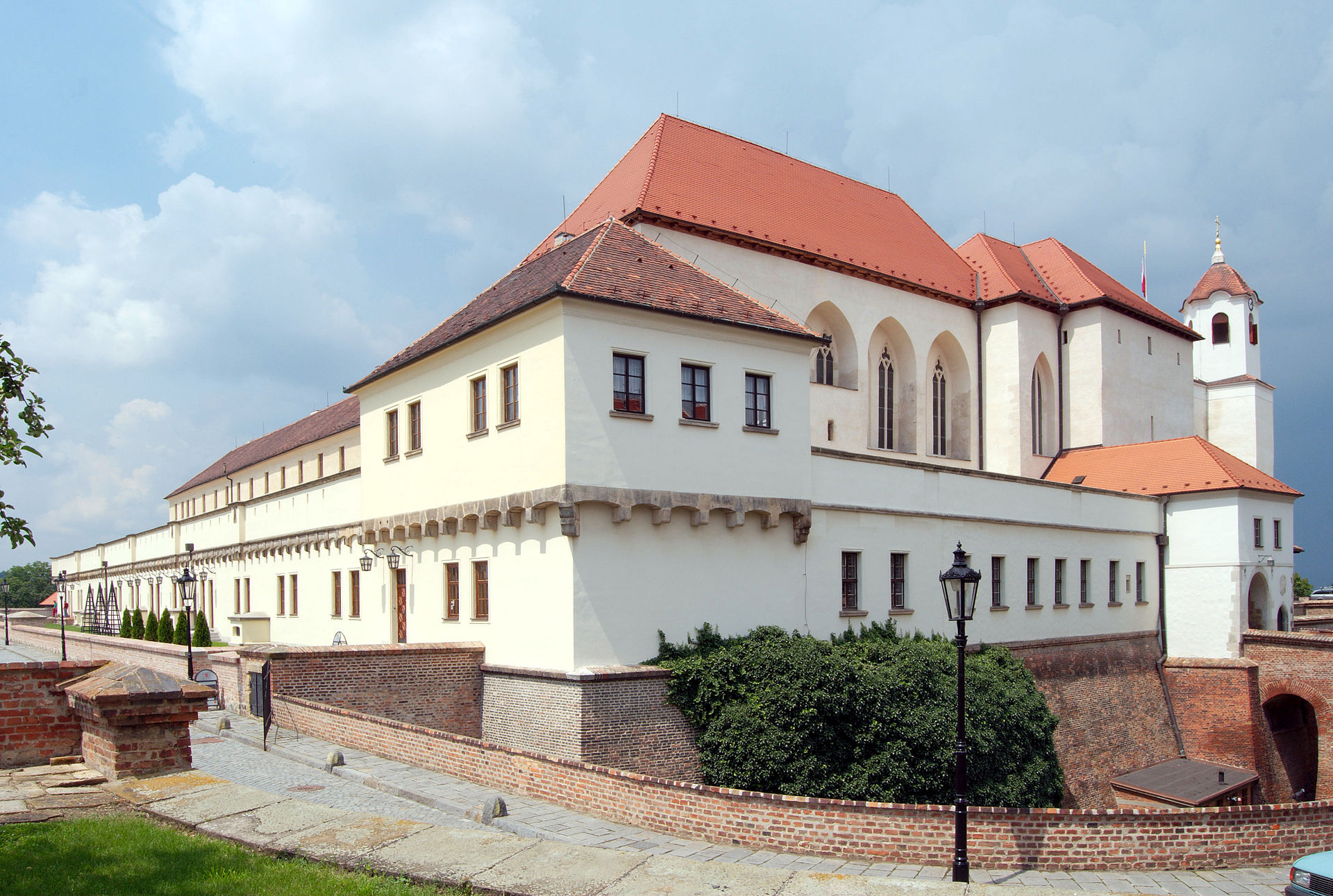
Špilberk Castle is a historic hilltop fortress located in Brno, Czech Republic. Originally established in the 13th century as a royal castle by the Přemyslid dynasty, it served as the seat of the Margraves of Moravia and a strategic defensive fortification for the city.
Following the Thirty Years' War, the castle was transformed into a massive Baroque citadel. By the late 18th century, it gained notoriety as one of the harshest prisons in the Austrian Empire, housing political dissidents and revolutionaries. Today, the site functions as a museum and cultural center, offering insight into its dual history as a military bastion and a site of incarceration.
Key Facts
- Materials
- Stone, Brick
- Civilization
- Bohemian/Austrian
- Accessibility
- Accessible via paved paths; some interior areas have stairs
- Date(s)
- 13th century
- Condition
- Restored, serves as a museum and public park
- Original Function
- Royal castle and defensive fortress
- Key Figures
- Ottokar II of Přemysl, Silvio Pellico, Baron Franz von Trenck
Royal Origins
13th centuryFounded by King Ottokar II of Přemysl, the castle was designed to protect the city of Brno and serve as a residence for the Margraves of Moravia. It played a crucial role in the defense of the region during the Middle Ages.
Baroque Citadel Transformation
17th centuryDuring the Thirty Years' War, the castle's strategic importance led to its conversion into a formidable Baroque fortress. The defensive walls were significantly reinforced to withstand modern artillery and siege tactics.
The Harshest Prison
18th-19th centuryUnder the Habsburg Monarchy, the casemates were converted into a notorious prison. It held high-profile political prisoners, including Italian carbonari and Hungarian revolutionaries, earning a reputation as the 'prison of nations'.
Modern Era
20th century - presentAfter serving as military barracks, the castle was acquired by the city of Brno. Extensive restoration projects in the 20th century converted the site into the Brno City Museum, preserving both the military architecture and the prison cells for public education.
Cultural Significance
Špilberk Castle is a central symbol of Brno's history, representing the city's resilience through centuries of conflict. Its transformation from a royal seat to a symbol of imperial oppression has made it a focal point for discussions on human rights and political history in Central Europe.
The site is deeply embedded in the cultural memory of several European nations, particularly Italy, due to the imprisonment of the writer Silvio Pellico, whose memoirs brought international attention to the conditions within the fortress.
Interpretive Notes
Scholarly debates and areas of uncertainty
There is ongoing academic discussion regarding the extent of the prison's brutality compared to other contemporary European institutions. While popular history emphasizes the 'harshest prison' narrative, some historians argue that the conditions were typical for the era's penal standards, though the psychological impact on political prisoners remains a subject of study.
Visiting Information
Entry Rules
Open daily. Tickets are required for the museum exhibitions and the casemates. Guided tours are available for the prison section. Visitors are advised to wear comfortable walking shoes due to the hilly terrain.
Best Times to Visit
Spring and autumn offer the best weather for exploring the surrounding park and exterior fortifications. Weekdays are generally less crowded than weekends.
Photography
Personal photography is permitted in the courtyards and park. Flash photography is prohibited inside the museum galleries and the casemates.
Preservation Notes
The site is a protected cultural monument. Visitors must remain on marked paths and refrain from touching the historic masonry in the casemates.
Nearby POIs
2 shownSources & Further Reading
- [1]
- [2]The Prison of Nations: Political Incarceration in the Habsburg Empire — J. K. H. W. Schmidt. Central European History Review (2012)
Key Facts
- Materials
- Stone, Brick
- Civilization
- Bohemian/Austrian
- Accessibility
- Accessible via paved paths; some interior areas have stairs
- Date(s)
- 13th century
- Condition
- Restored, serves as a museum and public park
- Original Function
- Royal castle and defensive fortress
- Key Figures
- Ottokar II of Přemysl, Silvio Pellico, Baron Franz von Trenck