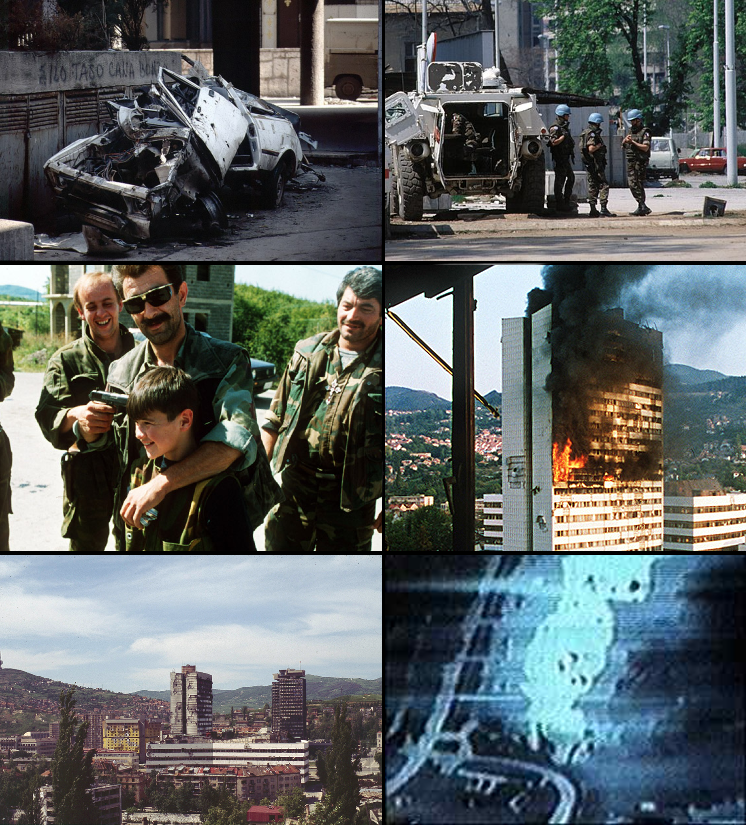
The Siege of Sarajevo Museum is dedicated to documenting the 1,425-day siege of the city during the Bosnian War, which lasted from April 1992 to February 1996. The museum serves as a repository for personal artifacts, photographs, and testimonies that illustrate the daily struggle for survival, the resilience of the civilian population, and the profound human cost of the conflict.
Located within the context of the city's broader memorial landscape, the museum provides a factual account of the military encirclement by the Army of Republika Srpska and the subsequent humanitarian crisis. It functions as both an educational institution and a site of remembrance, emphasizing the importance of international awareness and the preservation of historical memory regarding the longest siege of a capital city in modern warfare.
Key Facts
- Materials
- Concrete, Glass, Steel
- Civilization
- Modern Bosnia and Herzegovina
- Accessibility
- Wheelchair accessible
- Date(s)
- 2010s
- Condition
- Active
- Original Function
- Museum and Memorial
- Key Figures
- Alija Izetbegović
The Siege Begins
1992Following the declaration of independence by Bosnia and Herzegovina, the Yugoslav People's Army and Bosnian Serb forces encircled Sarajevo, initiating a blockade that would isolate the city from the outside world for nearly four years.
Life Under Siege
1992-1996Civilians faced constant sniper fire and artillery bombardment while enduring severe shortages of food, water, electricity, and medicine. The museum documents how the population maintained cultural and civic life despite the extreme conditions.
Establishment of the Museum
21st CenturyIn the decades following the Dayton Agreement, efforts were made to formalize the preservation of the siege's history. The museum was established to ensure that the experiences of the citizens were documented for future generations and international visitors.
Cultural Significance
The museum is central to the post-war identity of Sarajevo, representing the city's transition from a site of conflict to a symbol of multi-ethnic survival. It plays a critical role in local education and serves as a focal point for international visitors seeking to understand the complexities of the Balkan conflicts of the 1990s.
Interpretive Notes
Scholarly debates and areas of uncertainty
Discussions often center on the challenges of curating traumatic history and the balance between objective historical documentation and the subjective, emotional narratives of survivors. There is ongoing academic discourse regarding the role of such museums in fostering reconciliation versus the risk of reinforcing nationalistic narratives.
Visiting Information
Entry Rules
Open daily. Ticket purchase required at the entrance. Modest attire is recommended as a sign of respect for the memorial nature of the site.
Best Times to Visit
Weekdays during the morning hours to avoid larger tour groups and allow for a more reflective experience.
Photography
Personal photography is generally permitted, but flash and tripods are prohibited to protect sensitive artifacts and maintain a respectful atmosphere.
Preservation Notes
Do not touch exhibits or artifacts. Maintain a quiet demeanor throughout the galleries.
Nearby POIs
11 shown- Gallery 11/07/95
- Sacred Heart Cathedral0.1 km
- Museum of Crimes Against Humanity and Genocide0.1 km
- Sarajevo 80s Museum0.2 km
- Orthodox Church of the Nativity of the Theotokos0.2 km
- Sarajevo Clock Tower0.2 km
- Gazi Husrev-beg Mosque0.3 km
- Olympic Museum Sarajevo0.3 km
- War Childhood Museum0.3 km
- Vječna vatra0.3 km
- Svrzo's House0.4 km
Sources & Further Reading
- [1]The Siege of Sarajevo: A History — John K. Cox. Greenwood Press (2008)
- [2]Sarajevo: A Biography — Robert J. Donia. University of Michigan Press (2006)
Key Facts
- Materials
- Concrete, Glass, Steel
- Civilization
- Modern Bosnia and Herzegovina
- Accessibility
- Wheelchair accessible
- Date(s)
- 2010s
- Condition
- Active
- Original Function
- Museum and Memorial
- Key Figures
- Alija Izetbegović
Nearby POIs
11 shown- Gallery 11/07/95
- Sacred Heart Cathedral0.1 km
- Museum of Crimes Against Humanity and Genocide0.1 km
- Sarajevo 80s Museum0.2 km
- Orthodox Church of the Nativity of the Theotokos0.2 km
- Sarajevo Clock Tower0.2 km
- Gazi Husrev-beg Mosque0.3 km
- Olympic Museum Sarajevo0.3 km
- War Childhood Museum0.3 km
- Vječna vatra0.3 km
- Svrzo's House0.4 km