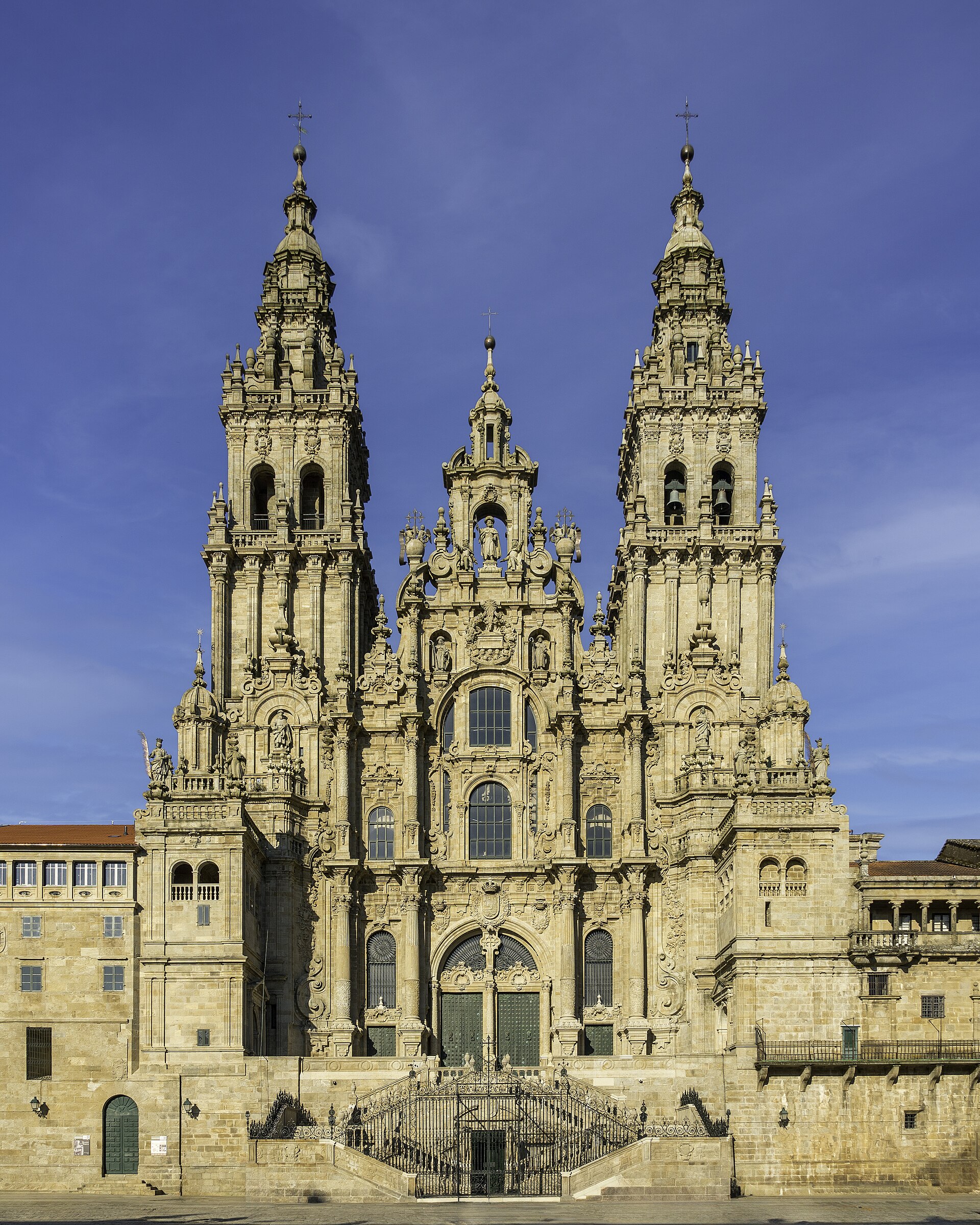
Santiago de Compostela Cathedral
The Cathedral of Santiago de Compostela is a major Roman Catholic church located in the city of Santiago de Compostela, Galicia, Spain. It serves as the final destination for the Way of St. James, a historic pilgrimage route that has been traversed by millions since the Middle Ages. The cathedral is traditionally believed to be the burial site of Saint James the Great, one of the apostles of Jesus.
The current structure is a complex architectural synthesis, featuring a core Romanesque design that has been expanded and modified over centuries. Its most iconic feature is the western facade, the Obradoiro, which is a masterpiece of Spanish Baroque architecture. The interior houses the Portico da Gloria, a Romanesque sculptural ensemble, and the famous Botafumeiro, one of the largest thuribles in the world.
Key Facts
- Materials
- Granite, Marble
- Civilization
- Medieval European
- Accessibility
- Limited accessibility in historic areas; ramp access available for main nave
- Date(s)
- 1075–1211 CE
- Condition
- Active cathedral and pilgrimage destination
- Original Function
- Pilgrimage church and burial site of Saint James
- Key Figures
- Saint James the Great, Bishop Diego Gelmírez, Master Mateo
Origins and Discovery
9th centuryAccording to tradition, the tomb of the Apostle James was discovered in 813 CE by a hermit named Pelagius. King Alfonso II of Asturias ordered the construction of a small chapel on the site, which soon became a focal point for Christian pilgrimage in the Iberian Peninsula.
Romanesque Construction
1075–1211Construction of the current Romanesque cathedral began under the patronage of Bishop Diego Peláez. The design followed the pilgrimage plan, characterized by a wide ambulatory and radiating chapels to accommodate large crowds. The building was consecrated in 1211.
Baroque Transformation
17th–18th centuryDuring the Baroque period, the cathedral underwent significant exterior modifications. The most notable addition was the Obradoiro facade, designed by Fernando de Casas Novoa, which was built to protect the medieval Portico da Gloria from weather damage.
Modern Preservation
20th century–presentThe cathedral continues to undergo extensive restoration efforts to preserve its granite masonry and interior artworks. It remains the spiritual heart of the Camino de Santiago, attracting hundreds of thousands of pilgrims annually.
Cultural Significance
The cathedral is the symbolic anchor of the Camino de Santiago, which has played a fundamental role in the cultural and religious integration of Europe since the Middle Ages. It represents the intersection of faith, art, and travel, serving as a site of profound personal transformation for pilgrims.
Beyond its religious importance, the cathedral is a cornerstone of Galician identity. The architectural evolution of the site reflects the shifting political and artistic tides of Spain, from the medieval Reconquista to the grandeur of the Spanish Baroque.
Interpretive Notes
Scholarly debates and areas of uncertainty
The authenticity of the relics attributed to Saint James the Great has been a subject of historical inquiry. While the Catholic Church maintains their validity, some scholars debate the archaeological evidence regarding the early burial site and the subsequent translation of the remains.
Visiting Information
Entry Rules
Open daily. Entry to the cathedral is free, though tickets are required for the museum, the roof tours, and the archaeological excavations. Modest dress is required; visitors must remain quiet during liturgical services.
Best Times to Visit
Early morning or late evening to avoid the peak crowds of pilgrims arriving at midday. The feast day of Saint James (July 25) is the most significant day but is extremely crowded.
Photography
Photography is permitted in most areas without flash. Tripods and professional video equipment require prior authorization from the cathedral administration.
Preservation Notes
Do not touch the stone carvings, particularly the Portico da Gloria. Follow marked paths to protect the historic floor and masonry. The cathedral is an active place of worship; please respect ongoing religious ceremonies.
Nearby POIs
0 shownNo nearby POIs listed yet.
Sources & Further Reading
- [1]The Art of the Pilgrimage: The Cathedral of Santiago de Compostela — John Williams. University of Pennsylvania Press (1994)
- [2]Santiago de Compostela: The Cathedral and the City — Manuel Castiñeiras. Editorial Galaxia (2010)
Key Facts
- Materials
- Granite, Marble
- Civilization
- Medieval European
- Accessibility
- Limited accessibility in historic areas; ramp access available for main nave
- Date(s)
- 1075–1211 CE
- Condition
- Active cathedral and pilgrimage destination
- Original Function
- Pilgrimage church and burial site of Saint James
- Key Figures
- Saint James the Great, Bishop Diego Gelmírez, Master Mateo
Nearby POIs
0 shownNo nearby POIs listed yet.