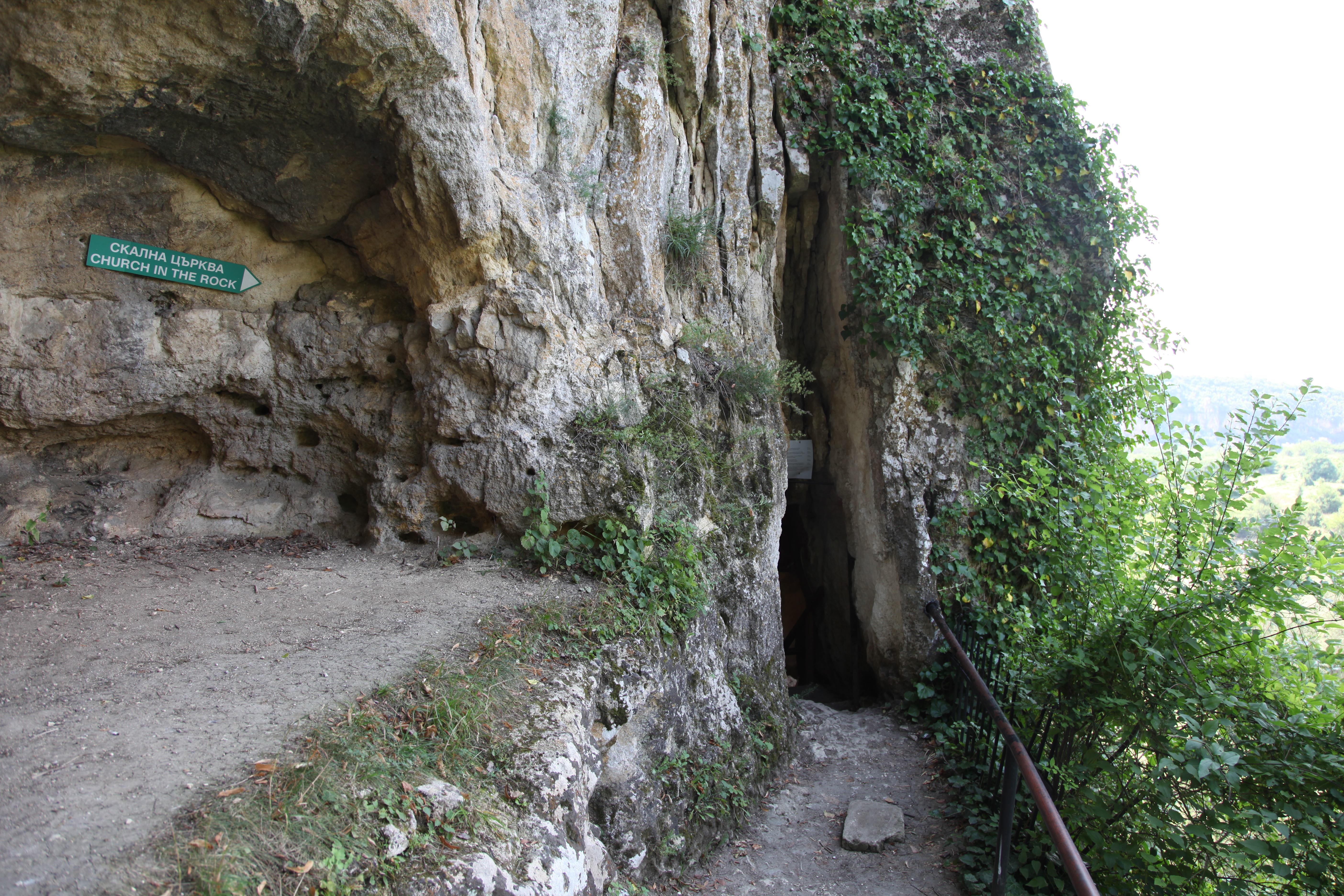
The Rock-Hewn Churches of Ivanovo are a complex of monolithic churches, chapels, and monastic cells carved into the high, rocky banks of the Rusenski Lom River in northeastern Bulgaria. Established in the 13th century by hermits, the site evolved into a significant spiritual and literary center under the patronage of the Bulgarian tsars, including Ivan Asen II and Ivan Alexander.
The site is internationally renowned for its 13th and 14th-century frescoes, which represent a pinnacle of the Tarnovo School of painting. These artworks are characterized by their expressive realism, sophisticated composition, and departure from the rigid Byzantine canon of the era, offering a rare glimpse into the artistic achievements of the Second Bulgarian Empire.
Key Facts
- Materials
- Limestone, Plaster, Natural pigments
- Civilization
- Second Bulgarian Empire
- Accessibility
- Steep stairs and uneven terrain; limited accessibility
- Date(s)
- 13th - 14th century
- Condition
- Partially preserved; frescoes remain in situ
- Original Function
- Monastic complex and hermitage
- Key Figures
- Joachim I, Tsar Ivan Asen II, Tsar Ivan Alexander
Founding and Expansion
13th centuryThe complex was founded by the monk Joachim, who later became the Patriarch of Bulgaria. The site grew rapidly as a monastic community, attracting royal patronage from the Bulgarian tsars who funded the excavation of new churches and the commissioning of elaborate frescoes.
The Golden Age of Frescoes
14th centuryDuring the 14th century, the site reached its peak as a center of hesychasm and literature. The frescoes painted during this period are considered some of the finest examples of medieval Balkan art, showcasing a transition toward more humanistic and emotional depictions of religious narratives.
Ottoman Period and Decline
15th - 19th centuryFollowing the Ottoman conquest of Bulgaria, the monastic community gradually declined. While the site remained a place of local veneration, the lack of institutional support led to the abandonment of many structures and the natural degradation of the exposed rock faces.
Modern Preservation
20th century - presentThe site was declared a national monument in the 20th century and was inscribed as a UNESCO World Heritage site in 1979. Ongoing conservation efforts focus on stabilizing the limestone cliffs and protecting the fragile frescoes from environmental moisture and erosion.
Cultural Significance
The Ivanovo churches are a testament to the unique cultural synthesis of the Second Bulgarian Empire, blending Eastern Orthodox traditions with local artistic innovation. They serve as a vital link to the medieval Bulgarian state's intellectual and religious life, reflecting the high level of literacy and artistic sophistication present in the region before the Ottoman period.
Today, the site is a cornerstone of Bulgarian national heritage, symbolizing the resilience of the country's medieval culture. It remains a site of pilgrimage and academic study, highlighting the historical importance of the Rusenski Lom valley as a cradle of Bulgarian monasticism.
Interpretive Notes
Scholarly debates and areas of uncertainty
There is ongoing academic discussion regarding the exact attribution of the 14th-century frescoes. While some scholars link them to the courtly workshops of Tarnovo, others suggest the presence of itinerant masters from the broader Byzantine sphere, leading to debates about the degree of local versus imported stylistic influence.
Visiting Information
Entry Rules
Open daily. Tickets are required for entry to the main church complex. Visitors should be prepared for a steep climb on stone stairs. Modest dress is recommended as a sign of respect for the site's religious history.
Best Times to Visit
Late spring and early autumn offer the best weather for navigating the steep paths. Avoid visiting during heavy rain, as the limestone paths can become slippery and the humidity poses a risk to the frescoes.
Photography
Photography is permitted for personal use, but the use of flash is strictly prohibited to prevent damage to the ancient pigments. Professional or commercial photography requires prior authorization from the regional museum authorities.
Preservation Notes
Do not touch the walls or the frescoes, as the oils from human skin cause irreversible damage to the medieval paint layers. Stay strictly within the designated visitor pathways and follow the instructions of the site guides.
Nearby POIs
6 shownSources & Further Reading
- [1]
- [2]Medieval Bulgarian Art and Architecture — Bozhidar Dimitrov. Tangra TanNakRa (2002)
Key Facts
- Materials
- Limestone, Plaster, Natural pigments
- Civilization
- Second Bulgarian Empire
- Accessibility
- Steep stairs and uneven terrain; limited accessibility
- Date(s)
- 13th - 14th century
- Condition
- Partially preserved; frescoes remain in situ
- Original Function
- Monastic complex and hermitage
- Key Figures
- Joachim I, Tsar Ivan Asen II, Tsar Ivan Alexander