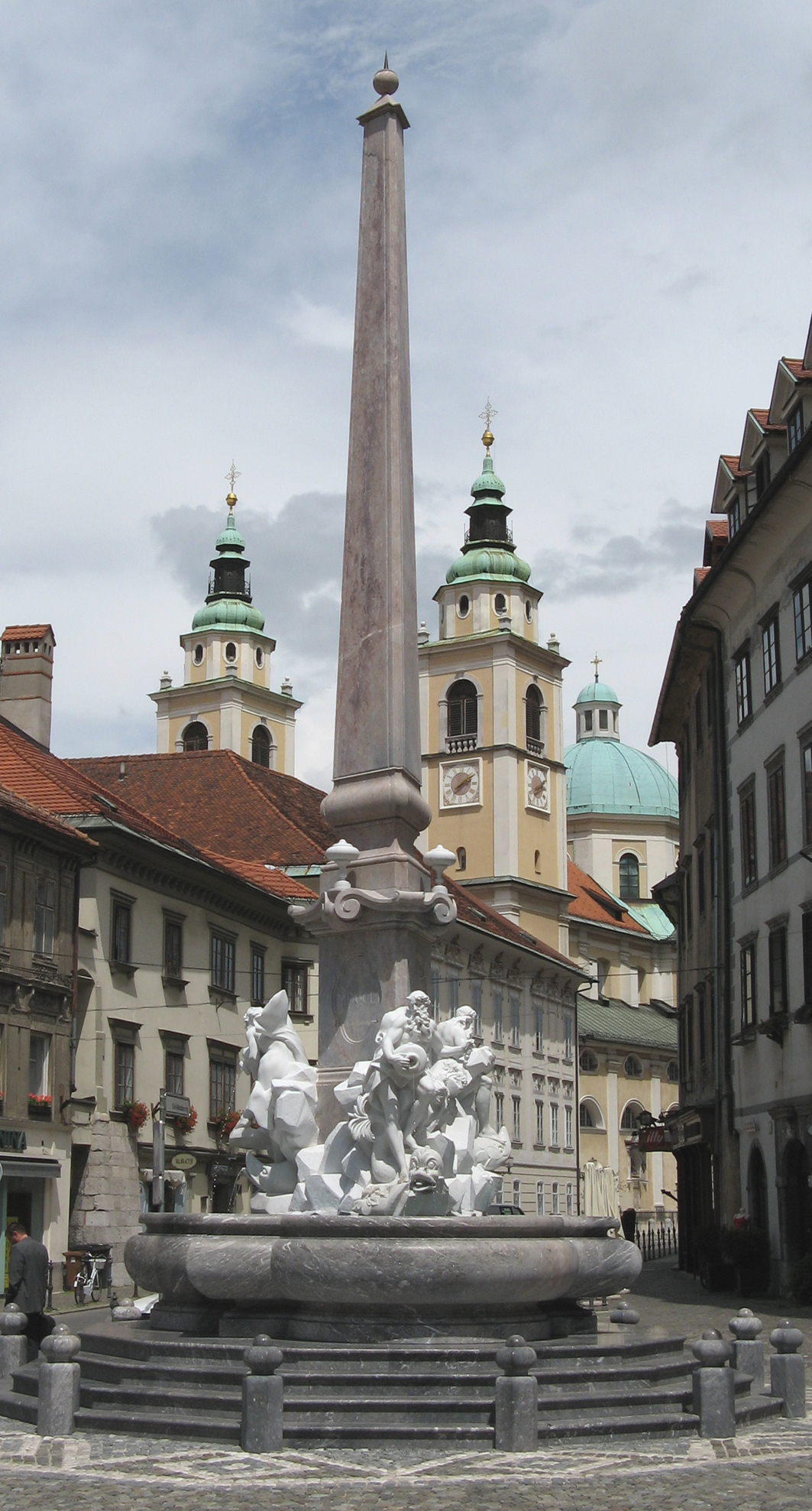
The Robba Fountain, also known as the Fountain of the Three Carniolan Rivers, is a prominent Baroque monument located in the Town Square (Mestni trg) in Ljubljana, Slovenia. Designed by the Italian sculptor Francesco Robba and completed in 1751, the fountain features three allegorical figures representing the three rivers of the Carniola region: the Sava, the Ljubljanica, and the Krka.
The original fountain was crafted from white marble and limestone, drawing inspiration from Bernini's Fountain of the Four Rivers in Rome. Due to the deterioration of the original materials caused by environmental exposure, the fountain was moved to the National Gallery of Slovenia for preservation in 2006, and a faithful replica was installed in its place at the original site.
Key Facts
- Materials
- Carrara marble, Podpeč limestone
- Civilization
- Habsburg Monarchy
- Accessibility
- Fully accessible in a public pedestrian square
- Date(s)
- 1751
- Condition
- Replica on-site; original preserved in the National Gallery of Slovenia
- Original Function
- Public water source and civic monument
- Key Figures
- Francesco Robba
Commission and Creation
1743-1751Francesco Robba, a Venetian sculptor who settled in Ljubljana, was commissioned by the city authorities to create a new fountain for the Town Square. The project took several years to complete, resulting in one of the most significant examples of Baroque sculpture in the region.
Symbolism and Design
18th CenturyThe fountain's design centers on an obelisk surrounded by three male figures holding shells, symbolizing the three main rivers of the Carniola province. The composition reflects the influence of Roman Baroque aesthetics, adapted to the local urban context of Ljubljana.
Preservation and Replication
2006-PresentBy the early 21st century, the original marble had suffered significant damage from acid rain and weathering. In 2006, the original fountain was dismantled and moved to the National Gallery of Slovenia for restoration and protection. A high-quality replica was installed in the original location to maintain the historical appearance of the square.
Cultural Significance
The Robba Fountain serves as a symbol of Ljubljana's historical connection to the broader European Baroque tradition. It represents the city's 18th-century civic pride and remains a focal point for public life in the historic center. The decision to replace the original with a replica sparked significant national discourse regarding the balance between preserving cultural heritage and maintaining the authenticity of public spaces.
Interpretive Notes
Scholarly debates and areas of uncertainty
Debate exists regarding the extent to which the fountain's design was influenced by local cultural identity versus the purely Italian artistic training of Francesco Robba. Additionally, the ethics and technical methodology of replacing original historical monuments with replicas in public squares remains a subject of ongoing discussion among Slovenian conservators.
Visiting Information
Entry Rules
The fountain is located in a public pedestrian zone and is accessible at all times without charge.
Best Times to Visit
Early morning or late evening to avoid heavy pedestrian traffic in the Town Square.
Photography
None; the site is in a public space.
Preservation Notes
The replica is durable, but visitors are requested not to climb on the structure or throw coins into the basin to prevent chemical damage to the stone surfaces.
Nearby POIs
11 shown- Ljubljana Cathedral0.1 km
- Ljubljana Castle0.2 km
- Franciscan Church of the Annunciation0.2 km
- House of Illusions0.3 km
- Ljubljana City Museum0.4 km
- Narodni muzej Slovenije0.6 km
- National Gallery of Slovenia0.7 km
- Museum of Modern Art Ljubljana0.7 km
- Plecnik House0.9 km
- Museum of Contemporary Art Metelkova1 km
- National Museum of Contemporary History1.3 km
Sources & Further Reading
- [1]Francesco Robba and the Venetian Baroque in Ljubljana — Nace Šumi. Slovenska matica (1998)
- [2]The Robba Fountain: Conservation and Presentation — Matej Klemenčič. National Gallery of Slovenia (2007)
Key Facts
- Materials
- Carrara marble, Podpeč limestone
- Civilization
- Habsburg Monarchy
- Accessibility
- Fully accessible in a public pedestrian square
- Date(s)
- 1751
- Condition
- Replica on-site; original preserved in the National Gallery of Slovenia
- Original Function
- Public water source and civic monument
- Key Figures
- Francesco Robba
Nearby POIs
11 shown- Ljubljana Cathedral0.1 km
- Ljubljana Castle0.2 km
- Franciscan Church of the Annunciation0.2 km
- House of Illusions0.3 km
- Ljubljana City Museum0.4 km
- Narodni muzej Slovenije0.6 km
- National Gallery of Slovenia0.7 km
- Museum of Modern Art Ljubljana0.7 km
- Plecnik House0.9 km
- Museum of Contemporary Art Metelkova1 km
- National Museum of Contemporary History1.3 km