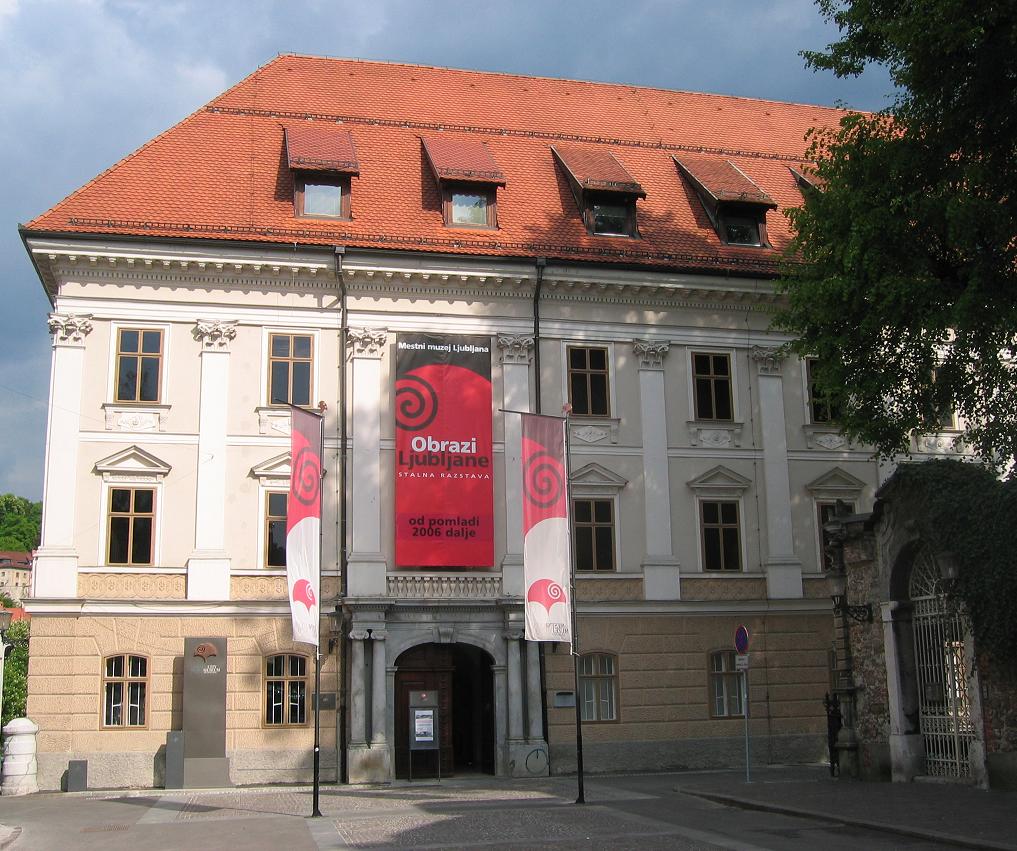
The City Museum of Ljubljana, housed in the historic Auersperg Palace, serves as the primary institution for documenting the history and cultural development of the Slovenian capital. The museum's permanent exhibition traces the city's evolution from prehistoric pile dwellers and the Roman settlement of Emona through the medieval period to the modern era.
The building itself is a significant cultural monument, featuring a blend of Renaissance and Baroque architectural elements. It provides a comprehensive overview of the urban, social, and artistic life of Ljubljana, utilizing archaeological artifacts, historical documents, and interactive displays to engage visitors with the city's heritage.
Key Facts
- Materials
- Stone, Brick, Plaster
- Civilization
- Slovenian
- Accessibility
- Fully wheelchair accessible
- Date(s)
- 17th century (Palace)
- Condition
- Well-preserved, active museum
- Original Function
- Aristocratic residence (Auersperg Palace)
- Key Figures
- Auersperg family
The Auersperg Palace
17th centuryThe museum is located in the Auersperg Palace, a structure built in the 17th century that served as a residence for the noble Auersperg family. The building reflects the architectural trends of the period in the Carniola region.
Establishment of the Museum
1935The City Museum of Ljubljana was founded in 1935 to preserve the historical memory of the city. It was initially established to collect and exhibit artifacts related to the urban development of Ljubljana.
Modernization and Integration
21st centuryIn recent years, the museum underwent significant renovations to integrate modern exhibition standards. It now operates as part of the Museum and Galleries of Ljubljana, coordinating research and cultural programming across multiple sites.
Cultural Significance
The museum is central to the preservation of Ljubljana's identity, acting as a repository for the city's collective memory. It plays a vital role in public education and the promotion of Slovenian history, bridging the gap between ancient archaeological discoveries and contemporary urban life.
Interpretive Notes
Scholarly debates and areas of uncertainty
Discussions often center on the interpretation of the Roman Emona legacy versus the Slavic medieval foundations of the city, and how best to represent the complex multi-ethnic history of the region within a national museum framework.
Visiting Information
Entry Rules
Open Tuesday to Sunday. Tickets can be purchased at the entrance. No specific dress code required.
Best Times to Visit
Weekday mornings are generally quieter. The museum often hosts special events during the annual 'Museum Summer Night' in June.
Photography
Personal photography is permitted for non-commercial use without flash. Tripods require prior authorization.
Preservation Notes
Visitors are requested to refrain from touching artifacts and to follow signage regarding restricted areas within the historic palace structure.
Nearby POIs
11 shown- House of Illusions0.3 km
- Ljubljana Castle0.4 km
- Robbov vodnjak0.4 km
- Ljubljana Cathedral0.5 km
- Plecnik House0.5 km
- Franciscan Church of the Annunciation0.6 km
- Narodni muzej Slovenije0.7 km
- National Gallery of Slovenia0.8 km
- Museum of Modern Art Ljubljana0.8 km
- Museum of Contemporary Art Metelkova1.4 km
- National Museum of Contemporary History1.5 km
Sources & Further Reading
- [1]
- [2]Ljubljana: A History of the City — Peter Štih. Slovenian Academy of Sciences and Arts (2010)
Key Facts
- Materials
- Stone, Brick, Plaster
- Civilization
- Slovenian
- Accessibility
- Fully wheelchair accessible
- Date(s)
- 17th century (Palace)
- Condition
- Well-preserved, active museum
- Original Function
- Aristocratic residence (Auersperg Palace)
- Key Figures
- Auersperg family
Nearby POIs
11 shown- House of Illusions0.3 km
- Ljubljana Castle0.4 km
- Robbov vodnjak0.4 km
- Ljubljana Cathedral0.5 km
- Plecnik House0.5 km
- Franciscan Church of the Annunciation0.6 km
- Narodni muzej Slovenije0.7 km
- National Gallery of Slovenia0.8 km
- Museum of Modern Art Ljubljana0.8 km
- Museum of Contemporary Art Metelkova1.4 km
- National Museum of Contemporary History1.5 km