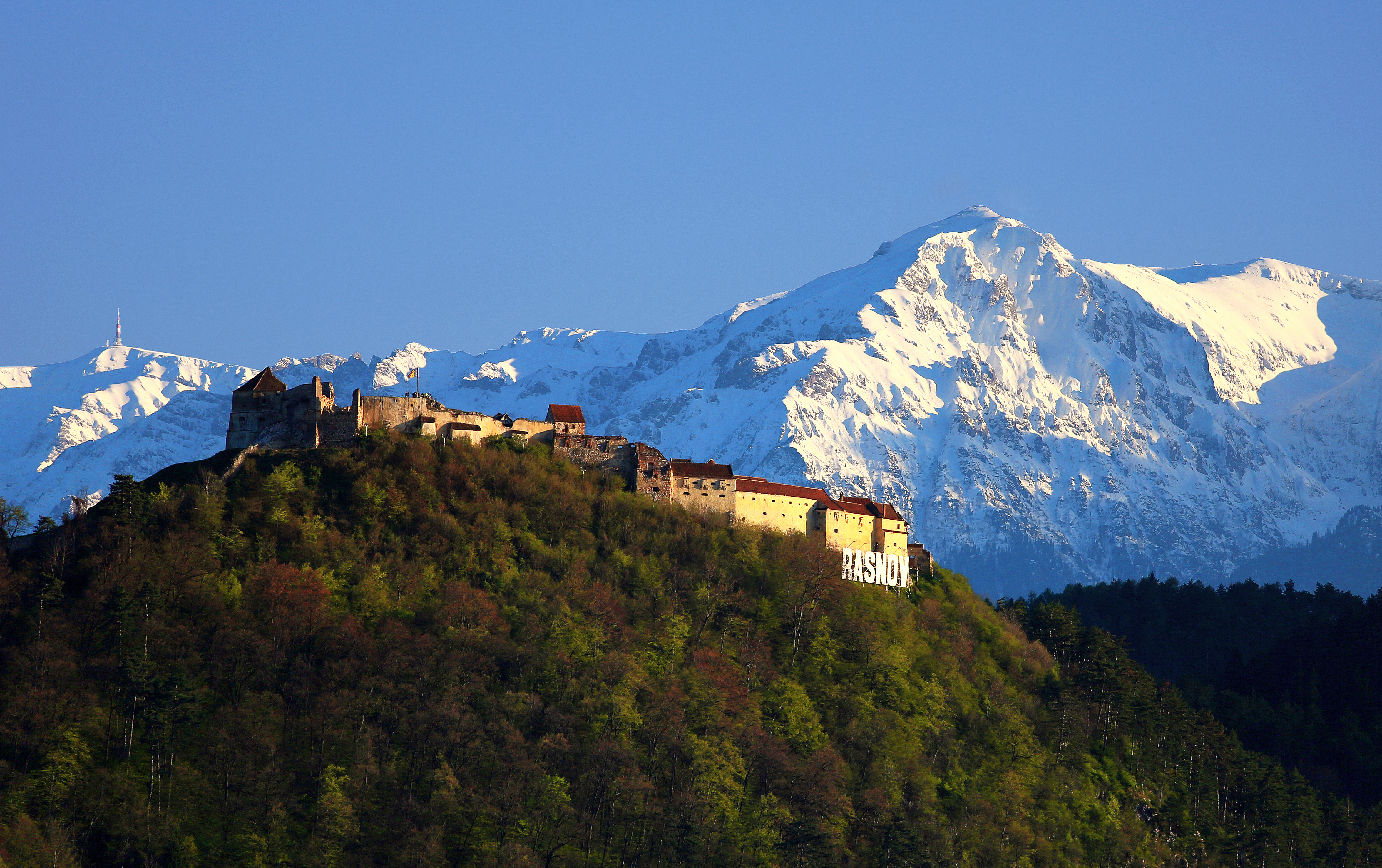
Râșnov Fortress is a historic fortification situated on a rocky hilltop in the Carpathian Mountains, overlooking the town of Râșnov in Transylvania. Originally constructed in the 13th century, the fortress served as a refuge for local villagers during times of conflict, particularly against Ottoman and Tatar invasions. Its strategic location allowed it to control the mountain pass between Wallachia and Transylvania.
The site is characterized by its defensive walls, nine towers, and two bastions, which enclose a complex of houses, a school, and a chapel. One of its most notable features is a 146-meter-deep well, which was reportedly dug by prisoners of war over several decades to ensure the fortress's water supply during prolonged sieges.
Key Facts
- Materials
- Stone, Brick, Wood
- Civilization
- Teutonic Knights / Transylvanian Saxons
- Accessibility
- Accessible via walking path or funicular
- Date(s)
- 13th century
- Condition
- Partially restored and open to the public
- Original Function
- Refuge and defensive fortification
- Key Figures
- Teutonic Knights
Foundation by the Teutonic Knights
1211-1225The fortress was initially established by the Teutonic Knights as part of their defensive efforts in the Burzenland region. Following their expulsion, the local Saxon population took over the site, expanding it into a fortified refuge.
Medieval Defense and Siege
14th-17th centuryThroughout the Middle Ages, the fortress successfully protected the inhabitants of Râșnov from numerous invasions. It was one of the few fortifications in the region that remained unconquered for centuries, largely due to its elevated position and the internal water supply.
Decline and Modern Restoration
19th century - presentFollowing the cessation of major regional conflicts, the fortress fell into disuse and suffered damage from fires and earthquakes. In the late 20th and early 21st centuries, extensive restoration projects were undertaken to stabilize the walls and preserve the site as a cultural heritage landmark.
Cultural Significance
Râșnov Fortress stands as a symbol of the resilience of the Transylvanian Saxon communities. It represents the unique 'peasant fortress' architecture of the region, where the primary purpose was not just military defense, but the long-term survival of the civilian population during periods of instability.
Today, the fortress is a significant cultural landmark in the Brașov region, hosting historical reenactments, film festivals, and educational programs that highlight the medieval history of Transylvania.
Interpretive Notes
Scholarly debates and areas of uncertainty
The exact timeline of the fortress's initial construction remains a subject of minor debate, as archaeological evidence of the earliest wooden structures is difficult to date precisely compared to the later stone fortifications.
Visiting Information
Entry Rules
Open daily. Ticketed entry required. Visitors are encouraged to wear comfortable walking shoes due to the steep terrain.
Best Times to Visit
Late spring and early autumn offer the best weather for exploring the outdoor fortifications. Weekdays are recommended to avoid peak tourist crowds from nearby Brașov.
Photography
Personal photography is permitted throughout the site. Commercial filming requires prior authorization from the administration.
Preservation Notes
Stay within marked pathways to avoid unstable masonry. The site is undergoing ongoing conservation; please respect all signage regarding restricted areas.
Nearby POIs
11 shownSources & Further Reading
- [1]Transylvanian Saxon Fortified Churches and Citadels — Fabian, G.. Editura Academiei Române (2010)
- [2]The Teutonic Knights in Transylvania — Mureșan, D.. Historical Review of Transylvania (2015)
Key Facts
- Materials
- Stone, Brick, Wood
- Civilization
- Teutonic Knights / Transylvanian Saxons
- Accessibility
- Accessible via walking path or funicular
- Date(s)
- 13th century
- Condition
- Partially restored and open to the public
- Original Function
- Refuge and defensive fortification
- Key Figures
- Teutonic Knights