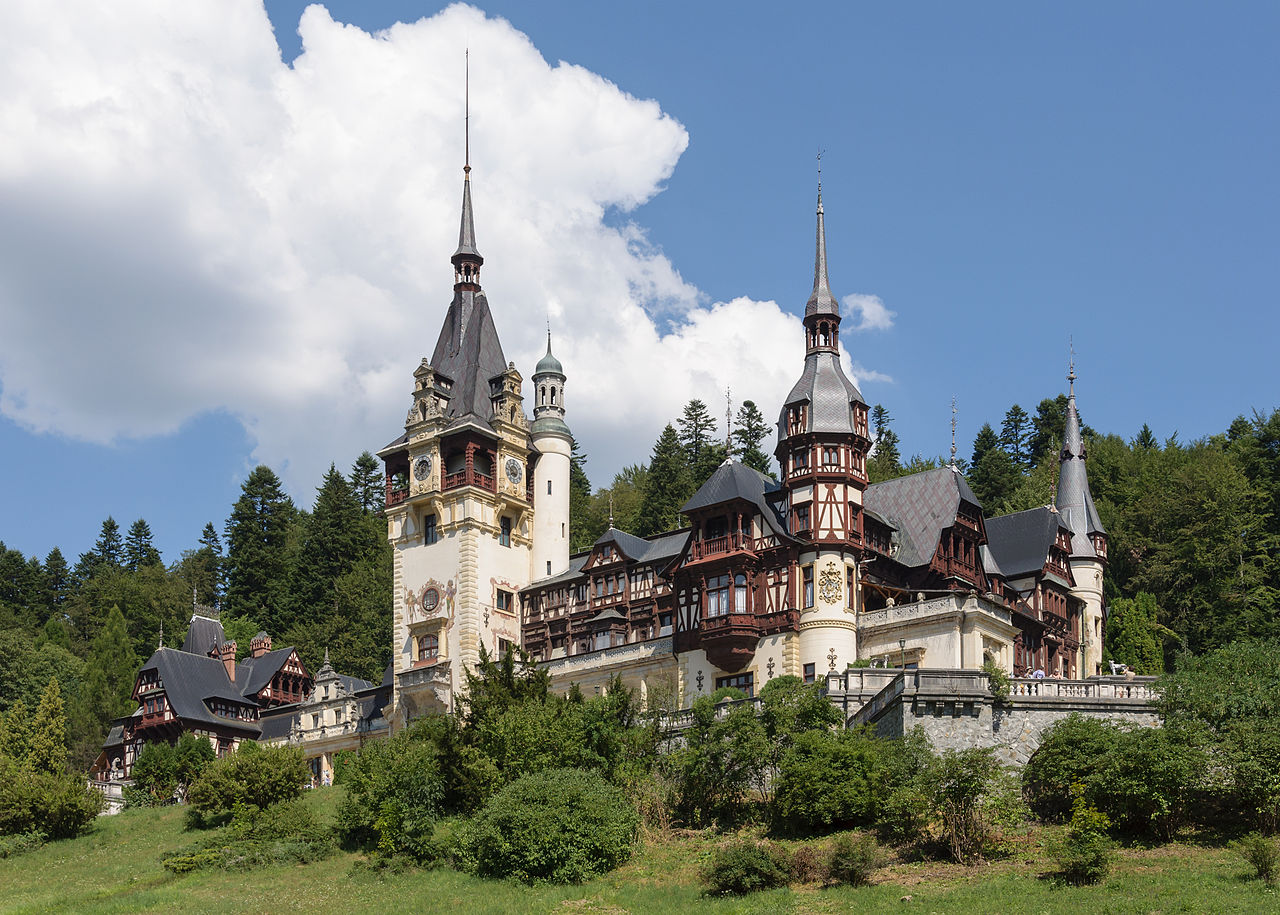
Peleș Castle is a Neo-Renaissance castle located in the Carpathian Mountains near Sinaia, Romania. Commissioned by King Carol I and inaugurated in 1883, the castle served as the summer residence for the Romanian royal family. Its architectural design blends various European styles, primarily German Neo-Renaissance, characterized by intricate wood carvings, ornate facades, and steep-pitched roofs.
The interior is renowned for its extensive collection of European art, including stained glass, Murano crystal chandeliers, and carved walnut paneling. The castle remained a royal residence until the abdication of King Michael I in 1947, after which it was briefly confiscated by the communist regime before being restored as a national museum.
Key Facts
- Materials
- Stone, Brick, Wood, Steel
- Civilization
- Kingdom of Romania
- Accessibility
- Limited; ground floor accessible, upper floors require stairs
- Date(s)
- 1873-1914
- Condition
- Well-preserved, functioning as a national museum
- Original Function
- Royal summer residence
- Key Figures
- King Carol I, Queen Elisabeth of Romania, Johannes Schultz, Karel Liman
Commission and Design
1873-1883King Carol I purchased the land in 1872 and commissioned the project to serve as a royal retreat. The initial design was drafted by German architect Johannes Schultz, who envisioned a structure reflecting the aesthetics of the German Renaissance.
Expansion and Modernization
1893-1914Under the direction of architect Karel Liman, the castle underwent significant expansions. During this period, it became one of the most modern residences in Europe, featuring central heating, electricity, and a vacuum cleaning system.
Communist Era and Nationalization
1947-1989Following the forced abdication of King Michael I, the castle was seized by the communist government. It was briefly closed to the public and used as a protocol site for visiting dignitaries, though it suffered from neglect during the later years of the regime.
Restoration and Museum Status
1990-PresentAfter the 1989 revolution, the castle was reopened to the public. In 2007, the Romanian state reached a settlement with the royal family, returning the property to King Michael I while maintaining its status as a public museum.
Cultural Significance
Peleș Castle stands as a symbol of the Romanian monarchy's efforts to modernize the nation and align it with Western European cultural standards during the late 19th century. It represents the synthesis of Romanian craftsmanship with European architectural trends, serving as a repository for the country's royal heritage.
Today, it is one of the most visited cultural sites in Romania, playing a vital role in the national tourism economy and serving as a primary venue for state ceremonies and cultural events.
Interpretive Notes
Scholarly debates and areas of uncertainty
There is ongoing academic discussion regarding the extent to which the castle's design was influenced by the personal aesthetic preferences of Queen Elisabeth versus the political image-building goals of King Carol I. Additionally, the legal status of the property during the transition from royal ownership to state museum remains a subject of periodic public and legal discourse.
Visiting Information
Entry Rules
Open Tuesday through Sunday. Tickets must be purchased at the site; guided tours are mandatory for the main floor and optional for the upper floors. Large bags are not permitted inside.
Best Times to Visit
Weekdays during the shoulder seasons (May-June or September-October) to avoid peak summer crowds and winter ski traffic.
Photography
Personal photography is permitted in the courtyard. Interior photography requires a separate paid permit; flash and tripods are strictly prohibited.
Preservation Notes
Visitors must wear protective shoe covers provided at the entrance to preserve the historic parquet floors. Touching of artifacts and wall coverings is strictly prohibited.
Nearby POIs
11 shownSources & Further Reading
- [1]Peleș Castle: The Royal Residence — Narcis Dorin Ion. Peleș National Museum Publishing (2015)
- [2]The Architecture of the Romanian Monarchy — Sorin Iftimi. Editura Istros (2018)
Key Facts
- Materials
- Stone, Brick, Wood, Steel
- Civilization
- Kingdom of Romania
- Accessibility
- Limited; ground floor accessible, upper floors require stairs
- Date(s)
- 1873-1914
- Condition
- Well-preserved, functioning as a national museum
- Original Function
- Royal summer residence
- Key Figures
- King Carol I, Queen Elisabeth of Romania, Johannes Schultz, Karel Liman