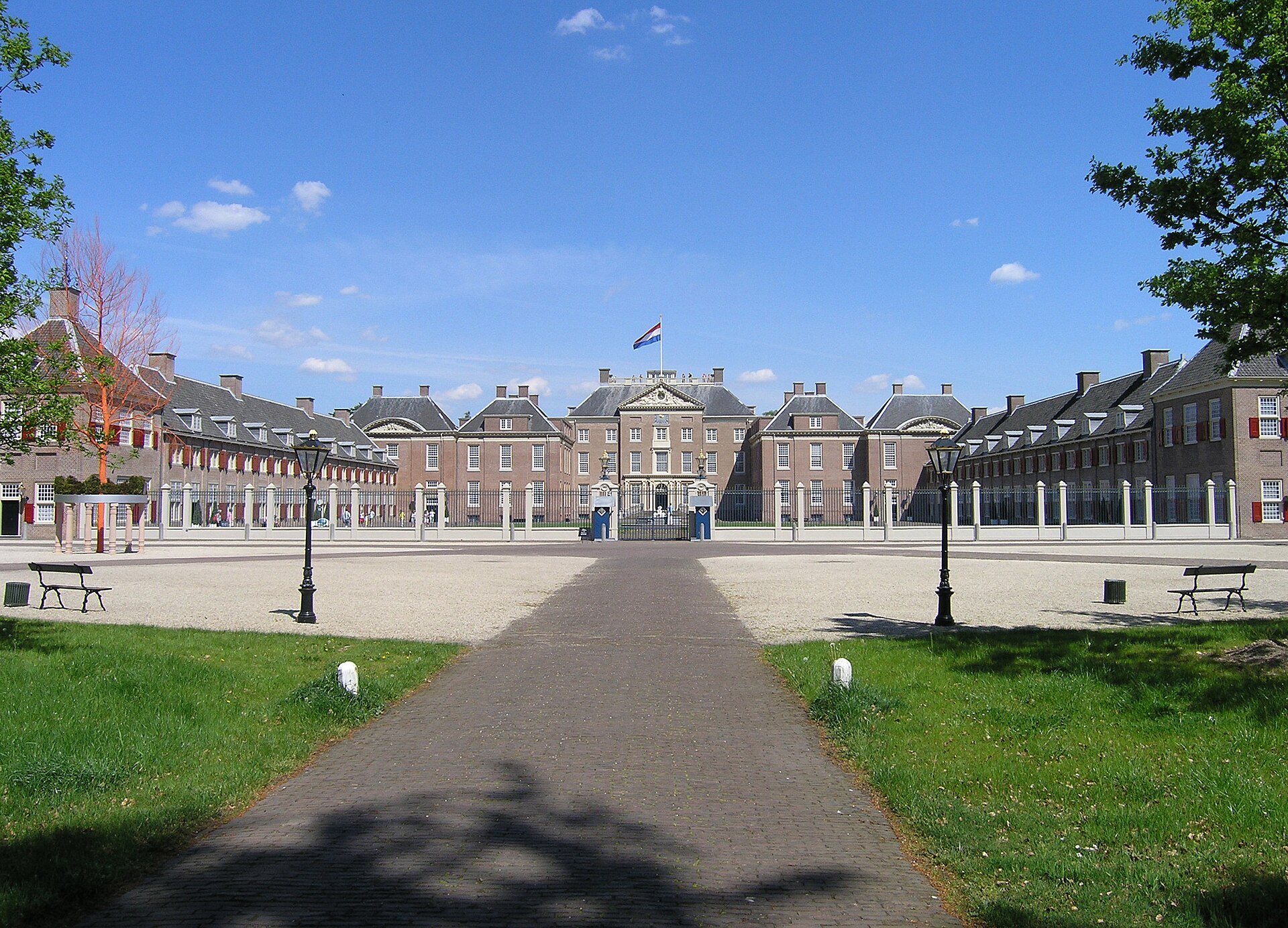
Paleis het Loo is a former royal palace located in Apeldoorn, Netherlands, commissioned by William III of Orange and his wife Mary II Stuart. Constructed between 1684 and 1686, the palace served as a summer residence for the House of Orange-Nassau for over three centuries. Its architecture is a prime example of Dutch Baroque, characterized by strict symmetry and integration with the surrounding landscape.
The palace underwent significant expansion and modernization throughout the 18th and 19th centuries. Following its transition into a national museum in 1984, the interiors were restored to reflect various stages of royal occupancy, while the extensive formal gardens were reconstructed based on 17th-century designs to showcase the original aesthetic vision of the Dutch Golden Age.
Key Facts
- Materials
- Brick, Sandstone, Slate
- Civilization
- Dutch
- Accessibility
- Fully accessible with elevators and paved garden paths
- Date(s)
- 1684-1686
- Condition
- Restored and operating as a national museum
- Original Function
- Royal summer residence
- Key Figures
- William III of Orange, Mary II Stuart, Queen Wilhelmina
Origins and Construction
1684-1686The palace was built on the site of a medieval hunting lodge known as 'Het Loo'. Architect Jacob Roman designed the central block, while Daniel Marot was responsible for the lavish interior decorations, establishing the Dutch Baroque style.
Expansion and Royal Use
18th-19th CenturySuccessive generations of the House of Orange-Nassau expanded the palace. King Louis Bonaparte briefly resided here during the French occupation, and later, King William I and his successors utilized the estate as a primary summer retreat.
Museum Transformation
1984-PresentAfter Queen Wilhelmina passed away in 1962, the palace was gifted to the state. Following extensive restoration work, it opened as the National Museum Paleis het Loo in 1984, dedicated to preserving the history of the Dutch monarchy.
Cultural Significance
Paleis het Loo serves as a vital repository for the history of the Dutch monarchy and the development of European garden design. It represents the political and cultural influence of the House of Orange-Nassau and provides insight into the evolution of royal domestic life in the Netherlands.
The palace is also significant for its role in the history of landscape architecture. The restoration of the formal gardens is considered one of the most accurate recreations of a 17th-century 'parterre' garden in Europe, serving as a reference point for historical garden conservation.
Interpretive Notes
Scholarly debates and areas of uncertainty
Debates exist regarding the extent to which the 1980s restoration prioritized the 17th-century 'William and Mary' aesthetic over the later 19th-century modifications. Some architectural historians argue that the removal of certain later additions to achieve a 'pure' Baroque look obscures the palace's long-term functional evolution.
Visiting Information
Entry Rules
Open Tuesday through Sunday. Tickets must be purchased online in advance. Visitors are required to store large bags in lockers. The palace is a non-smoking site.
Best Times to Visit
Spring and early summer are ideal for viewing the formal gardens in bloom. Weekdays outside of school holidays offer the quietest experience for touring the interior.
Photography
Personal photography is permitted in the palace and gardens without flash or tripods. Commercial photography requires prior written authorization from the museum administration.
Preservation Notes
The palace is a protected national monument. Visitors must refrain from touching historical textiles, furniture, or wall coverings. Stay on designated paths in the garden areas to protect the historical planting schemes.
Nearby POIs
0 shownNo nearby POIs listed yet.
Sources & Further Reading
- [1]
- [2]Paleis het Loo: A Royal Residence — R.J. van der Meulen. Waanders Publishers (2005)
Key Facts
- Materials
- Brick, Sandstone, Slate
- Civilization
- Dutch
- Accessibility
- Fully accessible with elevators and paved garden paths
- Date(s)
- 1684-1686
- Condition
- Restored and operating as a national museum
- Original Function
- Royal summer residence
- Key Figures
- William III of Orange, Mary II Stuart, Queen Wilhelmina
Nearby POIs
0 shownNo nearby POIs listed yet.