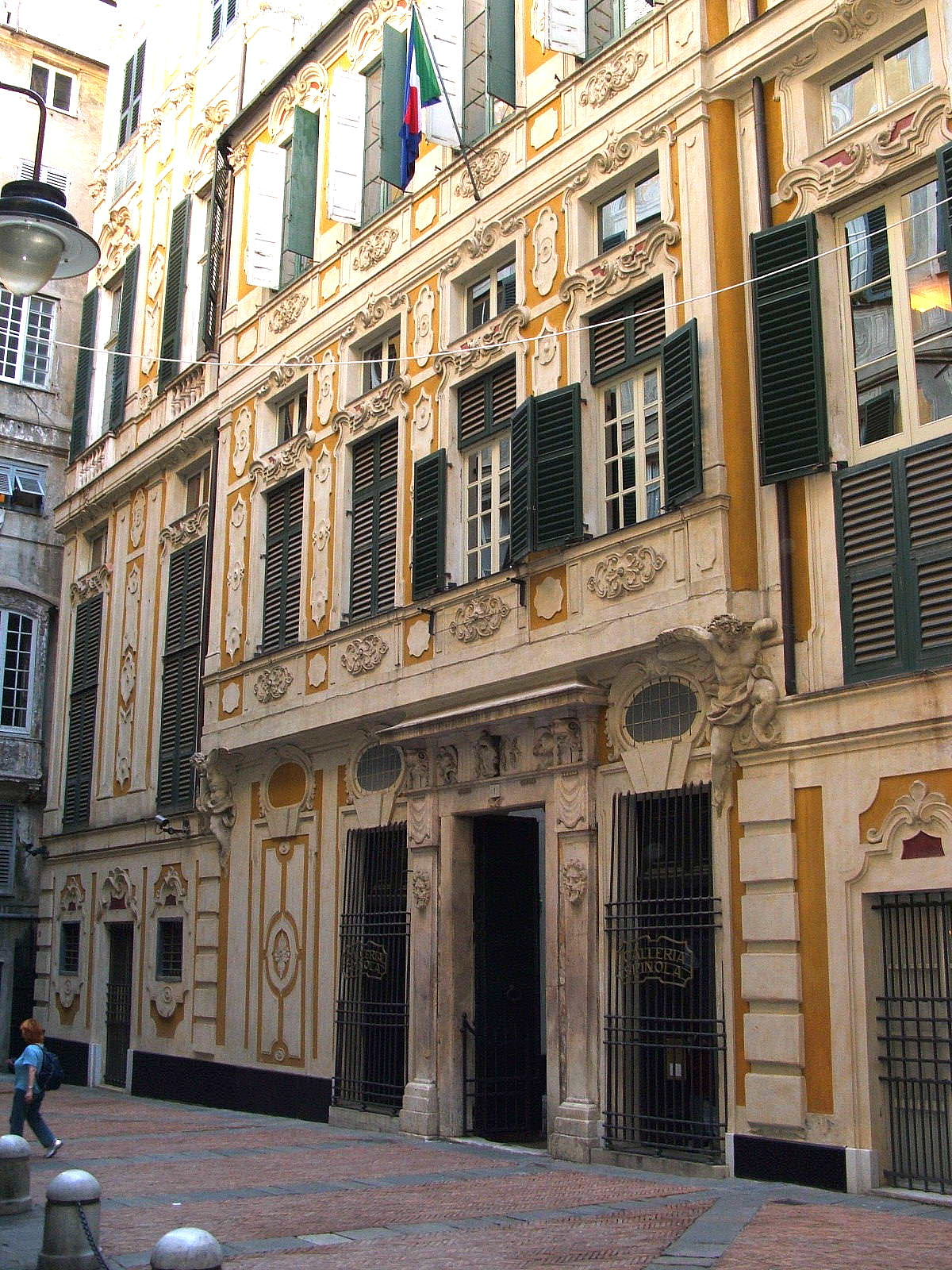
Palazzo Spinola di Pellicceria, also known as Palazzo di Paolo Spinola di San Luca, is a historic aristocratic residence located in the heart of Genoa. Constructed in the late 16th century, the building serves as a prime example of the Genoese 'Palazzi dei Rolli,' a series of noble residences recognized for their architectural significance and role in hosting state visitors during the Republic of Genoa.
Today, the palace functions as the National Gallery of Liguria. It preserves the original layout of a patrician home, featuring elaborate frescoes, period furniture, and an extensive art collection that includes works by masters such as Antonello da Messina, Rubens, and Van Dyck. The site offers a unique glimpse into the lifestyle of the Genoese nobility during the city's maritime golden age.
Key Facts
- Materials
- Stone, Stucco, Marble, Frescoes
- Civilization
- Republic of Genoa
- Accessibility
- Partially accessible; elevator available for upper floors
- Date(s)
- 1593
- Condition
- Well-preserved, functioning as a national museum
- Original Function
- Private aristocratic residence
- Key Figures
- Paolo Spinola, Franco Spinola, Paolo Roberto Spinola
Construction and Early History
1593The palace was commissioned by the Grimaldi family and later acquired by the Spinola family. It was designed to reflect the wealth and status of the Genoese merchant aristocracy, featuring a grand atrium and a monumental staircase.
The Spinola Legacy
17th-19th centuryFor centuries, the palace served as the primary residence for the Spinola di Pellicceria branch. The interior was continuously updated with Baroque decorations, frescoes, and a growing collection of fine art acquired through the family's extensive trade networks.
Donation and Museum Transformation
1958In 1958, the last heirs of the Spinola family, Paolo and Franco Spinola, donated the palace and its entire contents to the Italian State. This generous act ensured the preservation of the residence as a house-museum, maintaining the integrity of the original collection.
Cultural Significance
Palazzo Spinola is a cornerstone of Genoese cultural heritage, representing the 'Rolli' tradition where private palaces were designated to host distinguished guests of the Republic. Its preservation as a house-museum allows for the study of 17th-century interior design and the specific aesthetic tastes of the Genoese merchant class.
The palace also plays a vital role in the local community as a center for art history and restoration. Its collection provides essential context for the development of Ligurian art, bridging the gap between local traditions and the broader European influences brought by trade and diplomatic ties.
Interpretive Notes
Scholarly debates and areas of uncertainty
There is ongoing academic discussion regarding the attribution of certain frescoes within the palace, as the rapid succession of artists employed by the Spinola family often led to collaborative works. Additionally, scholars debate the extent to which the current museum arrangement reflects the original 17th-century spatial usage versus later 19th-century modifications.
Visiting Information
Entry Rules
Open Tuesday through Sunday. Tickets can be purchased at the entrance. Visitors are requested to leave large bags in the cloakroom. No flash photography allowed.
Best Times to Visit
Weekday mornings are generally quieter. The palace is particularly pleasant during the spring and autumn months when the internal courtyard remains cool.
Photography
Personal photography is permitted without flash or tripods. Professional photography requires prior authorization from the museum administration.
Preservation Notes
Visitors are asked to refrain from touching the furniture, tapestries, or wall surfaces. Please follow the marked visitor path to protect the historic flooring.
Nearby POIs
0 shownNo nearby POIs listed yet.
Sources & Further Reading
- [1]Palazzo Spinola: The National Gallery of Liguria — Farida Simonetti. Sagep Editori (2012)
- [2]The Palazzi dei Rolli of Genoa — Ennio Poleggi. De Ferrari (2006)
Key Facts
- Materials
- Stone, Stucco, Marble, Frescoes
- Civilization
- Republic of Genoa
- Accessibility
- Partially accessible; elevator available for upper floors
- Date(s)
- 1593
- Condition
- Well-preserved, functioning as a national museum
- Original Function
- Private aristocratic residence
- Key Figures
- Paolo Spinola, Franco Spinola, Paolo Roberto Spinola
Nearby POIs
0 shownNo nearby POIs listed yet.