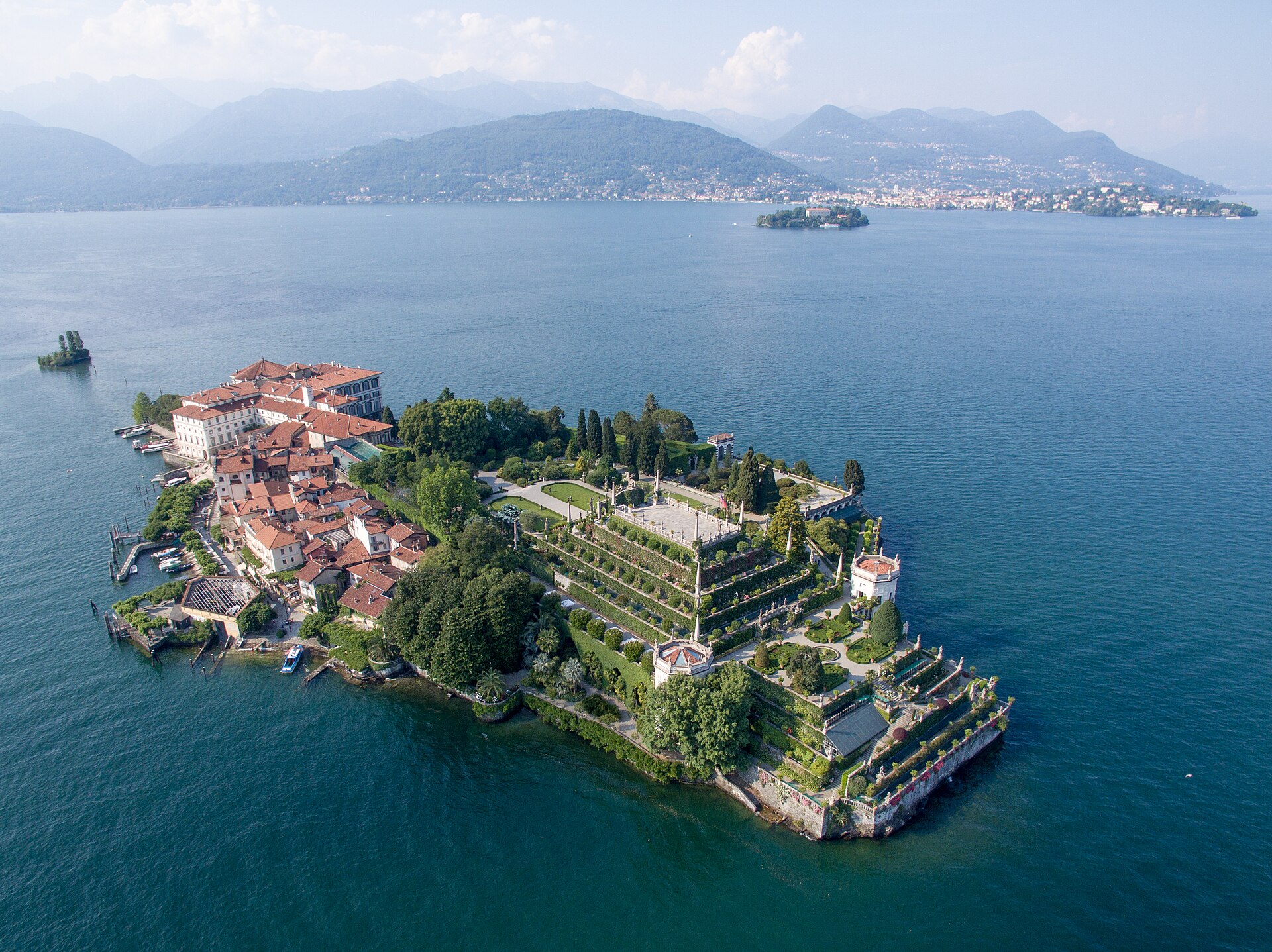
Palazzo Borromeo is a monumental Baroque palace located on Isola Bella in Lake Maggiore, Italy. Commissioned by the Borromeo family in the 17th century, the structure was designed to transform the rocky island into a floating garden and residence, reflecting the family's wealth and influence in the region.
The palace is renowned for its opulent interior, featuring grand halls decorated with paintings, tapestries, and furniture from the 17th to 19th centuries. The lower level contains the famous grottoes, a series of rooms decorated with intricate pebble and shell mosaics, designed to provide a cool, immersive environment during the summer months.
Key Facts
- Materials
- Stone, Marble, Stucco, Shells, Pebbles
- Civilization
- Italian
- Accessibility
- Limited due to historic architecture and terraced gardens
- Date(s)
- 1632 - 1671
- Condition
- Well-preserved, open as a museum
- Original Function
- Private residence and summer retreat
- Key Figures
- Vitaliano VI Borromeo, Carlo III Borromeo
Origins and Vision
1632Carlo III Borromeo began the transformation of the island, which was then a barren rock, into a grand residence. The project was intended to serve as a symbol of the family's prestige.
Baroque Expansion
1650 - 1671Vitaliano VI Borromeo expanded the project significantly, employing architects like Angelo Crivelli and Francesco Castelli to create the elaborate terraced gardens and the complex interior layout.
Completion and Refinement
18th - 19th centuryThe gardens were finalized and the interior collections were expanded, incorporating significant art pieces and decorative elements that define the palace's current aesthetic.
Cultural Significance
The palace serves as a prime example of the 'theatre of the world' concept prevalent in Baroque architecture, where nature and artifice are blended to create a dramatic landscape. It remains a central cultural landmark for the Lake Maggiore region, illustrating the lifestyle of the Italian aristocracy during the 17th century.
Interpretive Notes
Scholarly debates and areas of uncertainty
The attribution of specific architectural elements remains a subject of study, as the project involved multiple architects over several decades, leading to a complex layering of design influences that are sometimes difficult to disentangle.
Visiting Information
Entry Rules
Ticketed entry required. Open seasonally from spring through autumn. Visitors must follow designated paths through the palace and gardens.
Best Times to Visit
Spring and early summer to experience the gardens in full bloom. Weekdays are recommended to avoid high tourist traffic.
Photography
Personal photography is permitted in the gardens and certain palace areas; flash and tripods are prohibited inside the museum rooms.
Preservation Notes
The shell-adorned grottoes are highly sensitive to humidity and touch. Please refrain from touching any surfaces or decorative elements.
Nearby POIs
0 shownNo nearby POIs listed yet.
Sources & Further Reading
- [1]The Borromeo Islands: A History — Alessandro Morandotti. Silvana Editoriale (2011)
- [2]Baroque Gardens of Italy — Attilio Petruccioli. University of Pennsylvania Press (2000)
Key Facts
- Materials
- Stone, Marble, Stucco, Shells, Pebbles
- Civilization
- Italian
- Accessibility
- Limited due to historic architecture and terraced gardens
- Date(s)
- 1632 - 1671
- Condition
- Well-preserved, open as a museum
- Original Function
- Private residence and summer retreat
- Key Figures
- Vitaliano VI Borromeo, Carlo III Borromeo
Nearby POIs
0 shownNo nearby POIs listed yet.