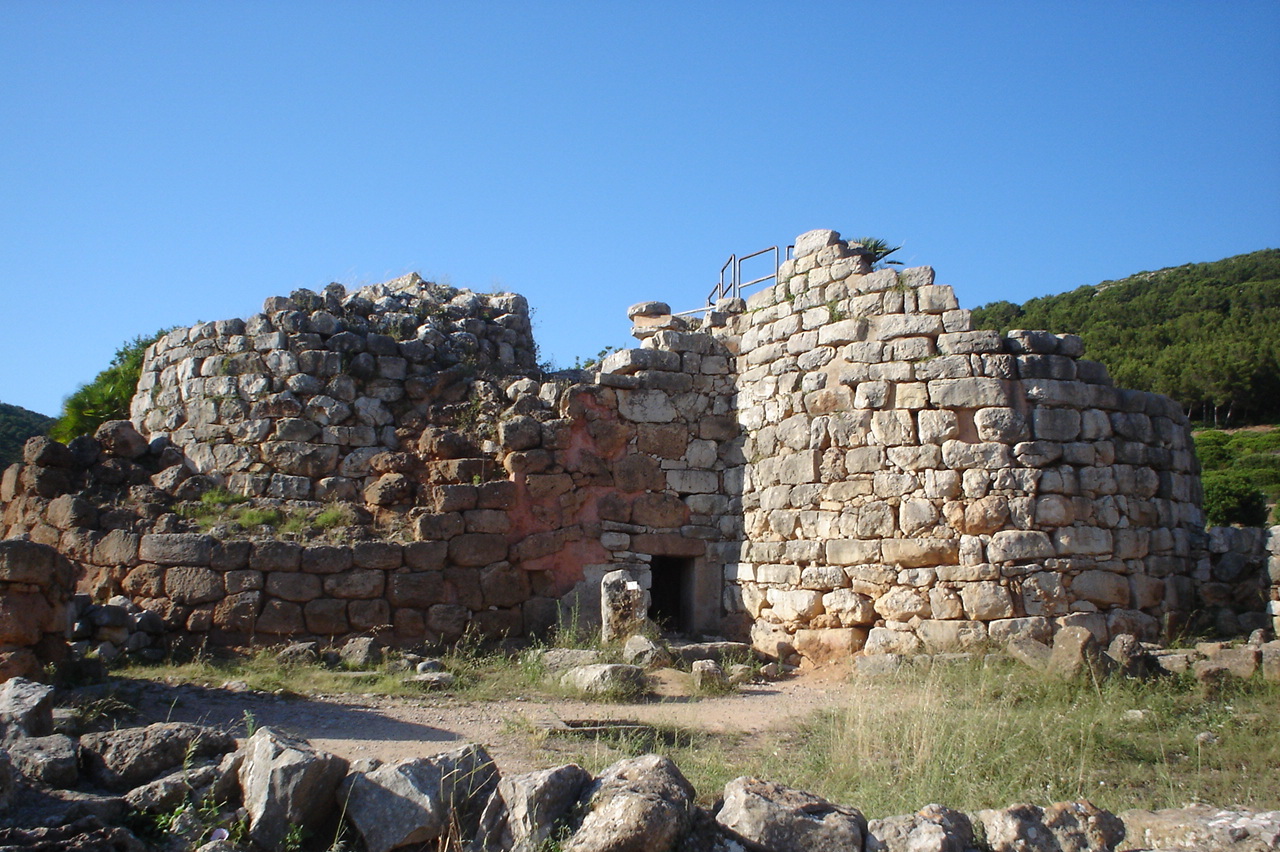
Nuraghe Palmavera is a significant archaeological site located near Alghero on the island of Sardinia. Classified as a complex nuraghe, the structure features a central tower surrounded by a fortified wall and a surrounding village that once contained dozens of circular stone huts. The site provides critical insight into the Nuragic civilization, which dominated the island from the second millennium BCE.
The complex was constructed in multiple phases, beginning with a single central tower and expanding over centuries to include a secondary tower and a defensive perimeter. The surrounding village, which grew to include over 150 huts, served as a hub for social and economic activity, with evidence of communal spaces and specialized workshops for metalworking and pottery.
Key Facts
- Materials
- Limestone, Sandstone
- Civilization
- Nuragic
- Accessibility
- Accessible via gravel paths; some areas uneven
- Date(s)
- 15th - 9th century BCE
- Condition
- Partially excavated and stabilized archaeological site
- Original Function
- Defensive fortification and residential settlement
- Key Figures
- Antonio Taramelli
Early Construction
15th century BCEThe initial phase of the site involved the construction of the central keep, a circular tower built using dry-stone masonry techniques characteristic of early Nuragic architecture.
Expansion and Fortification
12th - 10th century BCEDuring the Middle and Late Bronze Age, the site was expanded with the addition of a second tower and a surrounding curtain wall, transforming the structure into a complex nuraghe.
Village Development
10th - 9th century BCEThe settlement grew significantly during the Iron Age, with the construction of numerous circular huts. The 'Meeting Hut,' a large circular structure with a stone bench, suggests the site served as a regional political or religious center.
Modern Excavation
20th centurySystematic excavations led by archaeologists such as Antonio Taramelli in the early 20th century revealed the extent of the village and the sophisticated nature of the Nuragic social organization.
Cultural Significance
Nuraghe Palmavera is a primary example of the Nuragic civilization's architectural ingenuity and social structure. The presence of the 'Meeting Hut' indicates a high level of communal organization, distinguishing it from smaller, isolated towers found elsewhere on the island. It remains a focal point for understanding the transition from Bronze Age pastoralism to more complex Iron Age societal structures in Sardinia.
Interpretive Notes
Scholarly debates and areas of uncertainty
The exact function of the 'Meeting Hut' remains a subject of discussion. While many scholars interpret it as a place for political assembly or religious ritual, others suggest it may have served as a specialized workshop or a communal storage facility for the village.
Visiting Information
Entry Rules
Open daily during seasonal hours. Tickets can be purchased at the site entrance. Guided tours are available and recommended for better understanding of the site layout.
Best Times to Visit
Spring and autumn offer the most comfortable temperatures for exploring the outdoor site. Early morning visits are recommended to avoid the heat of the Mediterranean summer.
Photography
Personal photography is permitted. Commercial photography requires prior authorization from the local archaeological authorities.
Preservation Notes
Stay on marked paths to protect the archaeological remains. Do not climb on the stone walls or enter restricted areas. The site is subject to ongoing maintenance to prevent erosion of the dry-stone structures.
Nearby POIs
0 shownNo nearby POIs listed yet.
Sources & Further Reading
- [1]The Nuragic Civilization — Giovanni Lilliu. Ilisso Edizioni (2006)
- [2]Sardinia: The Archaeology of the Nuragic Age — Robert J. Rowland. University of Michigan Press (2001)
Key Facts
- Materials
- Limestone, Sandstone
- Civilization
- Nuragic
- Accessibility
- Accessible via gravel paths; some areas uneven
- Date(s)
- 15th - 9th century BCE
- Condition
- Partially excavated and stabilized archaeological site
- Original Function
- Defensive fortification and residential settlement
- Key Figures
- Antonio Taramelli
Nearby POIs
0 shownNo nearby POIs listed yet.