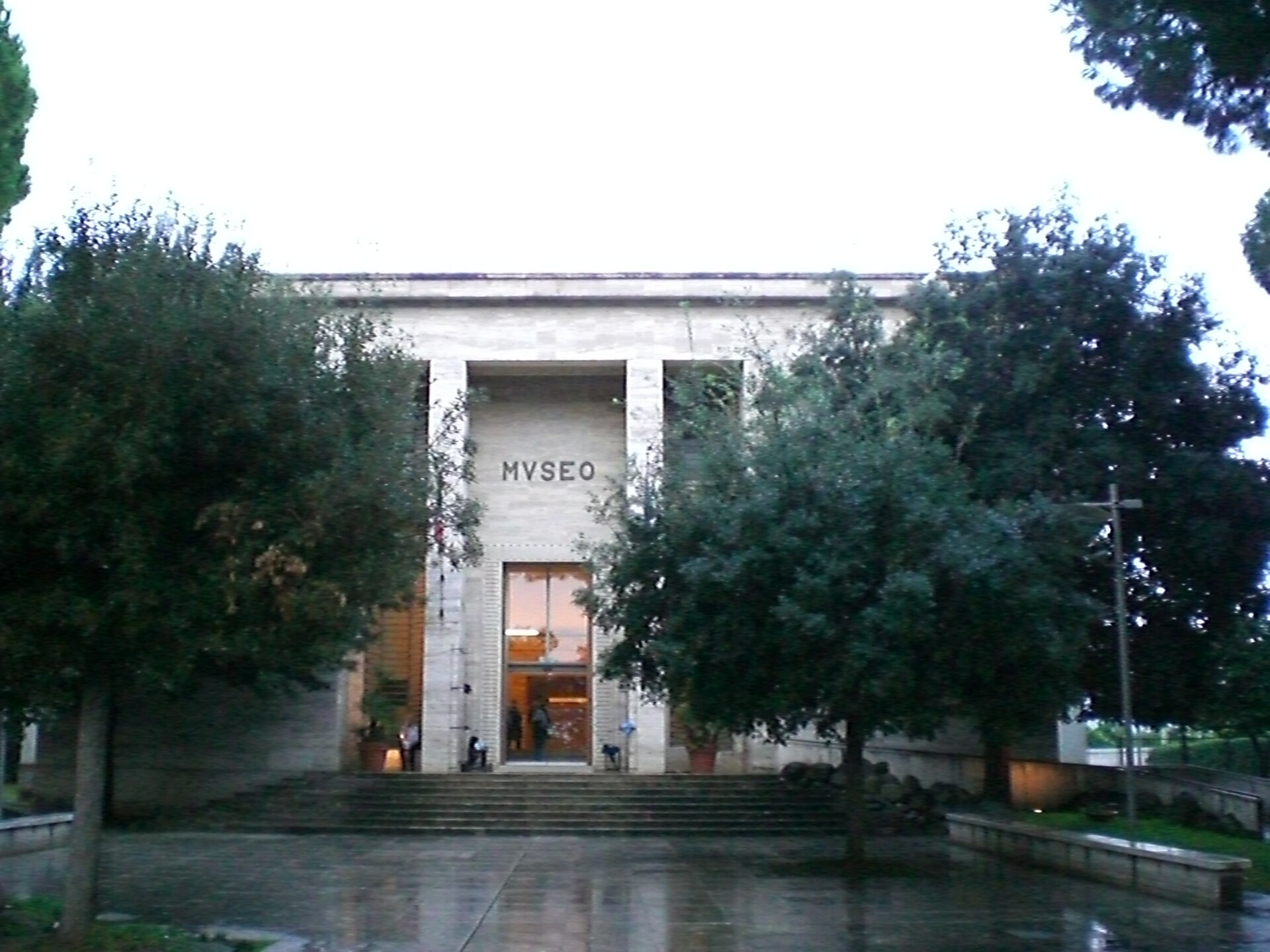
National Archaeological Museum of Paestum
The National Archaeological Museum of Paestum is located within the archaeological park of the ancient Greek city of Poseidonia, later renamed Paestum by the Romans. It serves as the primary repository for artifacts recovered from the site, including significant architectural fragments, votive offerings, and funerary art that document the transition from Greek colony to Roman municipality.
The museum is most renowned for its collection of painted tomb slabs, most notably the 'Tomb of the Diver' (Tomba del Tuffatore). Dating to the early 5th century BCE, this unique set of frescoes provides rare insight into the funerary customs and artistic traditions of the Lucanian and Greek populations in Southern Italy.
Key Facts
- Materials
- Reinforced concrete, Glass, Steel
- Civilization
- Magna Graecia, Roman
- Accessibility
- Fully accessible
- Date(s)
- 1952
- Condition
- Active, well-maintained
- Original Function
- Archaeological museum
- Key Figures
- Amedeo Maiuri, Mario Napoli
Establishment of the Museum
1952The museum was inaugurated to house the growing number of artifacts discovered during the systematic excavations of the Paestum site, which had intensified in the early 20th century under the direction of Amedeo Maiuri.
Discovery of the Tomb of the Diver
1968The discovery of the Tomb of the Diver by archaeologist Mario Napoli significantly elevated the museum's international profile. It remains the only example of Greek wall painting from the Orientalizing, Archaic, or Classical periods to survive in its entirety.
Modern Expansion
21st centuryRecent renovations have focused on the reorganization of the permanent collection to better contextualize the relationship between the museum's artifacts and the nearby monumental temples of the archaeological park.
Cultural Significance
The museum is essential for understanding the cultural synthesis of Magna Graecia. It preserves the material evidence of the interaction between the Greek settlers and the indigenous Lucanian populations, illustrating how artistic and religious practices evolved over centuries of shifting political control.
Interpretive Notes
Scholarly debates and areas of uncertainty
The interpretation of the 'Tomb of the Diver' remains a subject of academic discussion. While some scholars view the diving scene as a metaphor for the transition from life to death, others debate whether the iconography reflects specific philosophical or mystery cult influences prevalent in the region at the time.
Visiting Information
Entry Rules
Open daily except Mondays. Tickets are combined with the Archaeological Park of Paestum. No specific dress code, but respectful attire is expected.
Best Times to Visit
Spring and autumn mornings to avoid the heat of the Mediterranean summer and peak tourist crowds.
Photography
Personal photography is permitted without flash or tripods. Professional photography requires prior authorization from the museum administration.
Preservation Notes
Climate control is strictly maintained to preserve the fragile frescoes. Do not touch display cases or artifacts.
Nearby POIs
0 shownNo nearby POIs listed yet.
Sources & Further Reading
- [1]The Tomb of the Diver — Mario Napoli. De Luca Editore (1970)
- [2]Paestum: Greeks and Romans in Southern Italy — John Griffiths Pedley. Thames & Hudson (1990)
Key Facts
- Materials
- Reinforced concrete, Glass, Steel
- Civilization
- Magna Graecia, Roman
- Accessibility
- Fully accessible
- Date(s)
- 1952
- Condition
- Active, well-maintained
- Original Function
- Archaeological museum
- Key Figures
- Amedeo Maiuri, Mario Napoli
Nearby POIs
0 shownNo nearby POIs listed yet.