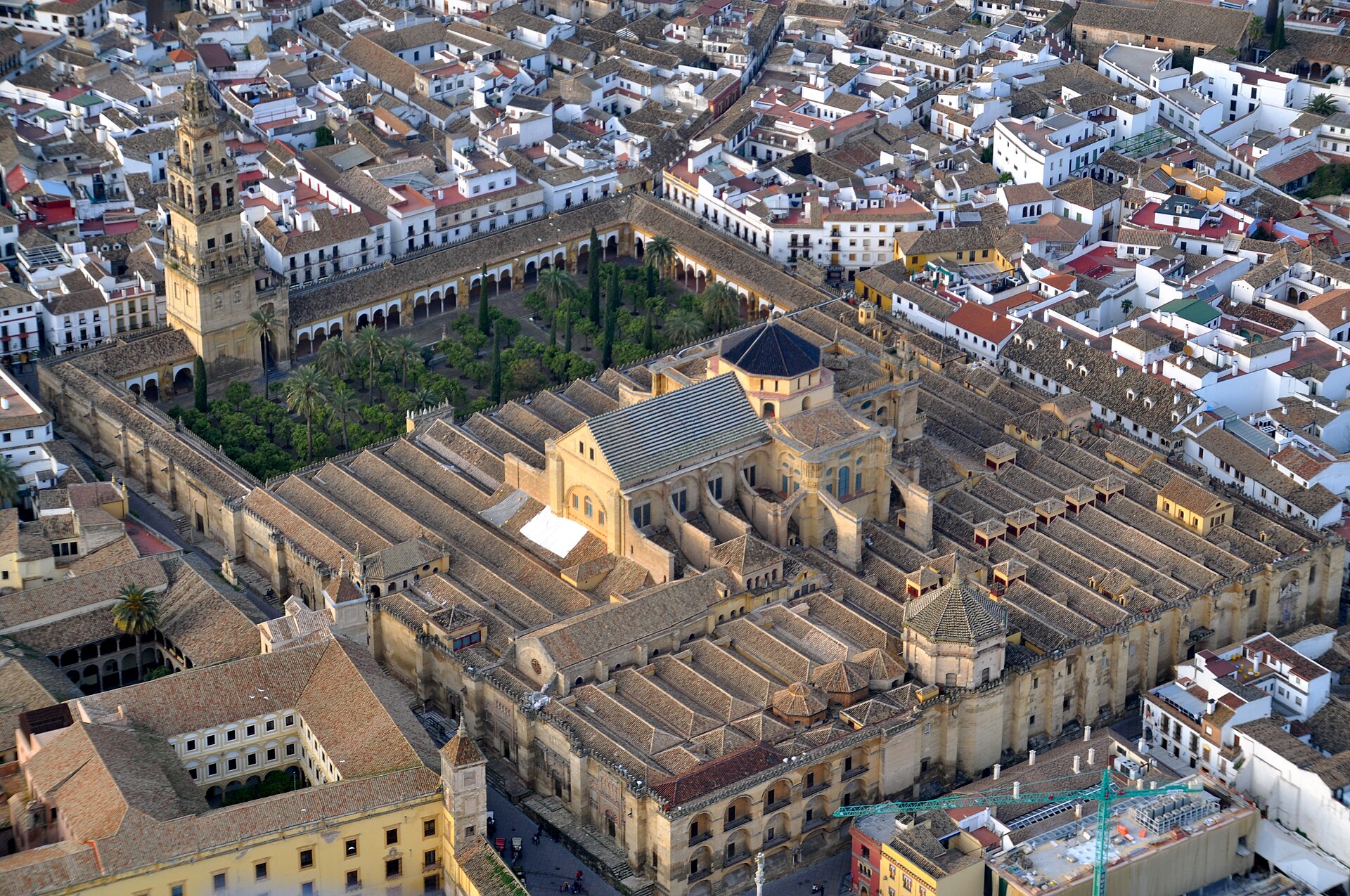
The Mosque–Cathedral of Córdoba, also known as the Mezquita-Catedral, is a unique architectural hybrid that stands as a testament to the layers of religious and cultural history in Andalusia. Originally commissioned in 785 CE by Abd al-Rahman I, the structure was expanded over several centuries by successive Umayyad rulers, becoming one of the largest and most significant mosques in the Islamic world.
Following the Christian conquest of Córdoba in 1236, the building was consecrated as a cathedral. In the 16th century, a Renaissance nave was constructed directly into the center of the existing prayer hall, creating a striking juxtaposition of Islamic hypostyle architecture and Christian ecclesiastical design. The site remains an active place of Catholic worship while serving as a major historical monument.
Key Facts
- Materials
- Brick, Stone, Jasper, Onyx, Marble
- Civilization
- Umayyad, Al-Andalus, Kingdom of Castile
- Accessibility
- Wheelchair accessible with designated routes
- Date(s)
- 785 CE - 1607 CE
- Condition
- Well-preserved, active cathedral
- Original Function
- Congregational Mosque
- Key Figures
- Abd al-Rahman I, Al-Hakam II, Al-Mansur, Charles V
Foundation and Early Expansion
8th - 10th centuryAbd al-Rahman I initiated the construction on the site of a former Visigothic church. Subsequent rulers, most notably Al-Hakam II, expanded the prayer hall and added the intricate mihrab, which remains one of the most celebrated examples of Islamic decorative art.
The Caliphate Peak
10th centuryDuring the height of the Caliphate of Córdoba, the mosque was enlarged to accommodate the growing population. The addition of the maqsura and the expansion of the prayer hall solidified its status as the spiritual heart of Al-Andalus.
Christian Conversion
13th centuryAfter the city fell to Ferdinand III of Castile in 1236, the mosque was converted into a cathedral. Initially, the structure remained largely intact, with only minor modifications made to adapt the space for Christian liturgy.
Renaissance Intervention
16th centuryIn 1523, construction began on a Renaissance-style nave in the center of the mosque. Despite the controversy surrounding the alteration of the historic structure, the project was completed in 1607, resulting in the current architectural synthesis.
Cultural Significance
The Mezquita-Catedral is a primary symbol of the 'convivencia' or coexistence of cultures in medieval Spain. Its architecture reflects the complex interplay between Islamic and Christian artistic traditions, serving as a focal point for discussions on religious heritage and historical preservation.
For the people of Córdoba, the site is a source of immense civic pride and a central element of the city's identity. It attracts millions of visitors annually, acting as a bridge between the Islamic past of Al-Andalus and the Christian history of modern Spain.
Interpretive Notes
Scholarly debates and areas of uncertainty
The 16th-century decision to insert a Renaissance nave into the mosque remains a subject of intense debate among architectural historians. While some view it as a destructive act of cultural erasure, others argue it represents a unique historical layering that saved the original structure from total demolition.
Visiting Information
Entry Rules
Open daily for visitors. Tickets are required for entry. Modest dress is requested as it is an active place of worship. Security checks are in place at the entrance.
Best Times to Visit
Early morning or late afternoon to avoid peak tour group congestion. Weekdays are generally quieter than weekends.
Photography
Personal photography is permitted without flash or tripods. Professional or commercial photography requires prior authorization.
Preservation Notes
Do not touch the historic columns or wall decorations. Follow marked visitor paths to protect the original flooring and structural elements.
Nearby POIs
0 shownNo nearby POIs listed yet.
Sources & Further Reading
- [1]
- [2]The Mezquita of Córdoba: A History — Susana Calvo Capilla. Journal of Islamic Architecture (2015)
Key Facts
- Materials
- Brick, Stone, Jasper, Onyx, Marble
- Civilization
- Umayyad, Al-Andalus, Kingdom of Castile
- Accessibility
- Wheelchair accessible with designated routes
- Date(s)
- 785 CE - 1607 CE
- Condition
- Well-preserved, active cathedral
- Original Function
- Congregational Mosque
- Key Figures
- Abd al-Rahman I, Al-Hakam II, Al-Mansur, Charles V
Nearby POIs
0 shownNo nearby POIs listed yet.