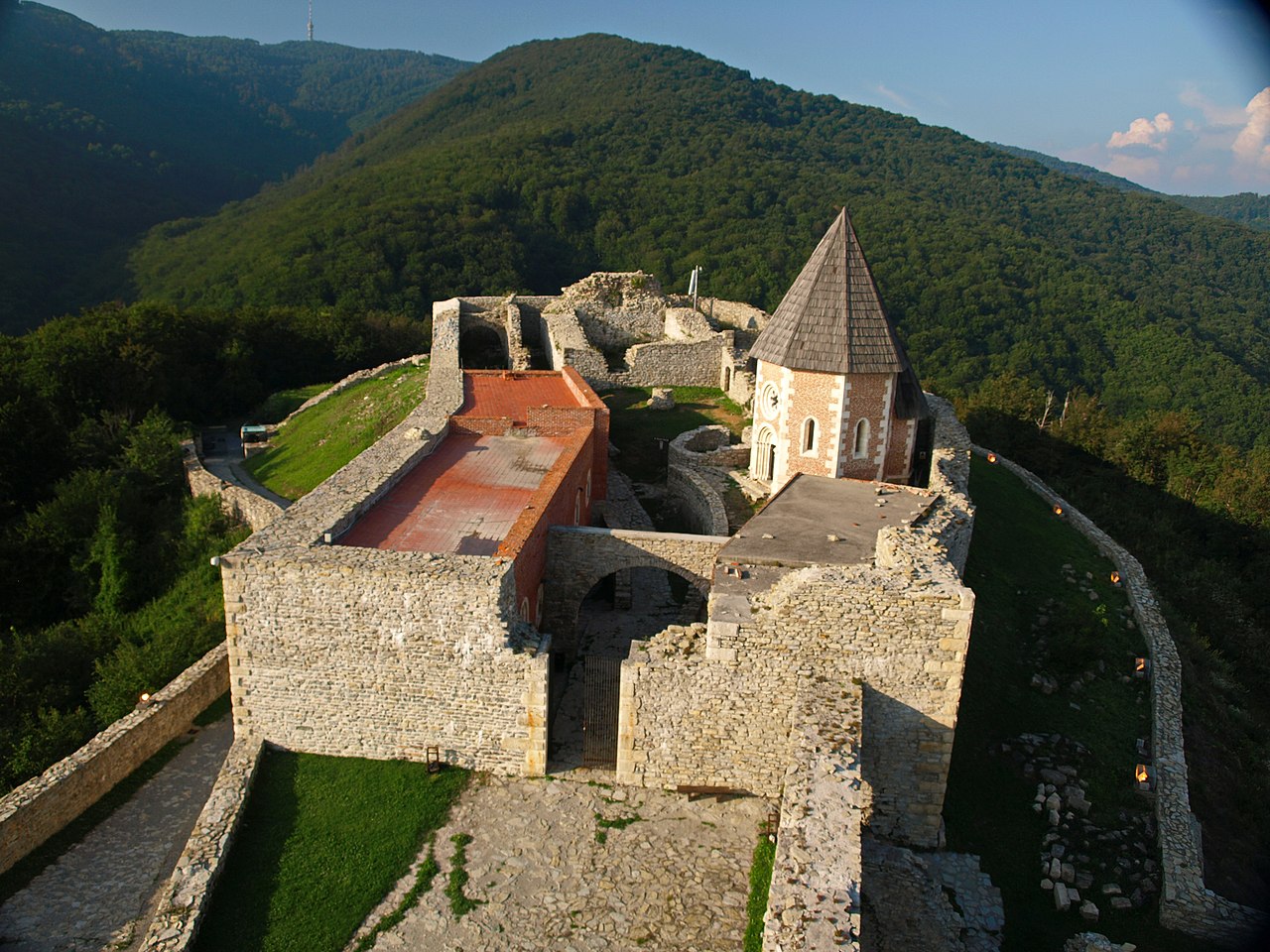
Medvedgrad is a fortified medieval town located on the southern slopes of Medvednica mountain, overlooking the city of Zagreb. Constructed in the 13th century following the devastating Mongol invasion of 1242, the fortress was commissioned by Pope Innocent IV to serve as a defensive stronghold for the Kaptol and the surrounding region.
The site features a complex layout including a residential palace, a chapel dedicated to Saints Philip and James, and a defensive tower known as the 'Oltar domovine' (Altar of the Homeland). While the fortress fell into disrepair following a major earthquake in 1590, extensive archaeological excavations and restoration efforts in the late 20th century have stabilized the ruins, allowing the site to function as a historical landmark and cultural venue.
Key Facts
- Materials
- Stone, Mortar
- Civilization
- Kingdom of Croatia (under Hungarian-Croatian rule)
- Accessibility
- Accessible by road and hiking trails; limited mobility access within the inner courtyard
- Date(s)
- 1249-1254 CE
- Condition
- Partially restored ruins
- Original Function
- Defensive fortress and administrative center
- Key Figures
- Pope Innocent IV, Bishop Filip of Zagreb
Origins and Construction
13th CenturyFollowing the Mongol invasion of 1242, which destroyed much of the region, Bishop Filip of Zagreb initiated the construction of Medvedgrad to protect the church treasury and the local population. It was built on a strategic ridge providing a clear view of the Sava valley.
Strategic Importance
14th-15th CenturyThe fortress served as a powerful political tool, often caught in conflicts between the secular nobility and the ecclesiastical authorities of Zagreb. It functioned as a residence for the bishops and a secure vault for valuables.
Abandonment and Earthquake
16th CenturyThe fortress was abandoned by its inhabitants following a catastrophic earthquake in 1590 that caused significant structural damage. It remained a ruin for centuries, serving as a source of building materials for local villages.
Modern Restoration
20th Century - PresentIn the 1990s, the site underwent significant conservation. The 'Altar of the Homeland' was installed in the main tower to commemorate those who fell during the Croatian War of Independence, transforming the site into a national monument.
Cultural Significance
Medvedgrad holds a dual significance as a symbol of medieval defensive architecture and a modern site of national memory. It represents the resilience of the Zagreb region against external threats during the Middle Ages and serves as a focal point for Croatian national identity through the Altar of the Homeland.
The site is deeply embedded in local folklore, with numerous legends surrounding the 'Black Queen' (Crna kraljica), a mythical figure said to have once ruled the fortress. These stories remain a staple of Zagreb's cultural heritage.
Interpretive Notes
Scholarly debates and areas of uncertainty
The exact extent of the fortress's military engagement during the late medieval period remains a subject of study. While historically documented as a defensive structure, some archaeologists debate whether it functioned more as a symbolic seat of power for the bishops than as a frontline military installation.
Visiting Information
Entry Rules
Open to the public with an entrance fee. Operating hours vary by season; generally closed on Mondays. Visitors are expected to respect the memorial status of the Altar of the Homeland.
Best Times to Visit
Spring and autumn for hiking access. Weekdays are recommended to avoid weekend crowds from Zagreb.
Photography
Personal photography is permitted. Commercial filming requires prior authorization from the Medvednica Nature Park administration.
Preservation Notes
The site is protected as a cultural monument. Visitors must stay on designated paths and refrain from climbing on unrestored wall sections.
Nearby POIs
11 shownSources & Further Reading
- [1]Medvedgrad: Povijest i arheologija — Zdenko Herkov. Zagreb City Museum (1985)
- [2]The Medieval Fortresses of Croatia — Mladen Obad Šćitaroci. Školska knjiga (2003)
Key Facts
- Materials
- Stone, Mortar
- Civilization
- Kingdom of Croatia (under Hungarian-Croatian rule)
- Accessibility
- Accessible by road and hiking trails; limited mobility access within the inner courtyard
- Date(s)
- 1249-1254 CE
- Condition
- Partially restored ruins
- Original Function
- Defensive fortress and administrative center
- Key Figures
- Pope Innocent IV, Bishop Filip of Zagreb