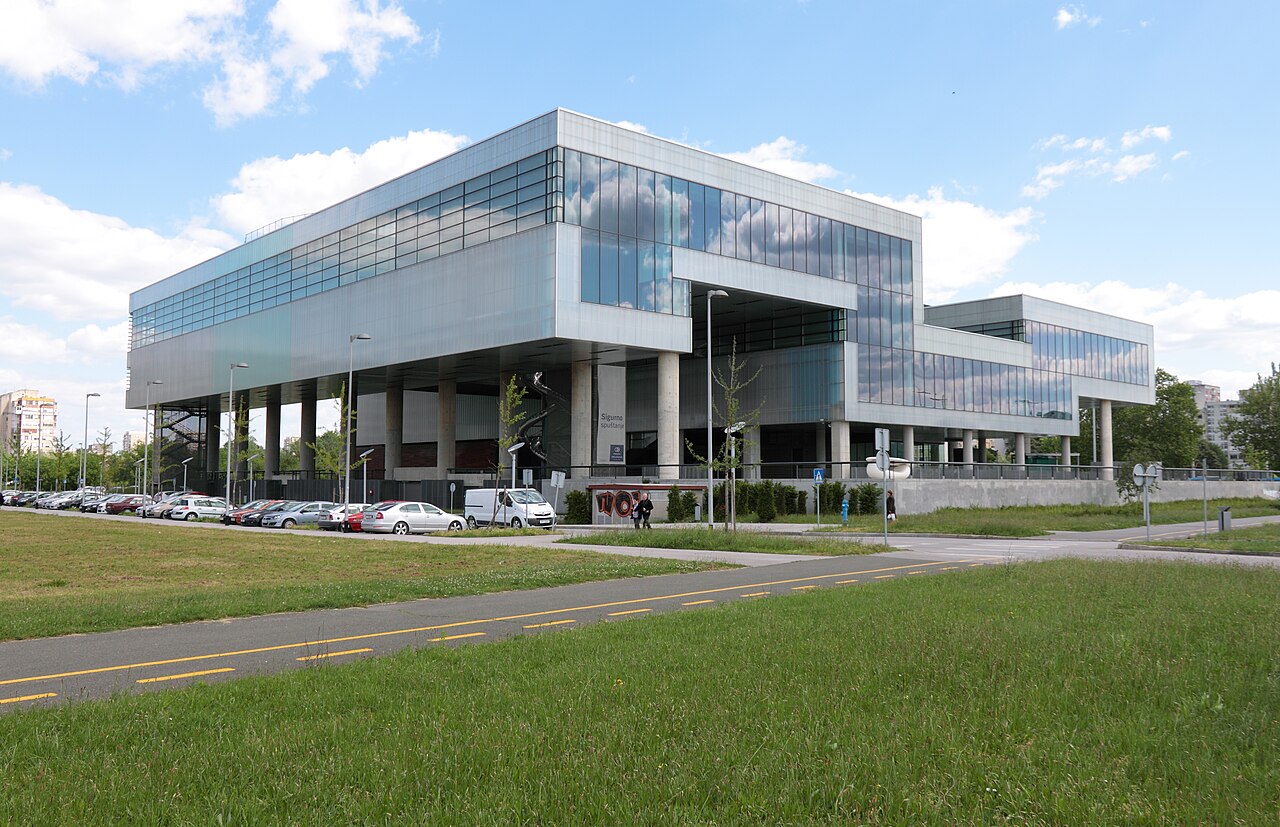
The Museum of Contemporary Art (Muzej suvremene umjetnosti) in Zagreb is the largest and most significant museum of its kind in Croatia. Established in 1954, the institution moved to its current purpose-built facility in the Novi Zagreb district in 2009. The museum serves as a primary repository for Croatian and international art produced from the mid-20th century to the present day.
The building, designed by architect Igor Franić, is a prominent example of contemporary architecture, characterized by its elongated form and a distinctive ramp that connects the exhibition spaces. The museum houses a vast collection of paintings, sculptures, installations, and media art, while also functioning as a hub for research, education, and public discourse on modern cultural trends.
Key Facts
- Materials
- Reinforced concrete, Glass, Steel
- Civilization
- Modern Croatia
- Accessibility
- Fully wheelchair accessible
- Date(s)
- 2003-2009
- Condition
- Active
- Original Function
- Museum
- Key Figures
- Igor Franić, Snježana Pintarić
Founding and Early Years
1954-1990The museum was founded in 1954 as the City Gallery of Contemporary Art. It was initially housed in the Kulmer Palace in the Upper Town, where it began assembling a collection focused on the New Tendencies movement and other avant-garde developments in Yugoslav art.
Transition and New Facility
1990-2009Following Croatian independence, the institution sought to expand its capacity and visibility. An international architectural competition was held in 1999 for a new building, which was won by Igor Franić. Construction began in 2003, culminating in the grand opening of the new facility in 2009.
Contemporary Era
2009-PresentSince its relocation, the museum has significantly expanded its international profile, hosting major traveling exhibitions and integrating digital media into its permanent displays. It remains the central institution for the study and promotion of contemporary visual arts in the region.
Cultural Significance
The museum is a cornerstone of Zagreb's cultural life, bridging the gap between the historical legacy of the 20th-century avant-garde and current artistic practices. It plays a vital role in the regional art scene by providing a platform for local artists to engage with global contemporary discourses.
Beyond its exhibitions, the museum acts as a social space, hosting film screenings, performances, and workshops that encourage public participation. Its architecture has become a landmark of the city's southern expansion, symbolizing the modernization of Zagreb's urban identity.
Interpretive Notes
Scholarly debates and areas of uncertainty
Discussions often center on the museum's role in balancing the preservation of the 'New Tendencies' historical legacy with the need to remain relevant to rapidly evolving digital and globalized art forms. There is also ongoing academic debate regarding the effectiveness of the building's layout in facilitating visitor flow and the display of large-scale site-specific installations.
Visiting Information
Entry Rules
Open Tuesday to Sunday. Tickets can be purchased at the entrance or online. No specific dress code is required.
Best Times to Visit
Weekday mornings are generally quieter. The museum often hosts evening events and exhibition openings which provide a more social atmosphere.
Photography
Personal photography is permitted for non-commercial use. Flash and tripods are prohibited in exhibition galleries.
Preservation Notes
Visitors are requested to maintain distance from artworks and refrain from touching installations. Large bags must be stored in provided lockers.
Nearby POIs
11 shownSources & Further Reading
- [1]Museum of Contemporary Art Zagreb: Architecture and Context — Igor Franić. Croatian Architectural Review (2010)View
- [2]Art in Croatia: 1950-2000 — Jasna Galjer. Institute of Art History (2015)
Key Facts
- Materials
- Reinforced concrete, Glass, Steel
- Civilization
- Modern Croatia
- Accessibility
- Fully wheelchair accessible
- Date(s)
- 2003-2009
- Condition
- Active
- Original Function
- Museum
- Key Figures
- Igor Franić, Snježana Pintarić