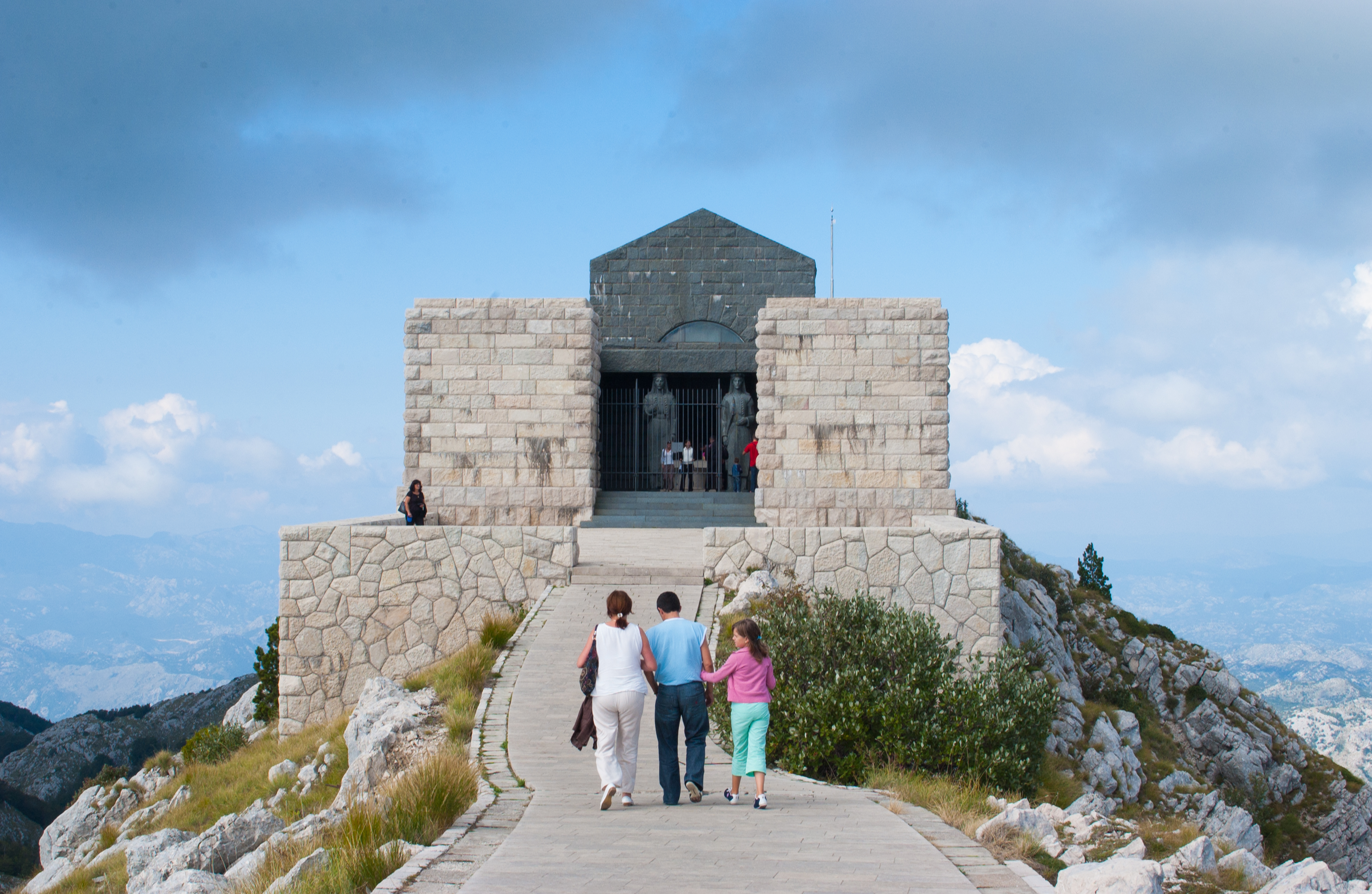
The Mausoleum of Njegoš is a monumental structure situated on the summit of Jezerski Vrh within Lovćen National Park, Montenegro. It serves as the final resting place of Petar II Petrović Njegoš, the 19th-century Prince-Bishop of Montenegro, poet, and philosopher. The site is reached via a long tunnel containing 461 steps carved into the mountain, leading to a courtyard that offers panoramic views of the surrounding Dinaric Alps.
The structure was designed by the Croatian sculptor Ivan Meštrović and completed in 1971, replacing an earlier chapel that had been destroyed during World War I. The interior features a massive granite statue of Njegoš, weighing 28 tons, and a gold-mosaic ceiling. The mausoleum stands as a significant symbol of Montenegrin national identity and cultural heritage.
Key Facts
- Materials
- Granite, Marble, Gold mosaic
- Civilization
- Montenegrin
- Accessibility
- Accessible via road followed by a 461-step climb
- Date(s)
- 1970-1971
- Condition
- Well-preserved
- Original Function
- Mausoleum and memorial
- Key Figures
- Petar II Petrović Njegoš, Ivan Meštrović
Original Chapel
1845-1916Njegoš originally requested to be buried in a small chapel he built on the summit of Mount Lovćen. This chapel was damaged during World War I and subsequently demolished by Austro-Hungarian forces.
Design and Construction
1950s-1971The Yugoslav government commissioned renowned sculptor Ivan Meštrović to design a new, grander mausoleum. Construction faced significant logistical challenges due to the remote, high-altitude location, requiring the excavation of a tunnel through the mountain peak.
Inauguration
1971The mausoleum was officially opened in 1971, housing the remains of Njegoš in a sarcophagus. It has since become a primary site for state commemorations and a major destination for cultural tourism in Montenegro.
Cultural Significance
The mausoleum is deeply embedded in the Montenegrin national consciousness, representing the synthesis of the country's spiritual, literary, and political history. Njegoš is revered as the architect of the modern Montenegrin state, and his burial place on the highest peak of the region serves as a symbolic 'throne' overlooking the nation.
It remains a site of pilgrimage for Montenegrins and a focal point for discussions regarding the intersection of secular statehood and religious tradition in the Balkans.
Interpretive Notes
Scholarly debates and areas of uncertainty
There is ongoing academic discussion regarding the decision to replace the original chapel designed by Njegoš with the modernist structure by Meštrović. Some traditionalists argue that the original chapel better reflected the historical and religious context of the 19th century, while proponents of the current site emphasize its architectural significance and status as a masterpiece of 20th-century monumental art.
Visiting Information
Entry Rules
Open daily during the summer season (May to October). Entry requires a ticket purchased at the park entrance. Visitors must climb the 461 steps from the parking area to reach the summit.
Best Times to Visit
Early morning or late afternoon during the summer months to avoid extreme heat and midday crowds. The site is often inaccessible or closed during winter due to heavy snowfall.
Photography
Photography is permitted in the courtyard and exterior areas. Flash photography is generally prohibited inside the burial chamber.
Preservation Notes
The site is exposed to harsh alpine weather conditions. Visitors are advised to wear appropriate footwear for the steep climb and to remain within designated viewing areas to protect the surrounding karst landscape.
Nearby POIs
11 shownSources & Further Reading
- [1]Ivan Meštrović: The Sculptor and His Work — Duško Kečkemet. McGraw-Hill (1976)
- [2]Njegoš and the Montenegrin Identity — Zoran Lakić. Historical Institute of Montenegro (2005)
Key Facts
- Materials
- Granite, Marble, Gold mosaic
- Civilization
- Montenegrin
- Accessibility
- Accessible via road followed by a 461-step climb
- Date(s)
- 1970-1971
- Condition
- Well-preserved
- Original Function
- Mausoleum and memorial
- Key Figures
- Petar II Petrović Njegoš, Ivan Meštrović