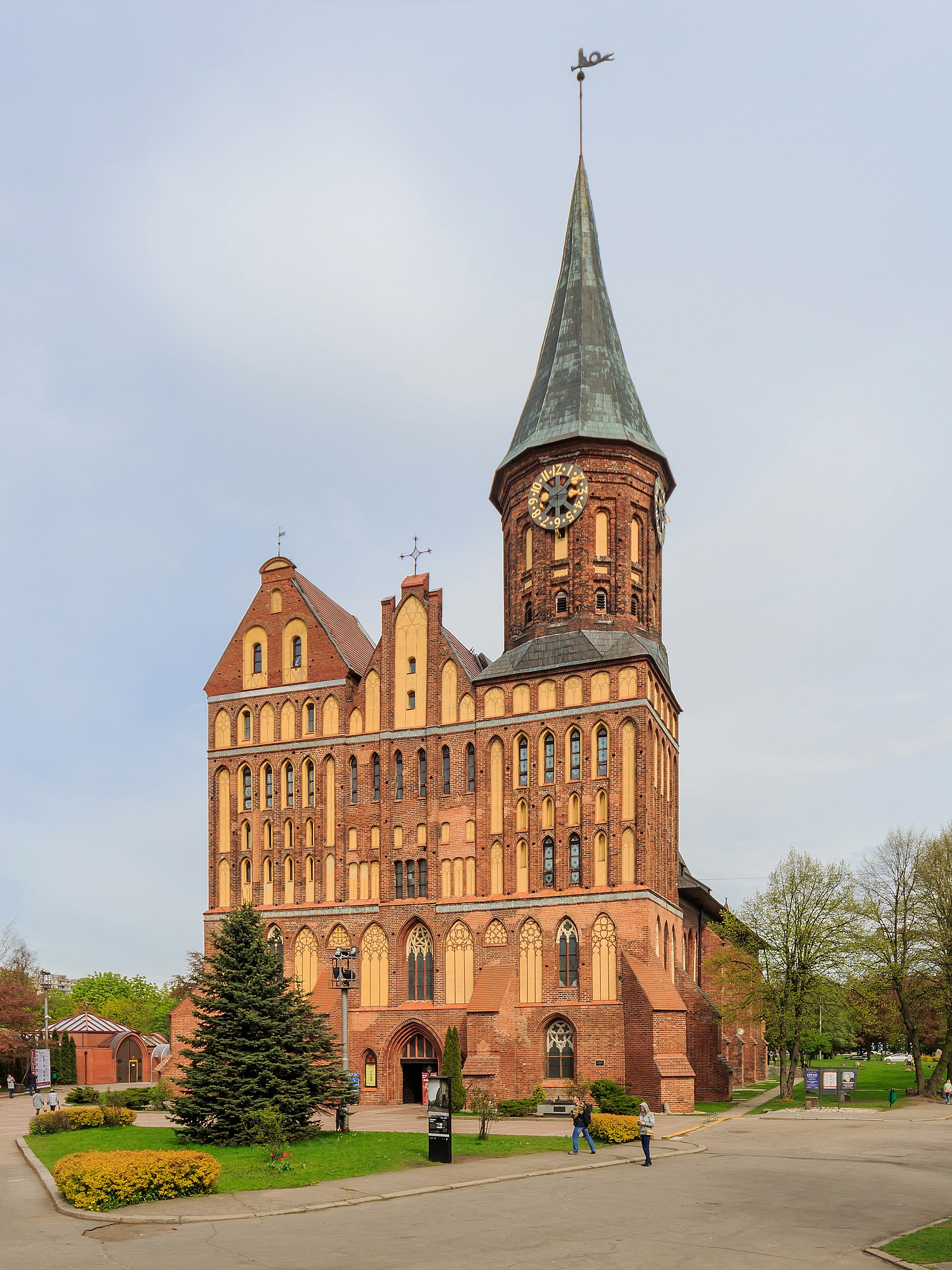
Königsberg Cathedral is a Brick Gothic structure located on Kneiphof Island in Kaliningrad, Russia. Originally constructed between 1333 and 1380, it served as the primary religious center for the Teutonic Order and the Duchy of Prussia. The cathedral is notable for its historical association with the University of Königsberg and as the final resting place of the philosopher Immanuel Kant.
Following the heavy bombardment of Königsberg during World War II in 1944 and 1945, the cathedral was left as a gutted shell. While most of the surrounding city was demolished or rebuilt in Soviet architectural styles, the cathedral remained a prominent ruin until restoration efforts began in the 1990s. Today, it functions as a cultural center, concert hall, and museum, housing both Protestant and Orthodox chapels.
Key Facts
- Materials
- Brick, Stone
- Civilization
- Teutonic Order
- Accessibility
- Ground floor accessible, upper levels limited
- Date(s)
- 1333-1380
- Condition
- Restored, serves as a cultural and religious center
- Original Function
- Roman Catholic Cathedral
- Key Figures
- Immanuel Kant, Albert, Duke of Prussia
Founding and Construction
14th CenturyConstruction began in 1333 under Bishop Johannes Clare. The cathedral was built on the marshy ground of Kneiphof Island, requiring the driving of massive oak piles into the soil to support the heavy brick structure.
Reformation and University Era
16th-19th CenturyFollowing the Protestant Reformation, the cathedral became the main church of the Duchy of Prussia. It became deeply linked to the nearby University of Königsberg, with many professors and notable figures buried within the 'Professor's Vault'.
Destruction and Ruin
1944-1945During the British Royal Air Force bombing raids on Königsberg in August 1944, the cathedral was gutted by fire. Subsequent fighting during the Soviet capture of the city in 1945 left the structure a hollowed-out ruin.
Restoration
1992-PresentAfter decades of neglect, a comprehensive restoration project began in 1992. The project focused on stabilizing the walls, reconstructing the roof and spire, and restoring the interior to serve as a multi-purpose cultural venue.
Cultural Significance
The cathedral serves as the primary symbol of the city's pre-1945 history. Its survival as a ruin and subsequent restoration represents the complex reconciliation of the city's German past with its current Russian identity. The tomb of Immanuel Kant, located at the northeast corner, remains a site of pilgrimage for scholars worldwide.
Interpretive Notes
Scholarly debates and areas of uncertainty
Debates persist regarding the extent to which the restoration should prioritize the original medieval aesthetic versus the preservation of the 'ruin' state that existed during the Soviet era. Some architectural historians argue that the modern spire reconstruction deviates from the historical silhouette.
Visiting Information
Entry Rules
Open daily for museum visits and concerts. Tickets are required for the museum and concert hall. Modest dress is recommended when entering the chapels.
Best Times to Visit
Summer months for the organ concert series. Weekdays are generally quieter for museum tours.
Photography
Personal photography is permitted. Professional or commercial photography requires prior authorization from the cathedral administration.
Preservation Notes
The structure is a protected cultural heritage site. Visitors are requested to refrain from touching the historical brickwork and to remain within designated visitor areas.
Nearby POIs
2 shownSources & Further Reading
- [1]Königsberg: The History of the Cathedral — Fritz Gause. Königsberg Historical Society (1968)
- [2]The Restoration of the Königsberg Cathedral — Igor Odintsov. Journal of Baltic Heritage (2005)
Key Facts
- Materials
- Brick, Stone
- Civilization
- Teutonic Order
- Accessibility
- Ground floor accessible, upper levels limited
- Date(s)
- 1333-1380
- Condition
- Restored, serves as a cultural and religious center
- Original Function
- Roman Catholic Cathedral
- Key Figures
- Immanuel Kant, Albert, Duke of Prussia