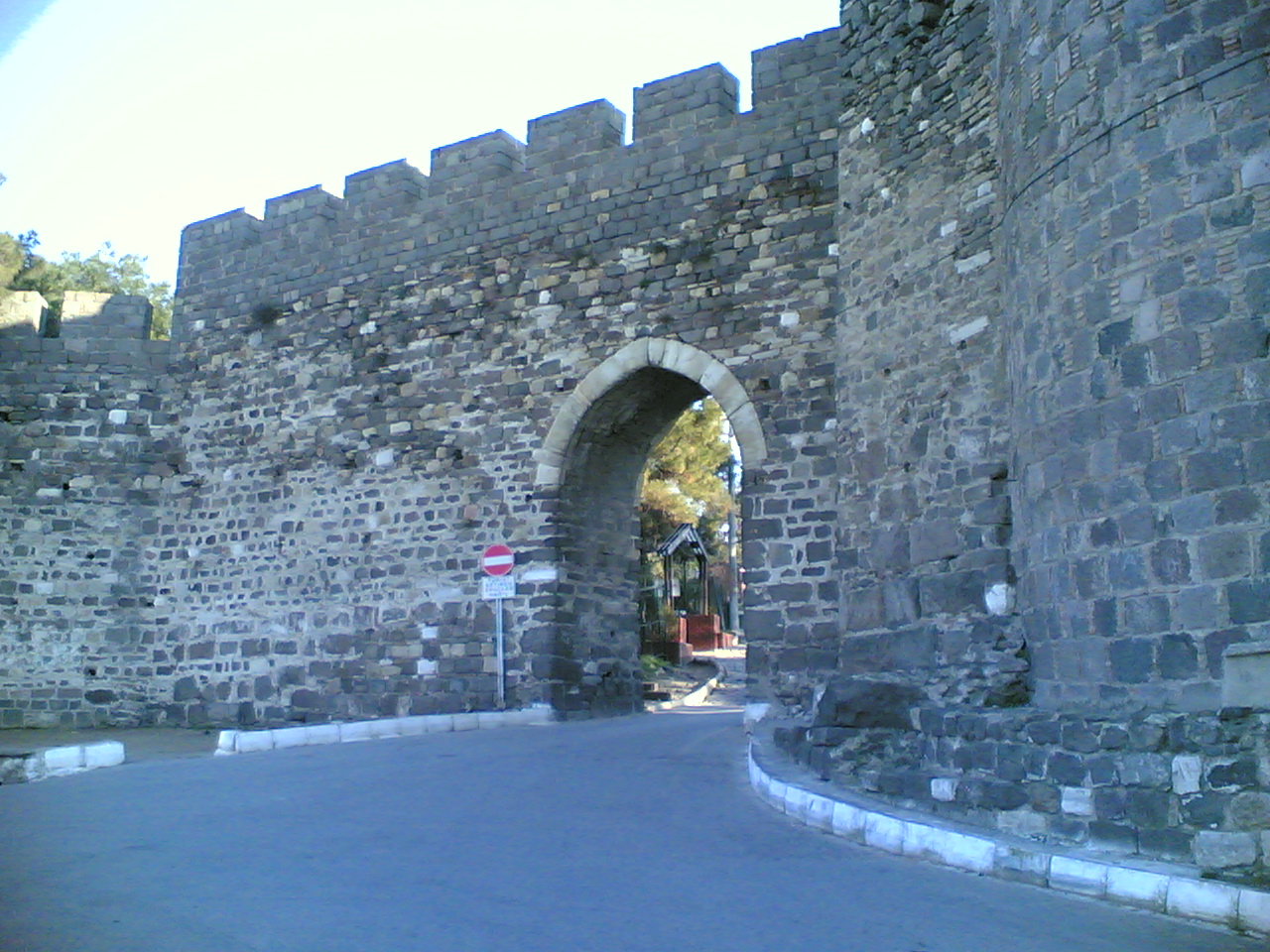
Kadifekale, historically known as Mount Pagus, is a hilltop fortress overlooking the city of Izmir and the Gulf of Izmir. The site was significantly developed during the Hellenistic period, with major fortifications established under the direction of Lysimachus, a successor of Alexander the Great. The fortress served as a strategic defensive point for centuries, controlling the harbor and the surrounding plains.
The existing ruins primarily date from the Roman and Byzantine eras, featuring substantial stone walls and several towers. While much of the structure has weathered over time, the site remains a significant archaeological landmark that provides insight into the defensive architecture of ancient Smyrna and its subsequent medieval transformations.
Key Facts
- Materials
- Limestone, Mortar, Spolia
- Civilization
- Hellenistic, Roman, Byzantine
- Accessibility
- Accessible by road; steep terrain within the site
- Date(s)
- 3rd century BCE - 14th century CE
- Condition
- Partially ruined, with restored sections
- Original Function
- Defensive fortress and acropolis
- Key Figures
- Alexander the Great, Lysimachus
Hellenistic Foundation
3rd century BCEFollowing the decline of Old Smyrna, the city was relocated to the slopes of Mount Pagus. Lysimachus ordered the construction of the fortress to secure the new city, establishing it as the primary acropolis of the Hellenistic settlement.
Roman and Byzantine Eras
1st century BCE - 14th century CEThe Romans expanded the fortifications to accommodate the growing importance of Smyrna as a trade hub. During the Byzantine period, the walls were reinforced and maintained to protect the city against various maritime and land-based threats.
Ottoman Period and Decline
14th - 19th centuryFollowing the capture of the fortress by the Aydinids and later the Ottomans, the site continued to serve a military function. Over time, as the city expanded toward the coastline, the fortress lost its strategic necessity and gradually fell into disrepair.
Cultural Significance
Kadifekale is deeply linked to the legend of Alexander the Great, who is said to have dreamt of rebuilding Smyrna on Mount Pagus while resting under a plane tree near the sanctuary of Nemesis. The site remains a symbol of Izmir's layered history, representing the transition from ancient Greek city-states to the modern urban landscape.
Locally, the area surrounding the fortress is known for traditional carpet weaving, a craft that has been preserved by residents living in the historic neighborhoods at the foot of the hill, linking the ancient site to contemporary cultural practices.
Interpretive Notes
Scholarly debates and areas of uncertainty
The exact extent of the Hellenistic-era walls versus later Byzantine reconstructions remains a subject of archaeological investigation. Scholars continue to debate the precise layout of the original acropolis and the degree to which Roman-era modifications altered the Hellenistic defensive footprint.
Visiting Information
Entry Rules
Open to the public daily. No entry fee is required for the main fortress area. Visitors are advised to visit during daylight hours.
Best Times to Visit
Early morning or late afternoon to avoid heat and to capture the best light for photography over the Gulf of Izmir.
Photography
Personal photography is permitted. Commercial photography may require local municipal authorization.
Nearby POIs
7 shownSources & Further Reading
- [1]The Archaeology of Smyrna — Greaves, A. M.. Oxford University Press (2010)
- [2]Smyrna: The History of the City — Akurgal, Ekrem. Hürriyet Publications (1983)
Key Facts
- Materials
- Limestone, Mortar, Spolia
- Civilization
- Hellenistic, Roman, Byzantine
- Accessibility
- Accessible by road; steep terrain within the site