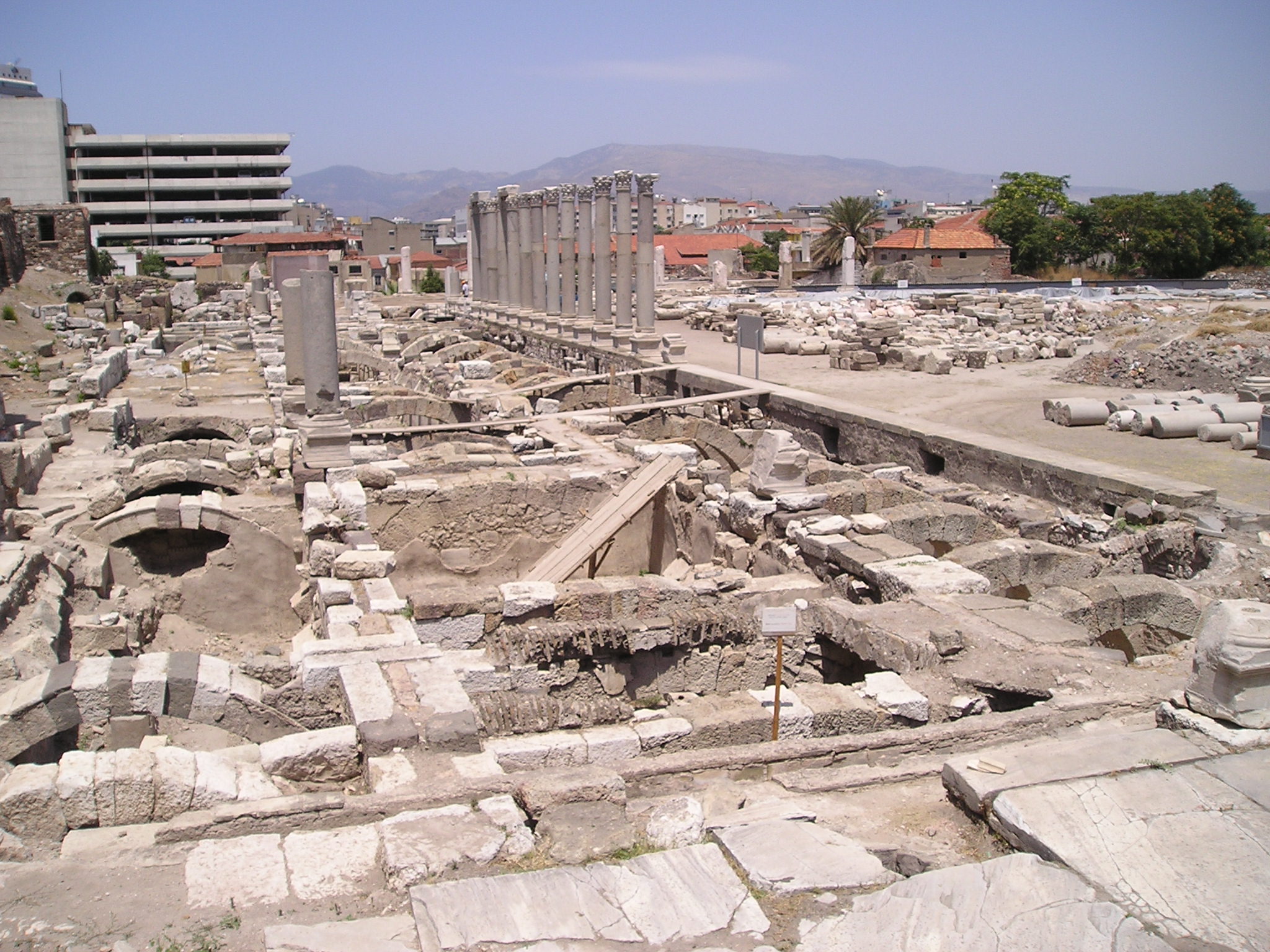
The Agora of Smyrna, located in the Namazgah quarter of Izmir, is one of the largest and best-preserved agoras of the ancient world. Originally constructed during the Hellenistic period, the site was significantly rebuilt and expanded following a devastating earthquake in 178 CE, with support from the Roman Emperor Marcus Aurelius.
The complex is notable for its unique three-level structure, which includes a massive vaulted basement designed to support the upper market level. This architectural feature allowed the agora to function on a slope, providing essential storage and commercial space. Today, the site serves as an open-air museum, showcasing extensive colonnades, a basilica, and intricate water channels that remain fed by the ancient Faustina spring.
Key Facts
- Materials
- Travertine, Marble, Brick
- Civilization
- Hellenistic, Roman
- Accessibility
- Ground level paths with some uneven terrain
- Date(s)
- 4th century BCE - 2nd century CE
- Condition
- Partially excavated and restored
- Original Function
- Marketplace and civic center
- Key Figures
- Alexander the Great, Marcus Aurelius, Faustina the Younger
Hellenistic Origins
4th century BCEThe original agora was established during the Hellenistic period following the refounding of Smyrna by Lysimachus. It served as the heart of the city's commercial and social life, situated on the slopes of Mount Pagos.
Roman Reconstruction
178 CEFollowing a catastrophic earthquake that leveled much of the city, the agora was reconstructed on a grander scale. The Roman administration, under the patronage of Marcus Aurelius, implemented a sophisticated multi-level design that incorporated a basilica and a large stoa.
Byzantine and Ottoman Use
5th-19th centuryDuring the Byzantine period, the site was partially repurposed, and later, the area served as a cemetery during the Ottoman era. The presence of the Namazgah cemetery helped protect the ruins from modern urban encroachment.
Modern Excavations
1932 - presentSystematic archaeological excavations began in 1932 under the direction of Selahattin Kantar and Rudolf Naumann. Ongoing restoration efforts continue to stabilize the vaulted substructures and preserve the site's unique architectural features.
Cultural Significance
The Agora of Smyrna is a vital link to the urban history of the Aegean region, illustrating the transition from Hellenistic city planning to Roman imperial architecture. It remains a symbol of Izmir's long-standing identity as a major Mediterranean trade hub.
Locally, the site is highly valued for its connection to the Faustina spring, which has provided water to the city for centuries. The agora is a central component of the 'Historic Port City of Izmir' UNESCO World Heritage site, reflecting the city's multicultural heritage.
Interpretive Notes
Scholarly debates and areas of uncertainty
There is ongoing academic discussion regarding the exact function of the vaulted substructures. While traditionally interpreted as storage facilities, some scholars suggest they may have also served as workshops or administrative offices for the market's guilds.
Visiting Information
Entry Rules
Open daily. Tickets are required for entry. Visitors are advised to wear comfortable walking shoes as the site involves uneven surfaces and stairs.
Best Times to Visit
Early morning or late afternoon to avoid the intense Aegean sun, as the site is largely exposed.
Photography
Personal photography is permitted. Commercial photography requires prior authorization from the local museum directorate.
Nearby POIs
7 shownSources & Further Reading
- [1]The Agora of Smyrna: A Study in Roman Urbanism — Akurgal, Ekrem. Turkish Historical Society (1998)
- [2]
Key Facts
- Materials
- Travertine, Marble, Brick
- Civilization
- Hellenistic, Roman
- Accessibility
- Ground level paths with some uneven terrain