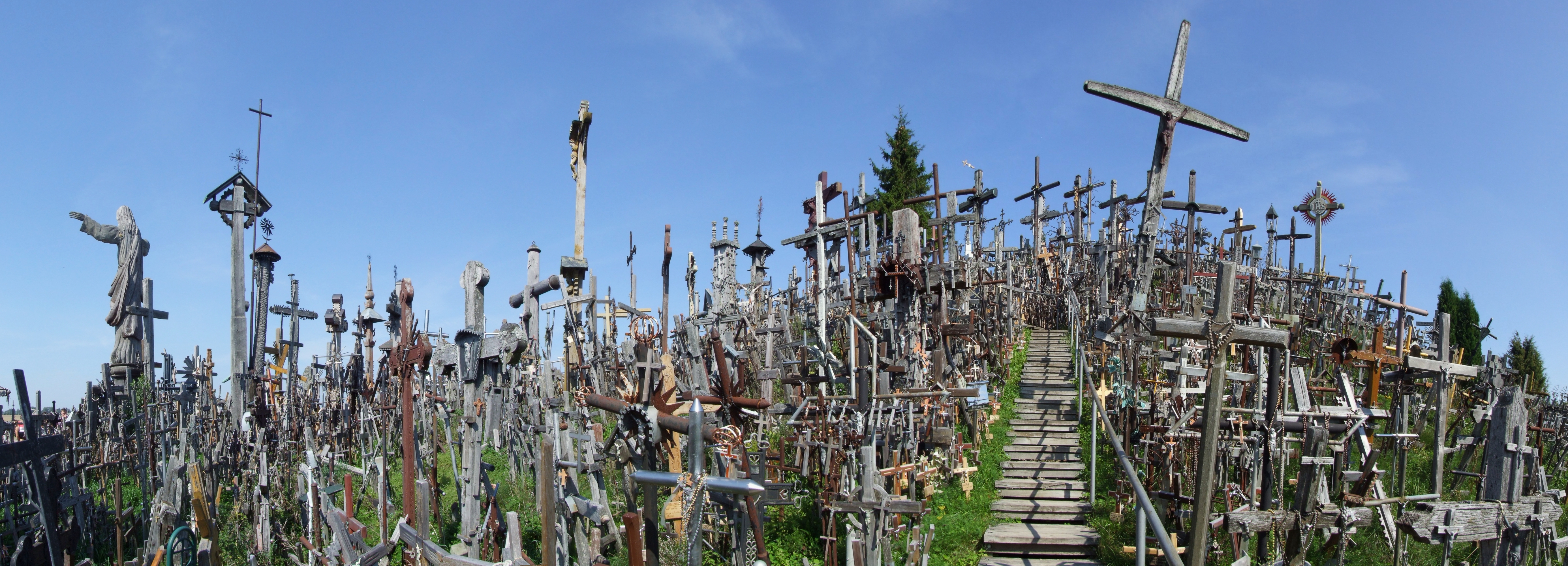
The Hill of Crosses is a unique pilgrimage site located near the city of Šiauliai in northern Lithuania. The tradition of placing crosses on the hill is believed to have begun after the 1831 Uprising against the Russian Empire, serving as a site for families to memorialize missing loved ones whose bodies were never recovered. Over the decades, the site has evolved into a massive collection of hundreds of thousands of crosses, crucifixes, statues of the Virgin Mary, and rosaries.
Throughout the Soviet occupation of Lithuania, the hill became a powerful symbol of peaceful resistance and national identity. Despite repeated attempts by Soviet authorities to bulldoze the site and remove the crosses, local devotees consistently returned to replace them under the cover of night. Today, it remains a significant site of Catholic pilgrimage and a testament to the endurance of Lithuanian cultural and religious expression.
Key Facts
- Materials
- Wood, Metal, Stone, Plastic
- Civilization
- Lithuanian
- Accessibility
- Accessible via gravel paths, some areas uneven
- Date(s)
- 1831 - Present
- Condition
- Active pilgrimage site
- Original Function
- Memorial site for uprising victims
- Key Figures
- Pope John Paul II
Origins and Early Memorials
1831Following the November Uprising against the Russian Empire, families of those killed or exiled began placing crosses on the Jurgaičiai mound to commemorate the fallen. The site quickly became a focal point for mourning and national remembrance.
Soviet Suppression
1944-1990During the Soviet era, the hill was viewed as a symbol of anti-state sentiment. Authorities attempted to destroy the site at least three times between 1961 and 1975, using bulldozers to level the hill and burning wooden crosses. Each time, the local population secretly rebuilt the site.
Papal Visit and Modern Status
1993-PresentIn 1993, Pope John Paul II visited the site, celebrating Mass and declaring it a place of hope, peace, and love. This visit significantly increased international awareness, and the hill continues to grow as pilgrims from around the world add their own crosses.
Cultural Significance
The Hill of Crosses represents the intersection of personal grief and collective national resilience. It is not a cemetery, but a living monument where the act of placing a cross serves as a prayer and a statement of faith. It remains a central pillar of Lithuanian identity, symbolizing the triumph of spiritual conviction over political oppression.
Internationally, the site is recognized as a unique example of folk religious art and a symbol of non-violent resistance. It is frequently visited by pilgrims and tourists alike, serving as a space for reflection on human rights and religious freedom.
Interpretive Notes
Scholarly debates and areas of uncertainty
Scholars often debate the classification of the site, questioning whether it should be categorized primarily as a religious sanctuary or a political monument. There is also ongoing discussion regarding the preservation of the site, as the sheer volume of crosses creates environmental and structural challenges for the mound itself.
Visiting Information
Entry Rules
Open 24 hours a day, 7 days a week. Entry is free. Visitors are encouraged to respect the site as a place of prayer and reflection.
Best Times to Visit
Early morning or late evening to avoid tour bus crowds. The site is particularly atmospheric during the autumn months or after a light snowfall.
Photography
Personal photography is permitted. Commercial photography requires prior authorization from local authorities.
Preservation Notes
Visitors are welcome to place their own crosses, but are asked to do so in designated areas to prevent damage to older, historical markers. Please stay on the marked paths to protect the integrity of the mound.
Nearby POIs
0 shownNo nearby POIs listed yet.
Key Facts
- Materials
- Wood, Metal, Stone, Plastic
- Civilization
- Lithuanian
- Accessibility
- Accessible via gravel paths, some areas uneven
- Date(s)
- 1831 - Present
- Condition
- Active pilgrimage site
- Original Function
- Memorial site for uprising victims
- Key Figures
- Pope John Paul II
Nearby POIs
0 shownNo nearby POIs listed yet.