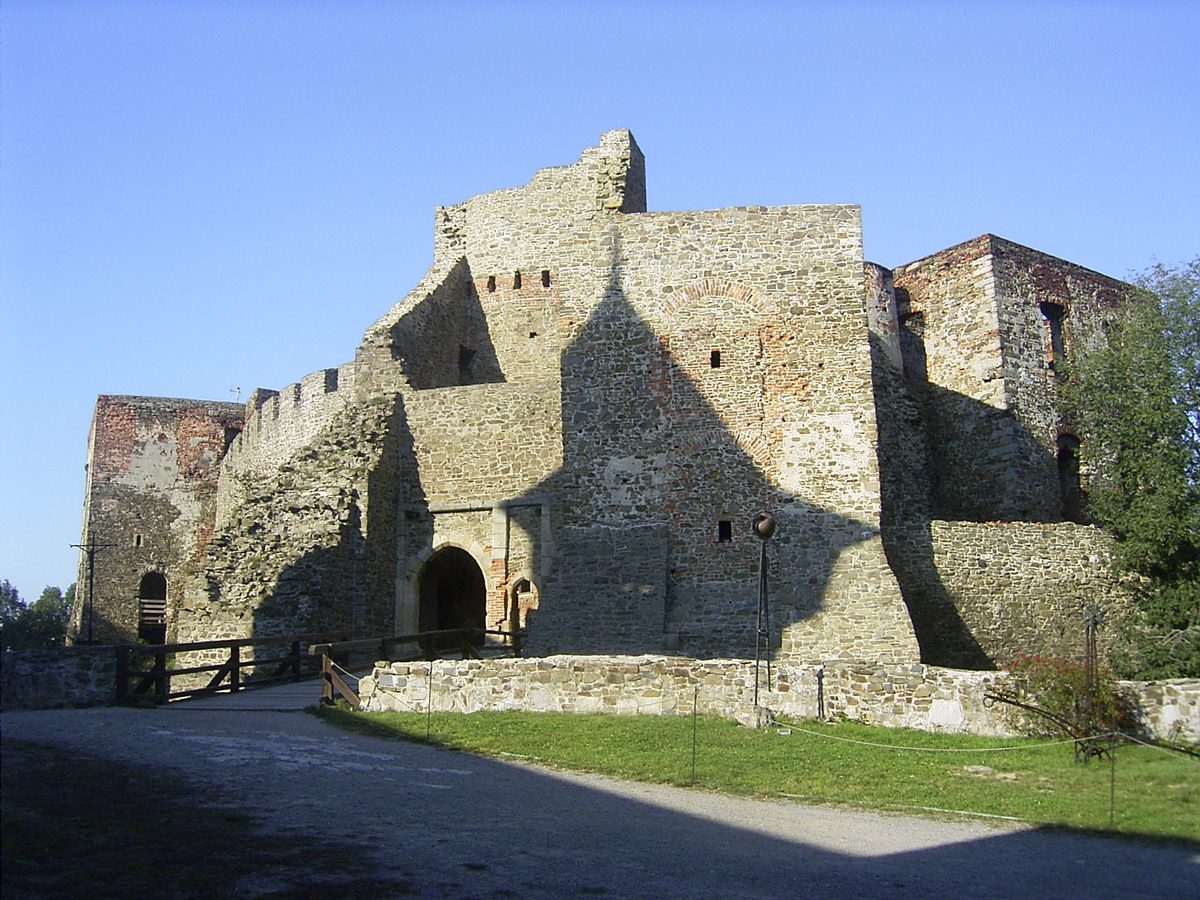
Helfštýn is a prominent castle located near Týn nad Bečvou in the Czech Republic. Founded in the late 13th century, the fortress served as a strategic defensive point and a significant royal residence, evolving through various architectural phases including Romanesque, Gothic, and Renaissance styles. Its extensive fortifications and imposing towers reflect its historical importance in controlling the Moravian Gate.
Following centuries of military use and eventual abandonment, the castle fell into a state of ruin. In recent decades, extensive restoration efforts have stabilized the masonry and preserved the site's structural integrity. Today, it is widely recognized for its annual international blacksmithing symposium, 'Hefaiston,' which highlights the site's long-standing tradition of metalwork and craftsmanship.
Key Facts
- Materials
- Stone, Brick
- Civilization
- Bohemian
- Accessibility
- Accessible via walking paths; some areas restricted due to ongoing restoration
- Date(s)
- Late 13th century
- Condition
- Partially restored ruin
- Original Function
- Defensive fortress and residence
- Key Figures
- František z Helfštýna, Vok of Kravaře
Foundation and Early Years
13th centuryThe castle was established in the late 13th century by Friduš of Linava, a nobleman who utilized the location to control trade routes. It quickly became a significant stronghold in the region.
Expansion and Ownership
14th-15th centuryDuring the 14th century, the castle passed to the Lords of Kravaře, who significantly expanded the fortifications. It played a strategic role during the Hussite Wars, remaining a loyalist stronghold.
Renaissance Transformation
16th centuryThe Pernštejn family acquired the castle and transformed it into a luxurious Renaissance residence, adding modern defensive systems and comfortable living quarters to the medieval core.
Decline and Modern Preservation
18th century - presentFollowing the Thirty Years' War, the castle's military importance waned. It was gradually abandoned and fell into disrepair. Since the 20th century, the site has been managed as a cultural monument, with major restoration projects completed in 2020 to preserve the palace ruins.
Cultural Significance
Helfštýn is a cornerstone of Moravian heritage, representing the evolution of Central European military architecture. Beyond its historical value, it serves as a global hub for the art of blacksmithing, hosting the annual Hefaiston event which attracts artisans from around the world to showcase ironwork within the castle's historic walls.
Interpretive Notes
Scholarly debates and areas of uncertainty
There is ongoing academic discussion regarding the exact extent of the original 13th-century layout versus the subsequent Gothic expansions, as many early records were lost during the Hussite conflicts.
Visiting Information
Entry Rules
Open to the public from March to November. Tickets are required for entry. Guided tours are available, and visitors are encouraged to check the official website for seasonal event schedules.
Best Times to Visit
Late spring and early autumn offer the best weather for exploring the extensive outdoor ramparts. The Hefaiston festival in late August is the most significant cultural event but attracts large crowds.
Photography
Personal photography is permitted throughout the grounds. Commercial photography and drone usage require prior authorization from the castle administration.
Preservation Notes
Visitors must remain on designated paths, especially within the palace ruins. The site is an active conservation area; some sections may be closed periodically for structural maintenance.
Nearby POIs
0 shownNo nearby POIs listed yet.
Key Facts
- Materials
- Stone, Brick
- Civilization
- Bohemian
- Accessibility
- Accessible via walking paths; some areas restricted due to ongoing restoration
- Date(s)
- Late 13th century
- Condition
- Partially restored ruin
- Original Function
- Defensive fortress and residence
- Key Figures
- František z Helfštýna, Vok of Kravaře
Nearby POIs
0 shownNo nearby POIs listed yet.