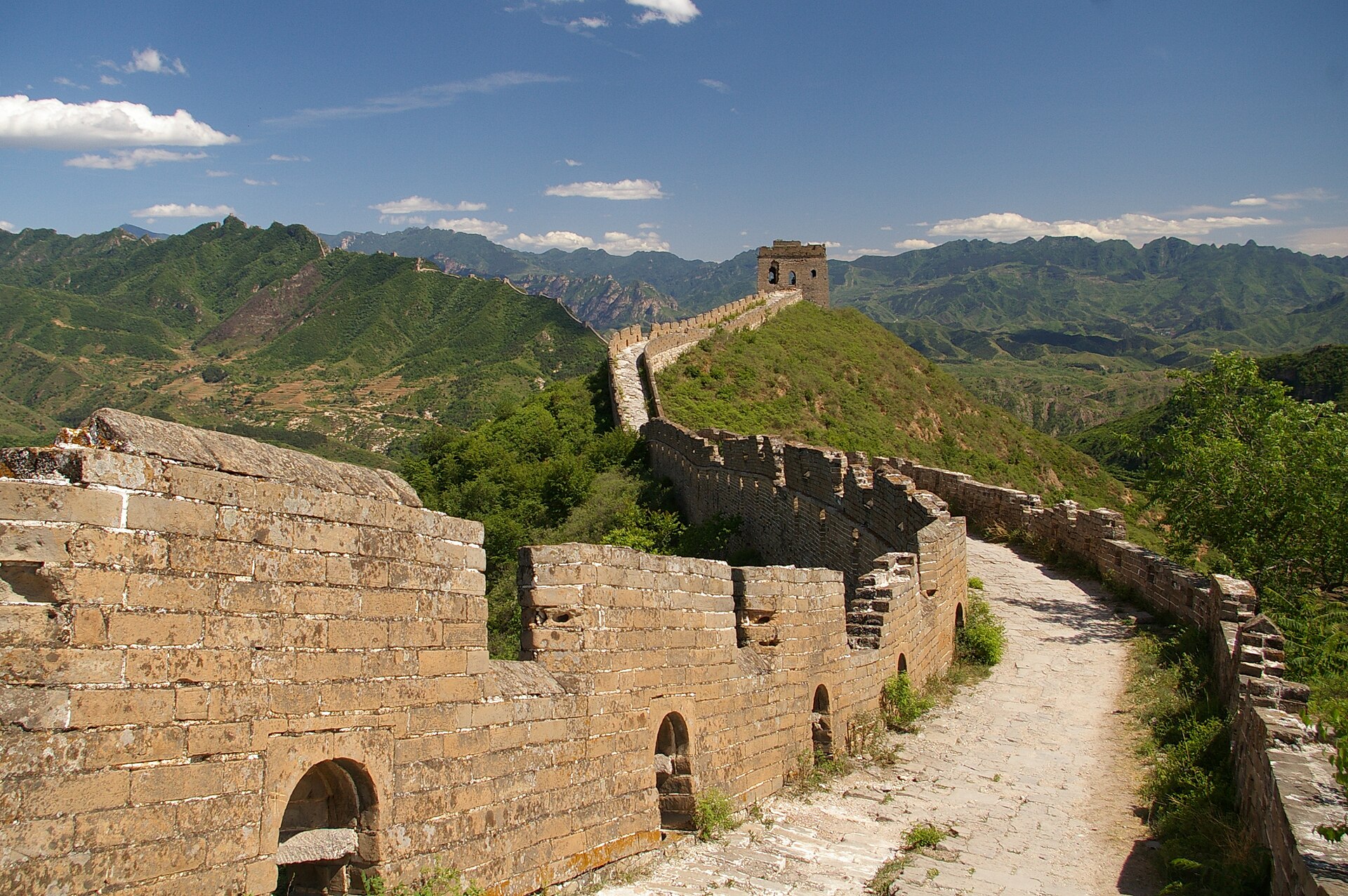
The Simatai section of the Great Wall of China is located about 120 km northeast of Beijing and is known for its steep, rugged terrain and dramatic architectural features. Built mainly during the Ming Dynasty (16th century), it retains both restored and unrestored areas, preserving much of its original defensive character. Simatai is distinguished by its 35 watchtowers, steep inclines, and panoramic views of the surrounding mountains. The section is partly lit at night, offering a unique visual experience and attracting adventure and heritage tourism.
Key Facts
- Length
- Approximately 5.4 km accessible to visitors
- Location
- Miyun District, Beijing, China
- Materials
- Granite, Stone blocks, Brick
- Civilization
- Ming Dynasty
- Major Features
- 35 watchtowers, Steep stone pathways, Partially restored walls, Night lighting system
- Date(s)
- 16th century
- Condition
- Partially restored; steep and challenging; sections remain unrestored and hazardous
Ming Dynasty Construction
16th centurySimatai was built to strengthen northern defenses of the Ming capital. Its steep slopes and watchtower placement maximized defensive advantage, making it a critical part of the Great Wall’s signaling network.
Abandonment and Preservation Challenges
17th-20th centuriesFollowing reduced military use, the wall experienced natural erosion and partial collapse. Many unrestored sections illustrate the original rugged construction techniques and vulnerability to weathering.
Modern Restoration and Tourism
21st centuryRestoration projects have stabilized key sections for public access while preserving unrestored areas. Simatai offers guided tours, hiking experiences, and evening illumination, balancing tourism with historical preservation.
Cultural Significance
Simatai exemplifies Ming Dynasty military engineering adapted to steep and rugged landscapes. Its combination of restored and wild areas offers insight into historical construction techniques and strategic defense, making it a symbol of China’s military and cultural heritage.
Interpretive Notes
Scholarly debates and areas of uncertainty
Debates concern the balance between restoration and authenticity, the original use of watchtowers, and the technical challenges of constructing steep wall sections. Scholars also examine whether partial restoration maintains historical integrity.
Visiting Information
Entry Rules
Ticketed entry required. Guided tours recommended for safety in steep and unrestored areas. Nighttime access available in limited, controlled zones.
Best Times to Visit
Spring and autumn for favorable weather and clearer hiking conditions. Avoid rainy or icy periods due to steep and dangerous paths.
Photography
Photography permitted. Tripods may be restricted on narrow or steep sections. Drone usage requires official permit.
Preservation Notes
Do not climb walls outside designated paths. Maintain caution on steep, unrestored areas. Follow guide instructions and stay on marked trails to prevent damage.
Nearby POIs
1 shownSources & Further Reading
- [1]
- [2]The Great Wall of China — William Lindesay. Da Capo Press (2007)
Key Facts
- Length
- Approximately 5.4 km accessible to visitors
- Location
- Miyun District, Beijing, China
- Materials
- Granite, Stone blocks, Brick
- Civilization
- Ming Dynasty
- Major Features
- 35 watchtowers, Steep stone pathways, Partially restored walls, Night lighting system
- Date(s)
- 16th century
- Condition
- Partially restored; steep and challenging; sections remain unrestored and hazardous