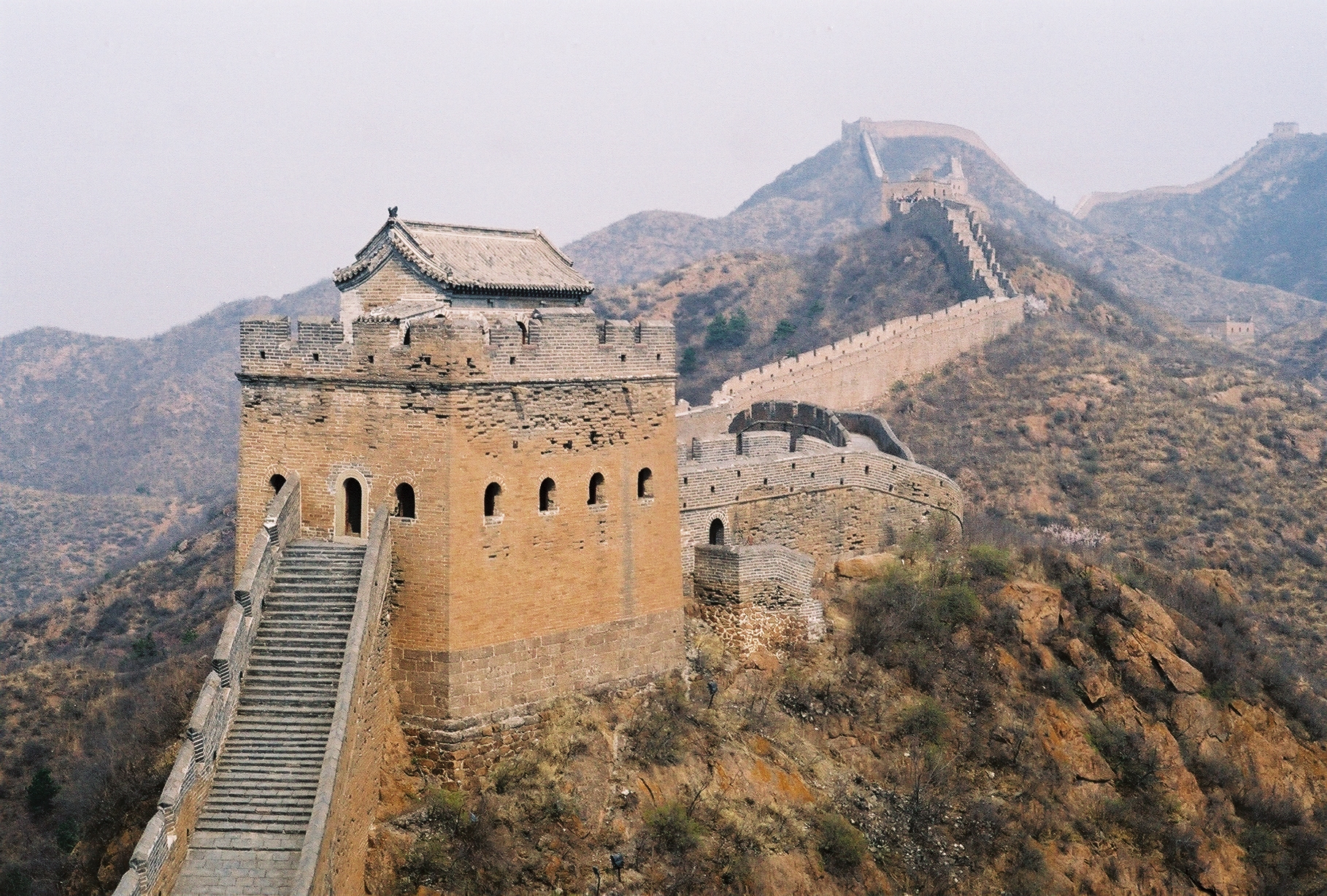
Great Wall of China - Jinshanling Section
The Jinshanling section of the Great Wall of China is a scenic and historically significant segment located approximately 125 km northeast of Beijing. Constructed primarily during the Ming Dynasty (16th century), it combines restored and unrestored stretches that showcase both the Wall’s original construction and conservation efforts. Jinshanling is known for its steep mountainous terrain, watchtowers, crenellations, and stone pathways. The mixture of restored and wild sections makes it popular for hikers seeking both historical authenticity and panoramic views.
Key Facts
- Length
- Approximately 10 km accessible to visitors
- Location
- Luanping County, Hebei Province, China
- Materials
- Granite, Stone blocks, Brick
- Civilization
- Ming Dynasty
- Major Features
- Watchtowers, Fortified parapets, Steep stone steps, Partially restored walls
- Date(s)
- Mid-16th century
- Condition
- Partially restored; sections remain unrestored and rugged
Ming Dynasty Construction
16th centuryJinshanling was built as a defensive frontier to guard Beijing’s northern approaches. Its walls and watchtowers were strategically positioned along steep ridges for maximum visibility and defense.
Abandonment and Natural Decay
17th-20th centuriesAfter military use declined, the section experienced natural decay and erosion. Unrestored areas remain in a wild, rugged condition, providing insight into original construction methods.
Modern Restoration and Tourism
20th-21st centuriesRestoration projects stabilized certain segments to allow safe public access. Jinshanling is now a popular hiking route that preserves both restored and authentic ruined sections, balancing tourism with heritage conservation.
Cultural Significance
Jinshanling demonstrates the Ming Dynasty’s military engineering and the integration of construction with rugged natural landscapes. It is a symbol of historical defense strategy and serves as a key location for hiking tourism, connecting modern visitors to China’s cultural heritage.
Interpretive Notes
Scholarly debates and areas of uncertainty
Debates focus on the balance between restoration and preservation of authenticity. Scholars examine construction techniques, original design intentions, and whether visitor access should be limited to protect unrestored sections.
Visiting Information
Entry Rules
Ticketed entry required. Visitors must stay on designated paths. Some steep, unrestored areas require caution and are recommended for experienced hikers only.
Best Times to Visit
Spring and autumn for mild temperatures, clearer skies, and optimal hiking conditions. Early morning recommended for minimal crowds and better photography lighting.
Photography
Photography permitted. Drones require official permit. Extreme caution needed in steep, unrestored areas.
Preservation Notes
Do not remove stones or climb unstable walls. Follow all safety signs and stay on marked trails to preserve fragile sections.
Nearby POIs
1 shownSources & Further Reading
- [1]
- [2]The Great Wall of China — William Lindesay. Da Capo Press (2007)
Key Facts
- Length
- Approximately 10 km accessible to visitors
- Location
- Luanping County, Hebei Province, China
- Materials
- Granite, Stone blocks, Brick
- Civilization
- Ming Dynasty
- Major Features
- Watchtowers, Fortified parapets, Steep stone steps, Partially restored walls
- Date(s)
- Mid-16th century
- Condition
- Partially restored; sections remain unrestored and rugged