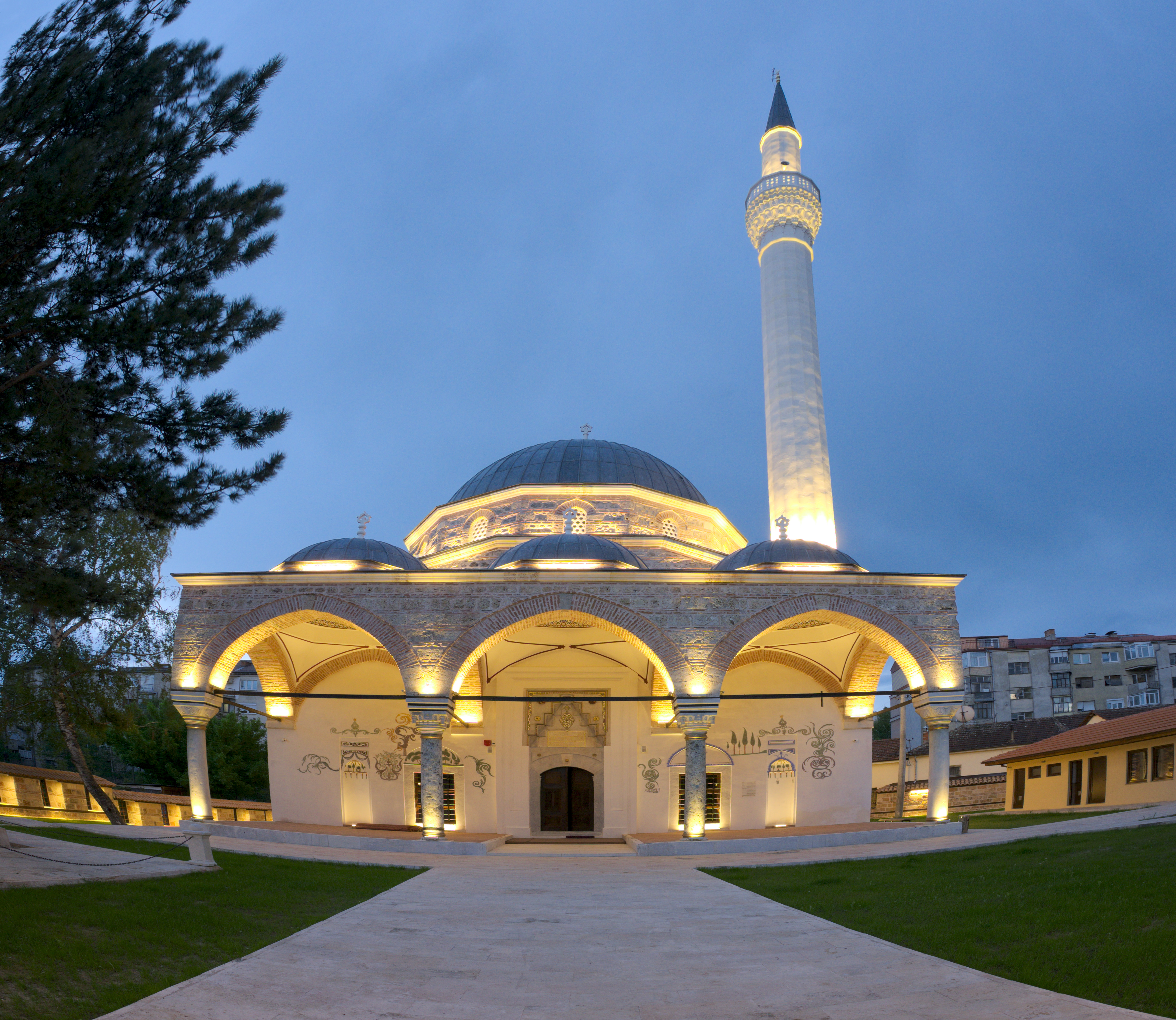
The Gazi Hajdar Kadi Mosque is a significant 16th-century Ottoman religious structure located in Bitola, North Macedonia. Commissioned by the judge (kadi) Hajdar, it is widely attributed to the renowned imperial architect Mimar Sinan, representing a classic example of Ottoman architectural influence in the Balkans.
The building features a large central dome supported by a square base and a slender, tall minaret. Its design reflects the transition of Ottoman architecture during the classical period, emphasizing geometric harmony and structural elegance. Despite centuries of wear, the mosque remains a prominent landmark in the city's historical center.
Key Facts
- Materials
- Stone, Brick, Lead
- Civilization
- Ottoman
- Accessibility
- Ground level access
- Date(s)
- 1561-1562 CE
- Condition
- Restored and active
- Original Function
- Mosque
- Key Figures
- Hajdar Kadi, Mimar Sinan
Commission and Construction
16th CenturyThe mosque was commissioned by Hajdar Kadi, a local judge, during the height of Ottoman influence in the region. Construction was completed in the early 1560s, serving as a focal point for the local Muslim community in Bitola.
Ottoman Period
17th-19th CenturyFor centuries, the mosque functioned as a primary religious and social center. It survived various regional conflicts and urban changes, maintaining its architectural integrity as a representative of the classical Ottoman style.
Modern Restoration
21st CenturyFollowing decades of neglect, the mosque underwent extensive restoration efforts in the early 2000s. These projects aimed to stabilize the structure and preserve its historical aesthetic, allowing it to return to active use.
Cultural Significance
The Gazi Hajdar Kadi Mosque serves as a vital link to the Ottoman heritage of Bitola, a city that was once a major administrative and cultural center of the empire. It stands as a testament to the architectural sophistication brought to the region by the Ottoman administration and remains a symbol of the city's multi-layered historical identity.
Interpretive Notes
Scholarly debates and areas of uncertainty
While the mosque is frequently attributed to the imperial architect Mimar Sinan, some scholars debate the extent of his direct involvement in provincial projects of this scale, suggesting it may have been designed by a student or a local architect working within the Sinan school of design.
Visiting Information
Entry Rules
Open to the public. Visitors are expected to dress modestly and remove footwear before entering the prayer hall. Please avoid visiting during scheduled prayer times.
Best Times to Visit
Spring and autumn offer the most comfortable weather for exploring the surrounding historical district of Bitola.
Photography
Photography is permitted in the courtyard and exterior. Please be respectful and avoid photographing individuals during prayer.
Preservation Notes
The site is a protected cultural monument. Visitors should refrain from touching the interior wall decorations and remain within designated areas.
Nearby POIs
11 shown- Clock Tower of Bitola0.6 km
- Church of St. Demetrius of Salonica0.7 km
- NI Institute and Museum Bitola1.3 km
- French Military Cemetery1.9 km
- Heraclea Lyncestis2.7 km
- Bay of Bones Museum45.7 km
- Robevci Family House46.4 km
- Church of the Virgin Mary Peribleptos46.5 km
- Church of Saint Sophia46.5 km
- Ancient Macedonian Theatre of Lychnidos46.6 km
- Plaoshnik Archaeological park46.8 km
Sources & Further Reading
- [1]Ottoman Architecture in the Balkans — Machiel Kiel. Research Centre for Islamic History, Art and Culture (1990)
- [2]The Architecture of Mimar Sinan — Gülru Necipoğlu. Princeton University Press (2005)
Key Facts
- Materials
- Stone, Brick, Lead
- Civilization
- Ottoman
- Accessibility
- Ground level access
- Date(s)
- 1561-1562 CE
- Condition
- Restored and active
- Original Function
- Mosque
- Key Figures
- Hajdar Kadi, Mimar Sinan
Nearby POIs
11 shown- Clock Tower of Bitola0.6 km
- Church of St. Demetrius of Salonica0.7 km
- NI Institute and Museum Bitola1.3 km
- French Military Cemetery1.9 km
- Heraclea Lyncestis2.7 km
- Bay of Bones Museum45.7 km
- Robevci Family House46.4 km
- Church of the Virgin Mary Peribleptos46.5 km
- Church of Saint Sophia46.5 km
- Ancient Macedonian Theatre of Lychnidos46.6 km
- Plaoshnik Archaeological park46.8 km