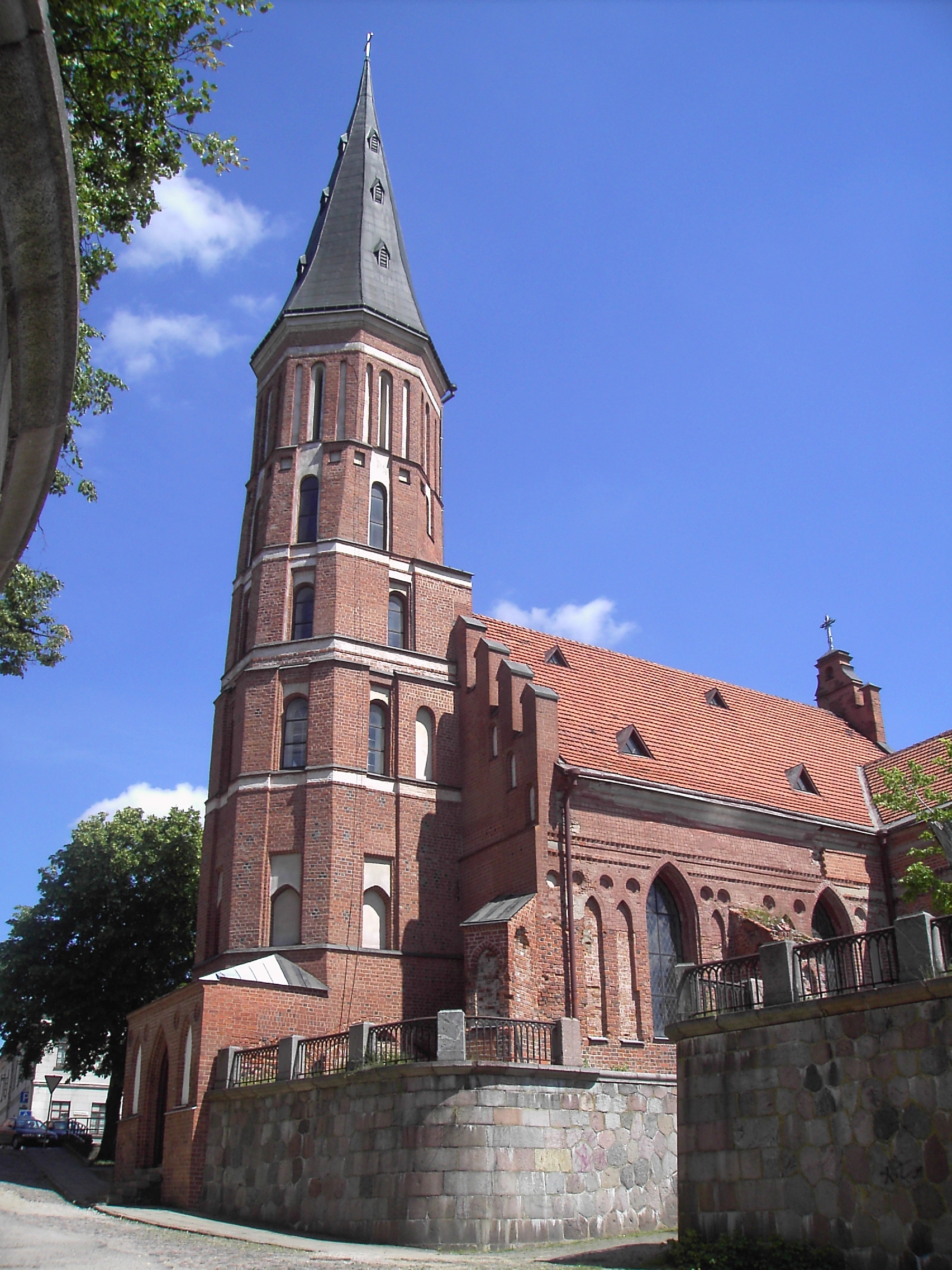
The Church of the Assumption of the Blessed Virgin Mary, commonly known as the Church of Vytautas the Great, is one of the oldest surviving churches in Kaunas, Lithuania. Located near the confluence of the Nemunas and Neris rivers, the structure was commissioned in the early 15th century, traditionally attributed to Grand Duke Vytautas the Great as a gesture of gratitude for his survival during the Battle of the Vorskla River.
Architecturally, the church is a prime example of Brick Gothic style, characterized by its stepped gables and austere exterior. Throughout its history, the building has undergone numerous transformations, including its use as a Franciscan monastery, a warehouse during the Napoleonic Wars, and a church for the local garrison. Despite significant damage from floods and military conflicts, the church remains a central landmark of Kaunas's historical Old Town.
Key Facts
- Materials
- Red brick, Stone foundations
- Civilization
- Grand Duchy of Lithuania
- Accessibility
- Ground level access, limited interior mobility due to historic layout
- Date(s)
- c. 1400
- Condition
- Active parish church, well-preserved
- Original Function
- Catholic Church and Franciscan monastery
- Key Figures
- Vytautas the Great
Founding and Early Years
15th centuryFounded around 1400, the church was originally built for Franciscan friars. Its location near the river port made it a vital religious center for merchants and travelers arriving in Kaunas.
Military and Secular Use
19th centuryFollowing the suppression of the Franciscan order, the church was repurposed for secular needs. During the Napoleonic Wars, it served as a warehouse for the French army, leading to significant interior degradation.
Restoration and Modern Era
20th century - presentThe church underwent extensive restoration in the 1930s and again in the late 20th century to repair flood damage and structural decay. It was returned to the Catholic Church and continues to serve the local community today.
Cultural Significance
The church serves as a symbol of Kaunas's medieval heritage and the influence of the Grand Duchy of Lithuania. Its proximity to the river confluence highlights the historical importance of water-based trade routes in the development of the city.
Interpretive Notes
Scholarly debates and areas of uncertainty
The exact date of the church's foundation remains a subject of minor debate among historians, as primary documentation from the early 15th century is sparse. Some scholars argue the current structure incorporates elements from a slightly later construction phase than the traditional 1400 date suggests.
Visiting Information
Entry Rules
Open to the public daily. Visitors are requested to maintain silence and respect ongoing religious services. Modest attire is expected.
Best Times to Visit
Late spring and early autumn offer the best weather for walking the surrounding Old Town area. Weekday mornings are generally quieter for visitors.
Photography
Personal photography is permitted without flash. Tripods and professional equipment require prior permission from the parish office.
Preservation Notes
The site is prone to moisture due to its proximity to the river; visitors should be aware of potential uneven flooring and damp conditions in lower areas.
Nearby POIs
11 shown- House of Perkunas0.1 km
- Kaunas Town Hall0.2 km
- Museum of the History of Lithuanian Medicine and Pharmacy0.2 km
- Kaunas Cathedral Basilica0.3 km
- Kaunas Castle0.4 km
- Historical Presidential Palace0.7 km
- Zmuidzinavicius Museum1.7 km
- M.K. Ciurlionis Museum of Art1.7 km
- Vytautas the Great War Museum1.7 km
- Christ's Resurrection Basilica2.1 km
- Church of St Michael the Archangel2.2 km
Sources & Further Reading
- [1]Kaunas: History and Architecture — Jurgis Vyšniauskas. Kaunas University Press (2012)
- [2]The Gothic Architecture of the Grand Duchy of Lithuania — Tomas Venclova. Baltic Academic Journal (2018)
Key Facts
- Materials
- Red brick, Stone foundations
- Civilization
- Grand Duchy of Lithuania
- Accessibility
- Ground level access, limited interior mobility due to historic layout
- Date(s)
- c. 1400
- Condition
- Active parish church, well-preserved
- Original Function
- Catholic Church and Franciscan monastery
- Key Figures
- Vytautas the Great
Nearby POIs
11 shown- House of Perkunas0.1 km
- Kaunas Town Hall0.2 km
- Museum of the History of Lithuanian Medicine and Pharmacy0.2 km
- Kaunas Cathedral Basilica0.3 km
- Kaunas Castle0.4 km
- Historical Presidential Palace0.7 km
- Zmuidzinavicius Museum1.7 km
- M.K. Ciurlionis Museum of Art1.7 km
- Vytautas the Great War Museum1.7 km
- Christ's Resurrection Basilica2.1 km
- Church of St Michael the Archangel2.2 km